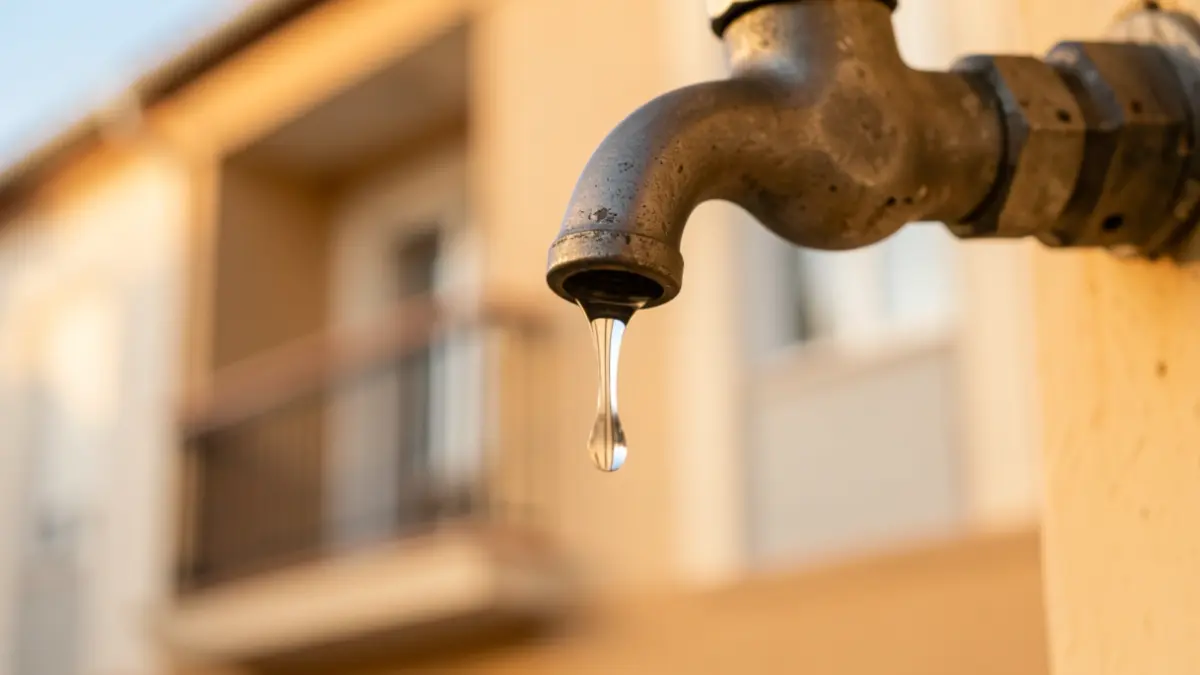
Residents on upper floors in several buildings in Santa Cruz de Tenerife are experiencing a desperate water shortage, where current pressure is insufficient for basic needs like showering, using the washing machine, or cooking. While homes closer to the street maintain supply, attics and upper apartments are affected.
Alberto Delgado, commercial director of Hidrogest Archipiélago, explains that this situation results from years of "water overpressure" that led many communities to remove their old cisterns and pressure equipment by connecting directly to the network. "In no case has supply been cut off," assures Delgado, differentiating the company's obligation to deliver water to the building's connection point from each community's responsibility to distribute it to the highest homes.
The problem arises when the incoming pressure decreases and buildings lack their own systems to compensate. Delgado notes that pressures of five to six kilos, high for an urban network (a single-family home functions with 2.5-3 kilos), allowed for years the omission of pumping systems and tanks. As pressure drops, these simple solutions are no longer effective.
Communities that have maintained their pumping equipment, machine rooms, and adequate tanks have experienced fewer problems. However, in buildings that eliminated their reserve systems, the solution involves studying technical and economic alternatives. An affordable option may be installing a variable speed drive pump after the meter, although this requires checking the installation, space, and available electrical power.
Another alternative is to install a cistern at the building's base along with a more powerful pumping system. Reinstating old rooftop tanks is more complex, requiring structural verification and compliance with sanitary controls. Costs can range from 3,000 to 25,000 euros, depending on the building's specifics, from small apartments to large buildings with community facilities.
An additional obstacle is the lack of funds in some communities to even afford the preliminary study and technical project needed to apply for public aid. While viable solutions are sought, some residents on upper floors are forced to resort to water jugs, facing a precarious and traumatic situation.