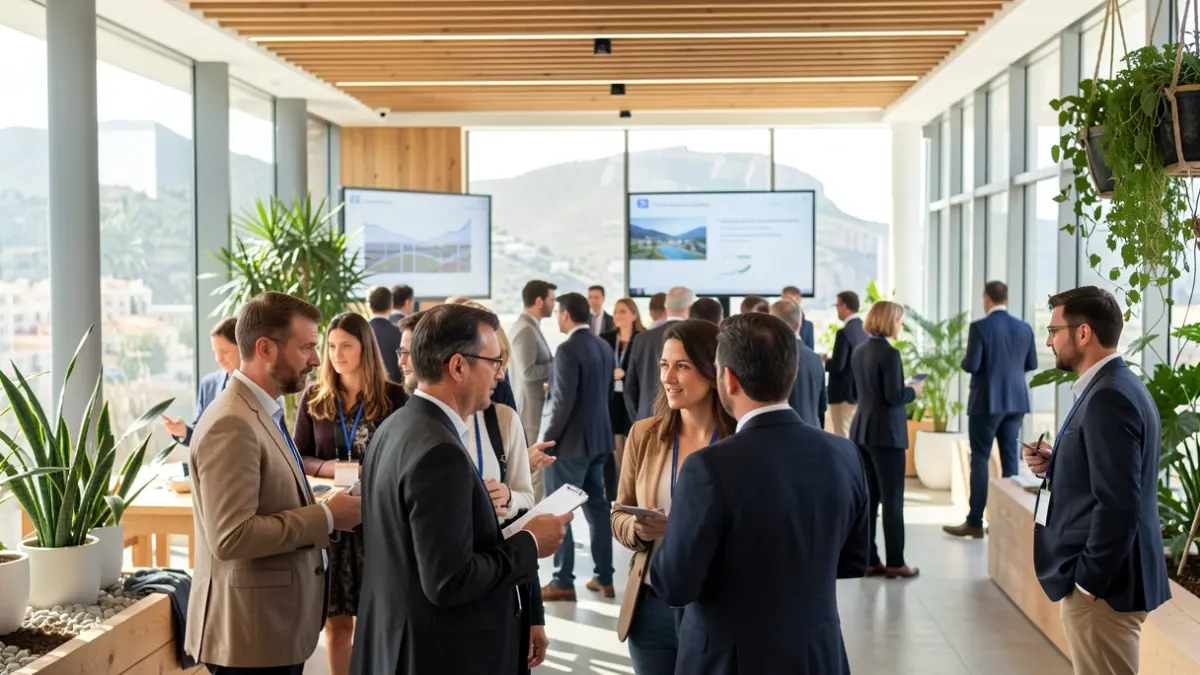
Increasing demographic pressure, climate emergency, and new social needs are driving a profound revision of the urban model. In this context, the City 360º summit, organized by the Santa Cruz de Tenerife City Council through its Santa Cruz Sostenible Foundation, with support from the Moeve Foundation, the Government of the Canary Islands, and the Tenerife Island Council, analyzed how to redesign cities to make them more sustainable, human, and resilient.
Eight specialists in urbanism, architecture, innovation, sustainability, and territorial planning shared their visions, agreeing on the need to reconnect people and territory. Urban regeneration was highlighted as a key concept, not just for solving problems but for improving quality of life and generating positive environmental impacts. The experience of Bilbao was cited, which after an industrial crisis, redefined its economic and urban model based on culture, public space renewal, and public-private collaboration, thanks to a shared vision and long-term planning.
From a practical standpoint, the Prat Nord project in El Prat de Llobregat was presented, emphasizing sustainability from a broad perspective including housing, mobility, social cohesion, and public space quality, integrating environmental, social, and economic criteria. The connection between nature and the city was another central theme, with the defense of natural ecosystems as inspiration for efficient urban solutions adapted to climate change, as presented by Melissa Sterry and Jenny Andersson. The importance of adaptation, balance, and efficient resource use was stressed, as well as the interdependence of economy, society, and nature.
The social dimension was also a protagonist. Emphasis was placed on strengthening citizen participation and creating dialogue spaces to build inclusive cities. Urban regeneration is also conceived through community empowerment. Participatory workshops were held on sustainable mobility, innovation, climate adaptation, and green infrastructure development, aiming to enhance natural spaces and improve urban resilience.
Waldek Olbryk addressed the daily experience, advocating for more accessible and healthy cities where technological transformation improves quality of life. He presented examples of industrial area recovery in Poland and the application of natural processes to complex urban issues. The summit concluded with the shared idea that cities must accelerate their transformation, integrating innovation, sustainability, nature, and citizen participation to face future challenges.