Fernando García Pérez, the current parish priest of Arguineguín, reflects on the welcoming capacity of this coastal town in Mogán, even after the 2020 migratory crisis. Although that episode put the town in the spotlight, García assures that coexistence among neighbors has not been diminished.
The priest describes Arguineguín as a community "open to everything that arrives," where a great diversity of races, languages, and conditions is observed. "It's beautiful to see so much capacity for welcome," he states, defining the town as "cosmopolitan" thanks to the mix of Canarians, Africans, Latin Americans, and Europeans.
García believes that the visit of Pope Leo XIV to Arguineguín is due not only to the situation experienced but also because the town has continued to welcome people naturally, becoming an example of a "crossroads of cultures, a crossroads of hearts, a crossroads of lives."
During his brief visit, the Holy Father will feel the welcome of approximately 2,000 people, 75% of whom are migrants, for whom the Canarian ecclesial community demands dignity. The organized event is designed "by and for the people," and the Pope will hear testimonies about the migratory reality.
In the parish led by García, the group "Acogida Digna" (Dignified Welcome) operates, under the migration pastoral care, offering support to facilitate the integration of newcomers. "People keep arriving," notes the priest, indicating that assistance is constant.
The priest emphasizes that in Arguineguín, "we look at people," offering support to both those who share the faith and those who do not, even if it presents a challenge. As an example, he officiated the funeral of a Syrian-Orthodox person due to the scarcity of Orthodox priests on the island.
Fernando García, originally from El Tablero (San Bartolomé de Tirajana), returns to Arguineguín 24 years after his internships. Ordained in 2008, his pastoral work has taken him through various parishes in Gran Canaria and Fuerteventura before settling in Mogán in 2024. His work covers the entire municipality and other churches.
At 48 years old, García hopes the Pope's visit will renew the attitude of Christians and serve as an incentive for the "fraternization" that the Holy Father seeks. He perceives "joy, excitement, and nervousness" among his neighbors, with 105 people signed up to attend the mass at the Gran Canaria Stadium.
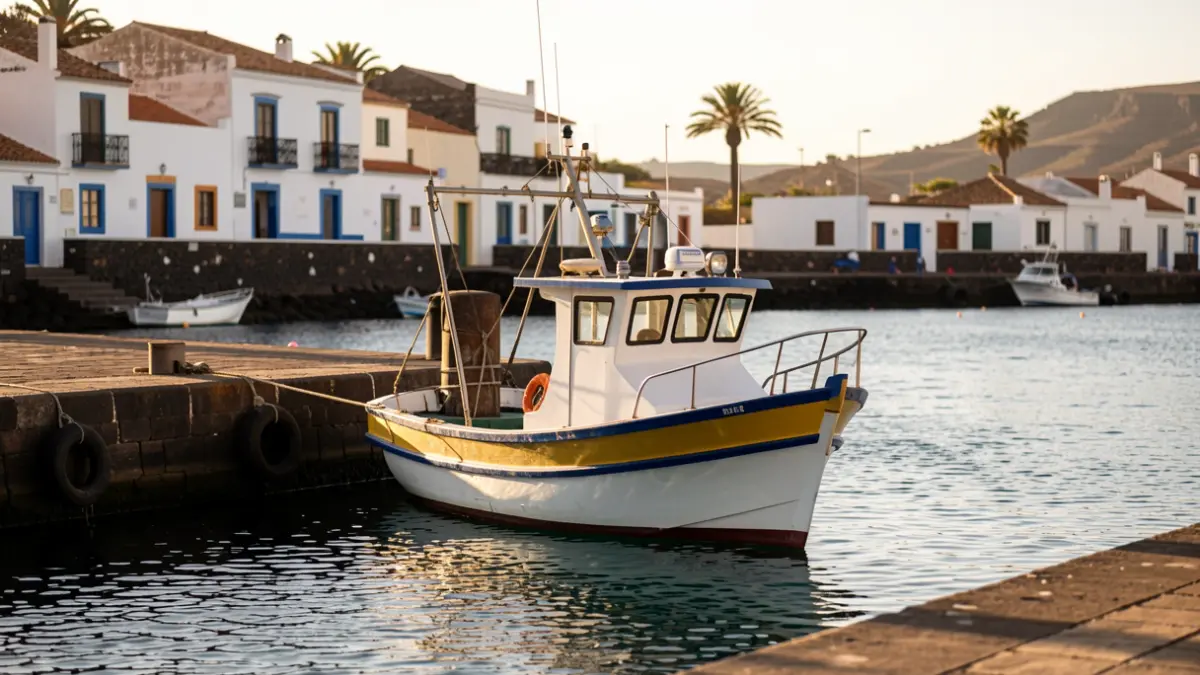
Alongside the statue of Our Lady of Mount Carmel of the fishermen, which suffered a theft, the Pope will lay a floral offering. García compares the resilience of the statue, despite being damaged, to that of many wounded Christians who continue forward.
The priest recalls experiencing the migratory crisis in Fuerteventura "with great sorrow, great interest, and great expectation," especially after the arrival of the first boat to the Canary Islands in 1994.