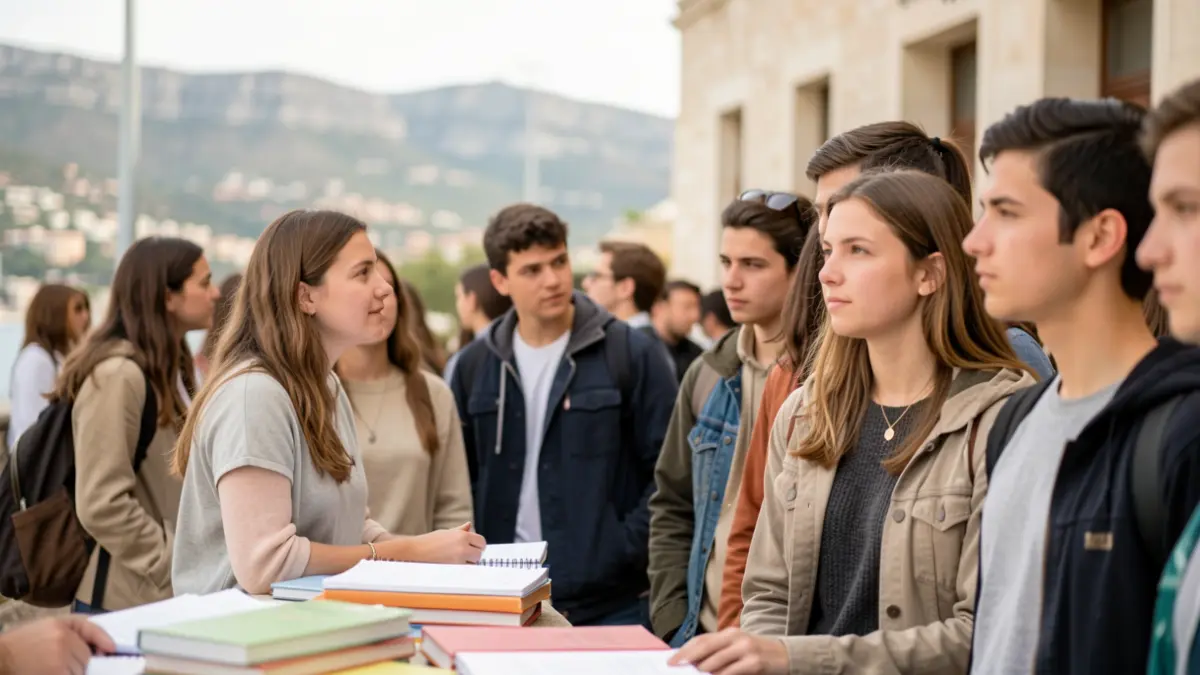
Among the initiatives are the creation of a stable funding framework for public universities, the development of university residences, and an acceleration in scholarship grants. These proposals aim to address the difficulties faced by young Canarians in areas such as education, housing, and emancipation.
The president of the Socialist Group, Nira Fierro, stated during the presentation that the regional government has failed to meet its commitment to allocate 5% of the Canarian GDP to educational investment. Fierro described the legislature as marked by 'discouragement' within the educational community, highlighting issues in the expansion of public education from 0 to 3 years, the needs of students with specific educational support (NEAE), university funding, and the execution of European funds.
For his part, the Secretary General of Juventudes Socialistas de Canarias, Borja Durán, explained that the measures address problems such as scholarship payment delays, the situation of special education, and the return of European university funds. He also called for a reduction in student-to-teacher ratios, improvements in working conditions for teachers, and a boost to early childhood education, criticizing that the enrollment rate for the 0-3 age group in the Canary Islands is below the national average.
The socialist deputy for Lanzarote, Alicia Pérez, added that difficulties in accessing housing are negatively impacting access to higher education, especially for students from non-capital islands, hindering emancipation and the possibility of pursuing university studies. She agreed on the need for greater funding and earlier scholarship disbursements to alleviate the financial burden on families.