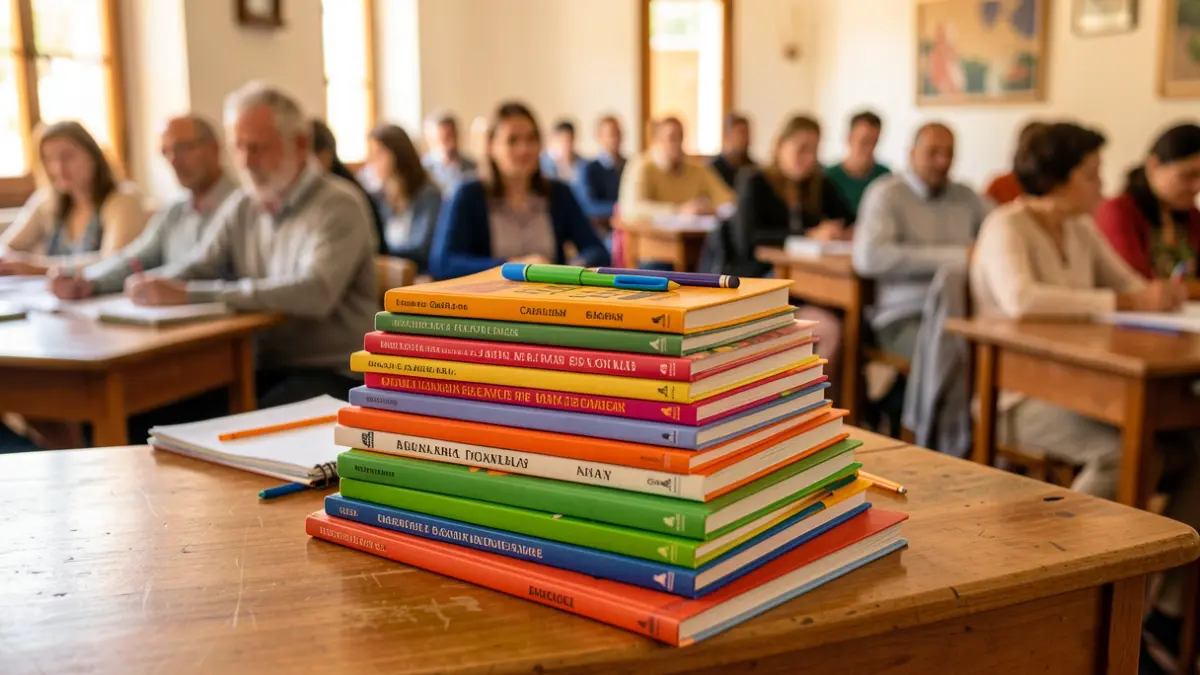
The next school year in the Canary Islands will see the progressive application of the free textbook and didactic material program, an initiative aimed at reducing the financial burden on families. The estimated saving per student ranges between €120 and €220. The main novelty of this program is its universal nature, extending to all students regardless of their income level.
Educational centers will be responsible for receiving funding directly and for selecting and purchasing didactic materials. Subsequently, they will inform families about which items they must purchase themselves. The program will initially launch in 1st, 2nd, and 3rd grade of Primary Education, 1st grade of ESO, and in basic and adapted Vocational Training. Full implementation across all compulsory education is planned for the 2029-30 academic year.
It is estimated that in its first year, the program will reach 70,000 students, a figure that will increase to 185,000 once its expansion is complete. This initiative will not replace other existing aid, such as the book loan program, which does consider family income (maximum threshold of €18,000 annually for families of two to four members).
The new initiative has an investment exceeding €11 million, largely funded by the Ministry's own resources. Centers have already approved the lists of materials to be acquired, which may include from technological material to reusable or consumable textbooks, especially in the early years of Primary Education. The idea is to create a book bank with a lifespan of four years.
Some family associations, such as FAPA Galdós in Gran Canaria, have expressed concerns. While they welcome the increase in aid, they warn that if the cost of books rises, the real benefit for family budgets could be minimal. They also point out that the Infant Education stage, which involves high expenses, is not included in the program.
The amount of aid per student varies by educational stage: €120 for 1st and 2nd grade of Primary, €150 for 3rd grade of Primary, €220 for 1st grade of ESO, and €120 for basic and adapted Vocational Training. FAPA Galdós considers these figures still insufficient and reiterates its demand for 5% of GDP to be allocated to education.
The Director General of Administration of Centers, David Crego, celebrates that the program will allow "to triple" the number of households reached. The president of FAPA Galdós, María Jesús Delgado, positively values the universal nature of the measure, defending the concept of "universal and free education."
Educational centers have been urged by the Ministry to make purchases from local bookstores to support local consumption. The logistics for having materials ready by September are underway, with payments expected from the Ministry during July and August. Centers consult prices and select materials through an application, which can include core subjects and languages.
Initially, some centers showed reluctance due to the perceived bureaucratic burden, but this perception changed after meetings with the Ministry, which simplified the process, eliminating the need for income assessment or consultation with the Tax Agency.