Adapting to the new European Packaging and Packaging Waste Regulation (PPWR) has become a priority for public administrations and the Canary business community. In this context, the Government of the Canary Islands and Ecoembes, the organization driving the transition towards a circular economy for packaging, held the “Canary Forum for Packaging Circularity” in Tenerife. This dialogue space is designed to anticipate the impact of the new regulatory framework and reinforce collaboration between administrations and companies in the transition to a circular economy.
This Forum arises in response to an express demand from the Canary business sector, supported by the Government, which was voiced in various meetings with business associations across the archipelago. Companies have emphasized the need for stable dialogue channels with the administration to address the challenges of complying with legal obligations, considering the unique characteristics of the Canary territory.
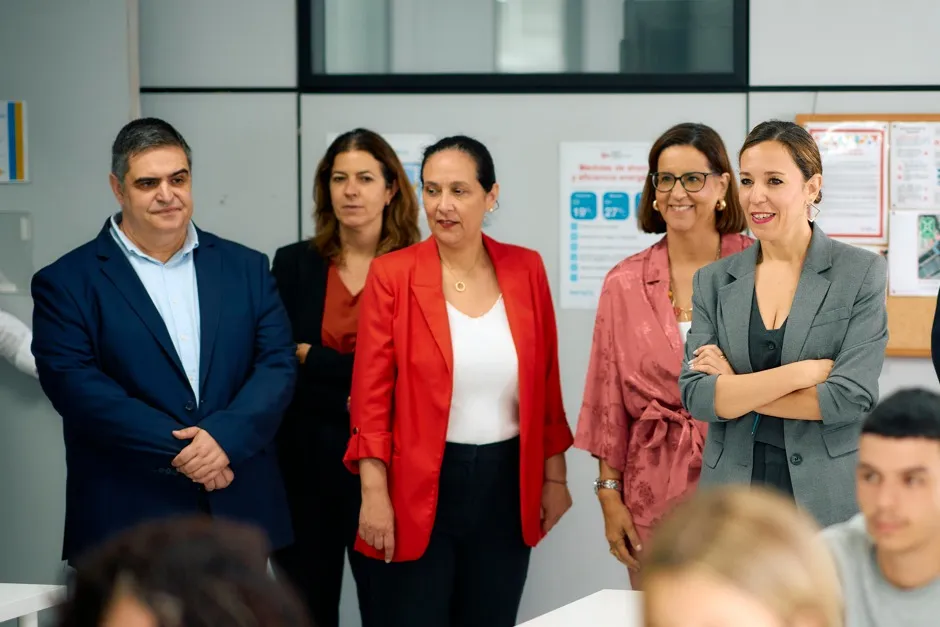
The event brought together institutional representatives, business associations, and leading companies from the packaging value chain in the Canary Islands. Participants included Manuel Domínguez, Vice President of the Canary Government and Minister of Economy, Industry, Trade, and Self-Employment; Mariano Hernández, Minister of Ecological Transition and Energy of the Government of the Canary Islands; Ángel Montañés, Director General of Environmental Quality; Rosa Trigo, CEO of Ecoembes, and various representatives from the archipelago's business sector.
Manuel Domínguez highlighted that “the objective is that no Canary company is left behind. This challenge is a strategic opportunity to modernize processes, gain efficiency, and innovate. The Canary Islands can play a differential role if it positions itself better in the markets and reinforces the value of its products. This entire process must be turned into a competitive advantage, and this forum has served to listen to the business sector, understand their needs, and build shared solutions. The commitment of the Government of the Canary Islands is firm and involves directing all our tools to facilitate an orderly, progressive, and viable adaptation to the new European regulation. An adaptation that allows compliance, but, above all, allows us to compete better”.
Mariano Hernández Zapata, Minister of Ecological Transition and Energy of the Government of the Canary Islands, emphasized that “the Canary Islands face the challenge of the circular economy from a unique reality, marked by our condition as an ultra-peripheral and fragmented region, making it essential to advance through collaboration between administrations and the business sector.” He also stressed that “the transition to more sustainable models must involve supporting our companies, creating spaces for dialogue, and providing tools that turn this challenge into an opportunity for innovation, competitiveness, and development for the Canary Islands.”
Rosa Trigo, CEO of Ecoembes, pointed out that “the new European regulatory framework presents significant challenges, but also opportunities to improve the competitiveness of the Canary business sector if approached collaboratively. We want to thank the Government of the Canary Islands for its leadership and its firm commitment to creating dialogue spaces like this Forum, as well as the joint work of public administrations, business associations, and companies that are driving real solutions from the Canary Islands to move towards a more circular, competitive, and territory-adapted model.”
The forum addressed topics of interest such as the challenges of the new regulatory framework, presented by Begoña de Benito, Director of External Relations at Ecoembes. Additionally, Ángel Montañés, Director General of Environmental Quality of the Canary government, outlined the measures being implemented with Ecoembes to promote separate collection of packaging.
It was highlighted that the transition to a circular economy for packaging is a shared challenge, which cannot fall solely on companies or administrations. It was agreed that meeting European objectives requires real co-responsibility, alignment of priorities, and effective collaboration among all stakeholders, especially in territories with unique characteristics like the Canary Islands.
The new European regulatory framework should be understood as a starting point, not a barrier to competitiveness, where compliance with the norm is synonymous with better competition and where the circular economy of packaging is seen as a collective project. Attendees agreed on the need to strengthen technical support for companies, reduce regulatory uncertainty, simplify administrative burdens, increase financial support for investments in redesign and adaptation to the norm, as well as promote support programs for SMEs and create a stable space for work and accompaniment based on public-private collaboration.
It was also emphasized that sustainability has consolidated as a strategic leadership decision, transcending the technical sphere and requiring integration at the highest management level, incorporating circularity, competitiveness, and innovation into business decision-making.
Finally, the potential of the Canary Islands as a benchmark territory for developing adapted circularity models was highlighted, capable of anticipating shared challenges with other territories and driving collaborative solutions that consider the archipelago's logistical and structural specificities.
Associations such as ASINCA, ASUICAN, ASEDAS, CEOE Tenerife, and ACANEC, along with companies like DINOSOL, SPAR, JTI, Dos Santos, Schreiber Canarias, Libbys, La Gaviota, and Tirma, participated in this “Canary Forum for Packaging Circularity,” which aims to become a reference space for building trust and advancing shared solutions that strengthen the circular economy in the Canary Islands and its positioning in the face of European challenges.
Ecoembes is an organization that promotes the transition towards a circular economy for packaging, supporting companies and society as a whole. Its purpose is to work towards a future without waste, promoting reduction, reuse, and recycling, and leaving a positive impact on society and the environment. Since 1997, Ecoembes has assisted companies in complying with Extended Producer Responsibility (EPR) for household packaging and, since 2024, also for commercial and industrial packaging, developing a model that operates throughout the territory in collaboration with public administration and society.