Traditional routes used for livestock transit, known as drovers' roads, have allowed centuries-old paths to be preserved in the Canary Islands, as in other parts of the world. In the archipelago, livestock farming, especially transhumance, has played a crucial role in the preservation of a trail network that, in the 19th century, was estimated at 357 public paths with a total length of 2,231 kilometers, according to data from the Official Gazette of the Province of Canarias from April 1868, cited in a doctoral thesis.
Since indigenous times, the need to move livestock between coastal areas and midlands, where permanent settlements were located, and high-altitude pastures, led to seasonal transhumance, particularly in northern La Palma. These same trails were used by shepherds in later periods. The current paths leading to the edge of the Caldera de Taburiente are the same as those from the aboriginal era, as evidenced by the remains of pastoral settlements used in spring and summer, as low winter temperatures made life in the peaks unfeasible.
A similar phenomenon occurred in Tenerife, where the southern and western regions were frequented by ancient inhabitants who ascended with their flocks to the Cañadas del Teide at the end of winter. These paths are dotted with numerous rock art sites. The pre-Hispanic trails have been integrated into the island's current network of footpaths.
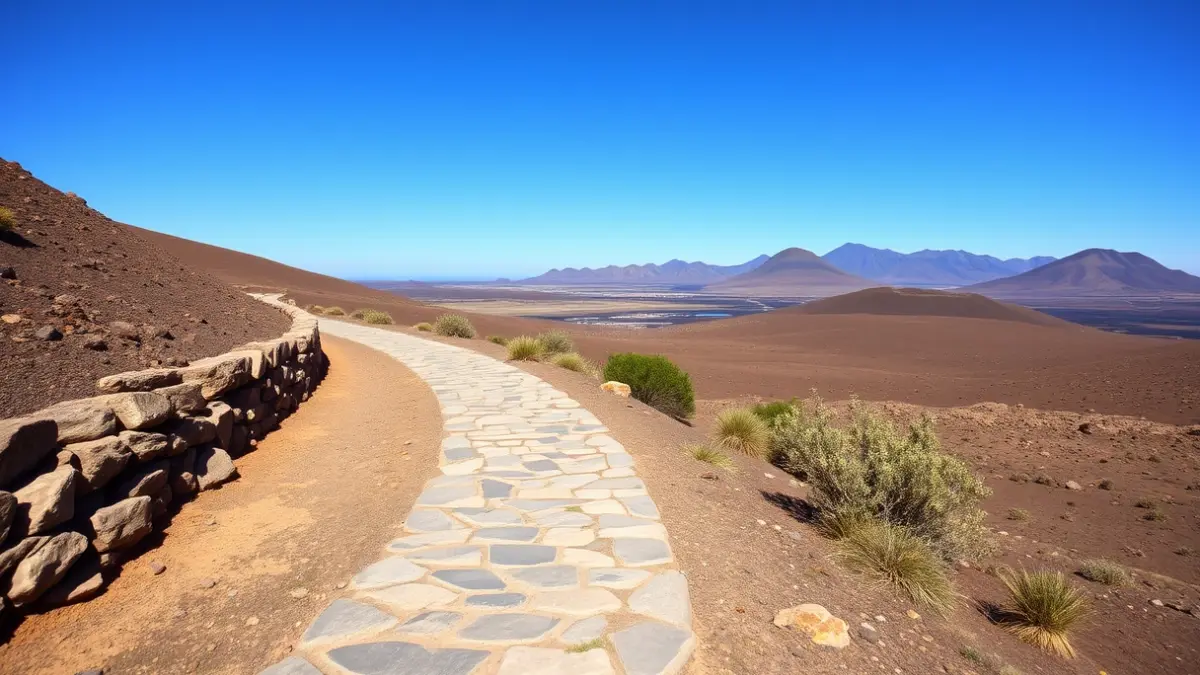
In Gran Canaria, the Paso de La Plata, a section of almost ten kilometers with 700 meters of paved bridle path, is considered an exceptional feat of trail engineering. Executed in the late 19th century, it revolutionized communications between the north and south of the island, shortening the transhumance route between Gáldar and Tunte. Today, the Transgrancanaria ultramarathon runs along this historic route.
In El Hierro, the traditional Bajada de la Virgen de los Reyes, one of the most emblematic pilgrimages in the Canary Islands, takes place along rural paths directly linked to transhumant pastoralism. These paths, which lead to the summit from the north and south, were used by shepherds and their families to move to La Dehesa, a communal territory where the patron saint's sanctuary is located, seeking relief and refuge in summer.
La Gomera stands out as an international reference in hiking. Its paths, originated by the first settlers, have been adapted for European tourism. Archaeological and anthropological research suggests a link between indigenous settlements and traditional paths connecting key points on the island, many of which overlap with pre-Hispanic trails. There is a proposal to design a circular route connecting historic hamlets with the Garajonay National Park, utilizing these ancient routes.
Fuerteventura, with the largest goat herd in the archipelago during pre-Hispanic times and currently, also possesses a network of paths linked to livestock farming. The seasonal mobility of shepherds was fundamental for the sustainability of the aboriginal livestock model. After the conquest, conflicts between ranchers and farmers over land use were constant, with regulations on flock transit to prevent damage to agriculture. A unique feature of Fuerteventura is the presence of female shepherds.
Finally, Lanzarote, despite its smaller size and the trails buried by the Timanfaya eruption, preserves a significant number of paths, mainly in its central plains. These drovers' roads, with gentle slopes and low maintenance needs, were used not only by goats but also by dromedaries.
Research highlights that the archipelago's trail heritage was intrinsically linked to internal trade and transhumance, now recognized as a cultural itinerary. Currently, hiking is the main guarantee for its survival, making the conservation and protection of these paths essential to preserve an outstanding legacy of the History of the Canary Islands.