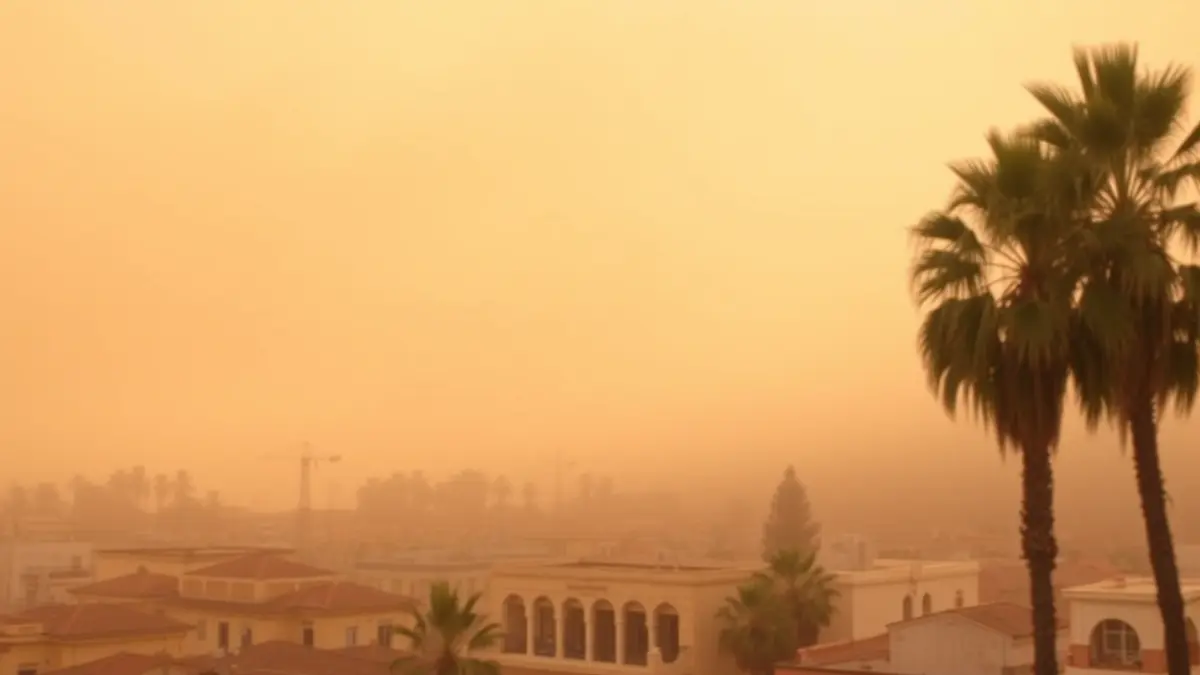
Health authorities have been emphatic regarding the weather forecast, emphasizing the importance of keeping windows closed as a preventive measure. The presence of suspended dust, known as calima, has activated recommendation protocols to prevent an overload in hospital emergency services.
Saharan dust is not merely an aesthetic phenomenon; its microparticles can penetrate deep into the respiratory system. The Ministry of Health warns that high concentrations of these particles can cause symptoms that, although initially mild—such as nasal irritation, itchy eyes, or coughing—can lead to serious complications.
“"Elevated concentrations of these particles can trigger symptoms that, although initially appearing mild—such as nasal irritation, itchy eyes, or coughing—can lead to severe complications."
For individuals with pre-existing conditions, calima represents a critical risk, potentially worsening heart diseases or triggering asthma attacks. The health impact is not immediate, as an increase in emergency care can be observed up to five days after the dust has cleared from the Canarian sky.
The most vulnerable groups, including children, the elderly, pregnant women, patients with respiratory or heart conditions, smokers, and outdoor workers, must take extra precautions. The recommendation to keep homes isolated aims to create a cleaner indoor environment, reducing the likelihood of respiratory infections.
Among the essential guidelines, the General Directorate of Public Health insists on closing doors and windows, sealing gaps with damp cloths, avoiding outdoor physical exercise, staying hydrated, and cleaning the home with wet cloths to prevent particles from becoming airborne again. In case of worsening symptoms such as difficulty breathing or chest pain, it is recommended to call 1-1-2.