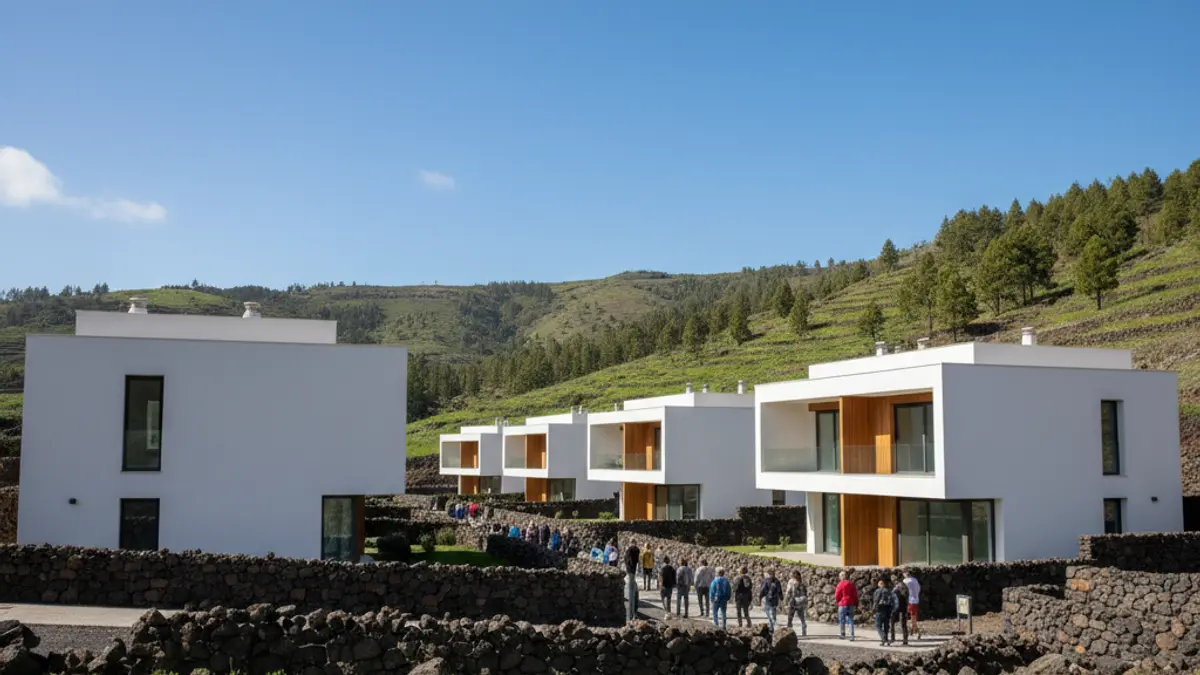
The development, representing the first public housing initiative in Valleseco in 30 years, remains unoccupied despite high demand. The Cabildo de Gran Canaria attributes the situation to the necessary procedures for transferring management from the Gran Canaria Housing Consortium to the Canarian Housing Institute (Icavi) of the Government of the Canary Islands, a prerequisite for tenant allocation.
In November 2022, the Cabildo formalized the purchase of a half-built property with 16 homes from a company, investing 1.75 million euros. The operation included the acquisition and completion of works on a project that a private developer had left unfinished in 2008 due to economic problems. These homes, originally conceived for the free market, were converted into Official Protection Housing (VPO) for limited-income families.
Although construction is complete, the homes remain vacant. The insular council has acknowledged encountering bureaucratic difficulties, including an error in the property registry. The Gran Canaria Housing Consortium approved the transfer a month ago and, after successfully completing the public exhibition period without objections, will send the resolution to Icavi for the drafting of the mandatory agreement between both institutions before the Government of the Canary Islands can designate the beneficiaries.
Valleseco faces high housing demand, with 80 applicants, making it one of the municipalities with the greatest need relative to its population in the Canary Islands. This is compounded by an aging population, with a quarter of residents at retirement age, largely due to the emigration of young people seeking employment opportunities. Each of the homes, acquired in the previous legislature, measures 63 square meters, distributed into two bedrooms, a kitchen, a bathroom, a utility room, a garage, and a storage room.