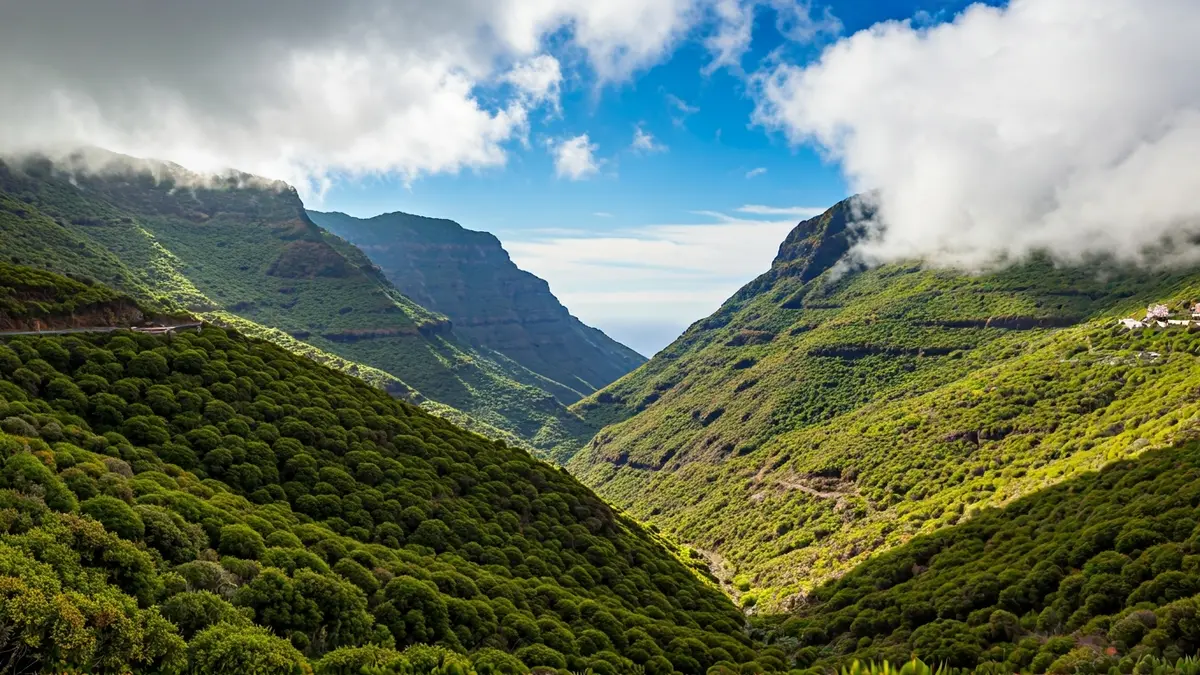
Although its name evokes an arid landscape, Valleseco, situated in northern Gran Canaria, is actually one of the municipalities with the highest annual rainfall. This peculiarity has led many to question the origin of its toponym, which dates back to the 16th century, following the Castilian conquest of the island.
The municipality, the youngest on the island, was established in 1842 after separating from Teror. In its early years, it was also documented as Verde Seco (Dry Green). Currently, it has a population of just under 4,000 inhabitants, making it one of the least populated on Gran Canaria.
“"The origin of the toponym Valleseco is related to its location between the valleys of Madrelagua and Valsendero, once rich in water. The population center, settled on volcanic terrain shaped by the ancient cone of La Calderilla, had fewer water resources than its neighbors. It was, in a way, the poor brother of the three."
Another hypothesis, proposed by Francisco J. Estévez, suggests that the name arose because, at the time of its naming, it was raining torrentially in the adjacent valleys, but not in the central one. Both theories agree that the hydrological difference from its surroundings was key to its denomination.
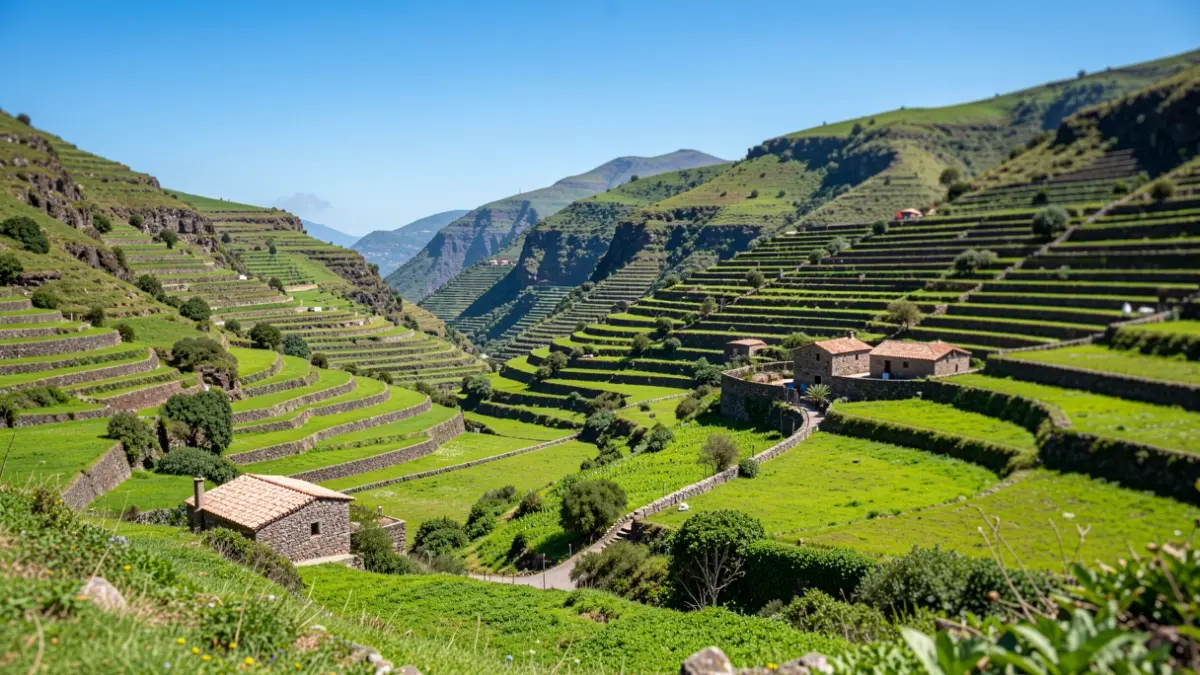
At an altitude of approximately 1,000 meters, Valleseco captures moisture from the trade winds as they ascend the northern slopes of the island. This phenomenon causes the air to cool and release its moisture in the form of rain, horizontal fog, and the characteristic 'donkey's belly' cloud cover, which nourishes the municipality's dense vegetation. Its average rainfall exceeds 900 millimeters annually, well above the island's average of 300 to 400 mm.
Storm Therese, which affected the islands in 2026, once again highlighted this paradox, with Valleseco accumulating 166 liters per square meter in a single episode, reinforcing its reputation as the wettest place in the midlands of Gran Canaria.