The rise in waste and refuse production across Lanzarote's seven municipalities is attributed to a strong tourist presence, population growth, and increased economic activity. This upward trend was observed in both waste collected by municipal services and materials deposited in recycling containers.
Regarding household waste, the total amount reached 95,582.5 tons, a figure significantly higher than the records from 2022, 2023, and 2024, when 90,789, 93,013.4, and 93,322.4 tons were collected, respectively. The difference is even more pronounced when compared to 2020 and 2021, periods affected by the pandemic.
By municipality, Arrecife remained the primary generator of urban waste, with over 24,382.1 tons in 2025. The tourist municipalities of Yaiza and Tías followed, with Yaiza accumulating nearly 21,090.9 tons and Tías recording 19,905.3 tons. Teguise reached 15,531.5 tons, being one of the few municipalities where waste generation decreased. San Bartolomé ended the year with 8,524.2 tons, while Haría and Tinajo registered 3,098.35 and 3,049.6 tons, respectively.
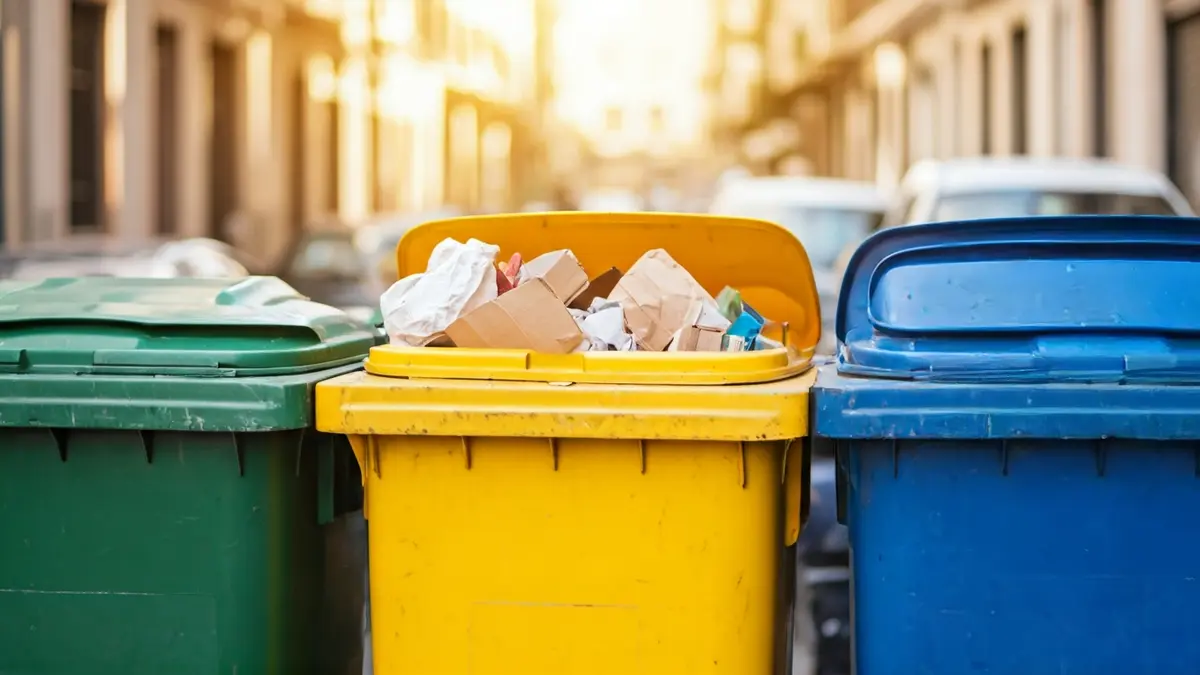
In terms of recycling, 14,483.7 tons of material were collected, representing a notable improvement over previous years and setting historical figures for Lanzarote and La Graciosa. Glass collection in green containers exceeded 7,750.1 tons, establishing a new annual record. Yellow containers for packaging reached 2,632.3 tons, also an annual record. However, the recovery of paper and cardboard in blue containers, with nearly 4,101.3 tons, did not surpass previous years' figures.