The 4th University of Summer of Fuerteventura concluded after five days dedicated to analyzing one of the major challenges of current society: how to distinguish reliable information in an ecosystem marked by fake news, artificial intelligence, algorithms, polarization, and the loss of trust in traditional communication channels.
The event gathered journalists, researchers, philosophers, communicators, political strategists, and verification specialists, who addressed from different perspectives the impact of disinformation on contemporary democracies and the need to strengthen critical thinking and media literacy among citizens.
During the program, issues such as trust in the media, the role of digital platforms in public discourse, the application of artificial intelligence to content verification, climate disinformation, political communication, and the necessary tools for a more conscious and responsible consumption of information were discussed.
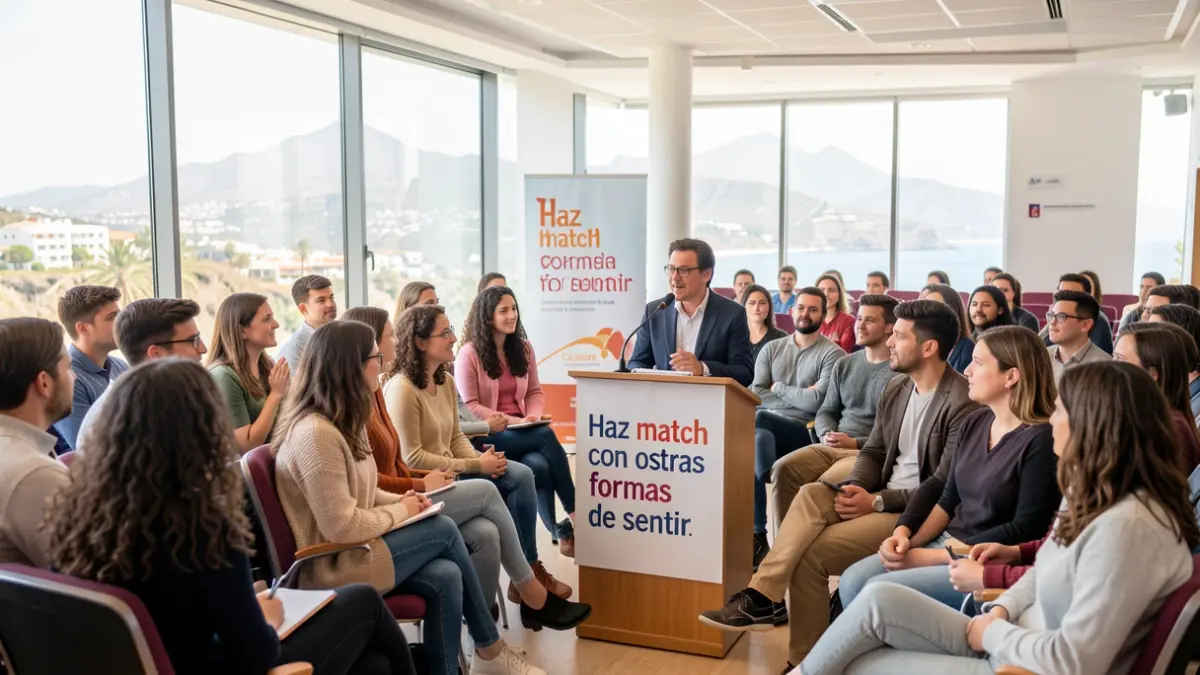
The 2026 edition, held from June 22 to 26 at the Insular Youth Center of Puerto del Rosario and with a decentralized session in Gran Tarajal, reached full capacity before its inauguration.
Disinformation is not just a problem of fake news, but a phenomenon that affects democracy, coexistence, science, politics, media, social networks, and citizen trust.
The various sessions agreed that the response cannot be limited to debunking fake news in isolation. It also requires education, critical thinking, media literacy, technological transparency, professional verification, and a citizenry capable of identifying how narratives that influence their understanding of reality are constructed and disseminated.
The initiative, promoted by the Cabildo of Fuerteventura through the Department of Education and Youth, featured this year the joint participation of the two public universities of the Canary Islands, the University of Las Palmas de Gran Canaria and the University of La Laguna. Fundación DISA, Fundación MAPFRE Canarias, and RTVC also collaborated.
“"Education is a tool for social transformation. Investing in training is investing in a more innovative island capable of facing the challenges of the 21st century."
“"informational manipulation and fake news"
The first day opened the program with a reflection on the value of information in democratic societies. The impact of disinformation on democracies and the need to precisely differentiate concepts like misinformation or disinformation were addressed, defending the role of journalism and media as essential tools for building informed societies.
A political strategist and former head of the Spanish Government's Cabinet presented a reading of the social, cultural, and emotional changes that contemporary democracies are undergoing, suggesting that future political battles will be fought not only over programs or figures but also over the ability to interpret citizen expectations, uncertainties, and emotions.
“"Perhaps we used to move between truth and lies; now we move more between truth and oblivion."
A professor of Interactive Digital Communication analyzed the spread of disinformation and fake news in digital ecosystems, emphasizing the importance of strengthening media literacy so that citizens can navigate with a critical spirit in an increasingly complex information environment.
In the afternoon, a conference focused on political communication, the construction of institutional narratives, the use of interpretive frameworks, and the importance of symbols, narratives, and social trust in the exercise of public power was offered.
The second day delved into the impact of technology on democracy, public discourse, and how citizens inform themselves and participate. It was highlighted that democracy is no longer played out solely within institutions, but also within algorithms, platforms, and data.
The growing weight of major technology platforms in shaping public debate and collective decision-making processes was analyzed, warning about how massive data management and algorithmic systems alter traditional balances of political and social power.
Public discourse in digital times and the role of media and social networks in political coexistence were addressed, focusing on polarization, the crisis of media intermediation, and the new flows of disinformation circulating in digital environments.
The need to reinforce the classic values of the profession—verification, source checking, and informational rigor—was defended, given the difficulty of competing with the speed at which disinformation spreads, driven by algorithms.
Disinformation was presented as a structural phenomenon, analyzing how certain manipulated narratives can influence political, social, and cultural processes.
In the afternoon, a workshop dedicated to climate change disinformation was held, offering tools to identify manipulation strategies, understand denialist discourse, and strengthen media and scientific literacy.
The third day focused on informational trust, advocating for the reinforcement of verification mechanisms and professional criteria in newsrooms in the face of the rapid dissemination of content and the emergence of new technological tools.
“"credibility as one of journalism's greatest challenges."
It was analyzed how certain denialist discourses and baseless theories find new channels of diffusion in the digital environment and influence the social perception of the climate emergency.
A reflection was posed on the influence of major technology companies on public discourse and the need for greater transparency regarding the mechanisms that determine the information we consume.
The afternoon concluded with a roundtable discussion on female leadership in the media, where participants shared experiences on women's roles in media management, persistent obstacles, and the need to incorporate diverse perspectives in editorial decision-making spaces.
The fourth day addressed the fundamental question: why do we believe fake news and what tools help combat it. Reflections were made on behaviors that make society more vulnerable to manipulation and disinformation, from the weakening of social bonds to the loss of participation spaces and the need to strengthen critical thinking.
Artificial intelligence reappeared as both a tool and a challenge, demonstrating how these tools can assist journalism in detecting disinformation campaigns, verifying content, and strengthening data fact-checking.
It was analyzed how fake news has ceased to be an isolated phenomenon and has integrated into the daily information ecosystem, conditioning the perception of reality and public discourse.
Reflections were made on the challenges faced by newsrooms under pressure from speed, social media, technology, and the need to continue offering rigorous information.
In the afternoon, the event moved to Gran Tarajal for the panel "Debunking Fake News, Changing the Narrative," which addressed how certain narratives fuel prejudices, stereotypes, and hate speech affecting vulnerable groups and social debates. The panel advocated for more responsible, inclusive communication committed to informational rigor as a tool to combat disinformation and strengthen democratic coexistence.
The final day emphasized media education as an essential tool for citizens to identify misleading content, understand how digital ecosystems function, and consume information more consciously and responsibly.
This session concluded an edition that brought together journalists, researchers, philosophers, communicators, political strategists, and verification specialists for five days to reflect on the challenges that disinformation poses to current democracies.
Throughout the program, issues such as trust in the media, the impact of algorithms on democracy, artificial intelligence, verification strategies, climate disinformation, political communication, and critical thinking were addressed.
The initiative once again received an excellent reception from the public and is consolidating itself as a reference space in the Canary Islands for debate, dissemination, and reflection on the major challenges of contemporary information.