This significant surge was discussed on the program Herrera en COPE Canarias, where dermatologist Marina Rodríguez detailed the causes of this phenomenon. The situation coincides with the launch of the third island-wide prevention campaign by the Cabildo de Tenerife, which will visit all 31 municipalities on the island to strengthen public awareness.
According to Dr. Rodríguez, one of the key reasons behind this increase is improved diagnosis. "Diagnosis has increased, screening methods in the general population have improved, and more people are visiting dermatologists," she explained. This trend includes preventive check-ups, facilitating the early detection of potential conditions.
Society's relationship with the sun has evolved positively, moving away from harmful practices such as using "Coca-Cola on the skin or oil and vinegar." The dermatologist highlights that "people are increasingly aware of sun damage," evidenced by the widespread use of SPF 30 or higher sunscreens, even among men and teenagers, demonstrating the effectiveness of awareness campaigns.
Despite this increased awareness, dangerous messages persist, especially on social media. Dr. Rodríguez criticized "hoaxes" promoted by influential figures, such as a recent case involving a footballer who advised against sunscreen, calling them "harmful" due to their public impact, particularly on young people.
“"Suddenly, teenagers would come in with their desperate father or mother: "Look, tell him something, because this footballer, who is his idol, is saying this outrageous thing, and now he says he won't wear sunscreen."
This phenomenon is particularly concerning because sunburns during childhood and adolescence significantly impact the future prognosis of skin cancer. Dr. Rodríguez emphasizes that intense and sporadic sunburns in early life, such as during holidays, are directly associated with melanoma, the most aggressive type of skin cancer, which "can kill you, because it can metastasize to the central nervous system, lungs, liver."
“"A single sunburn in childhood doubles the risk of skin cancer in adulthood."
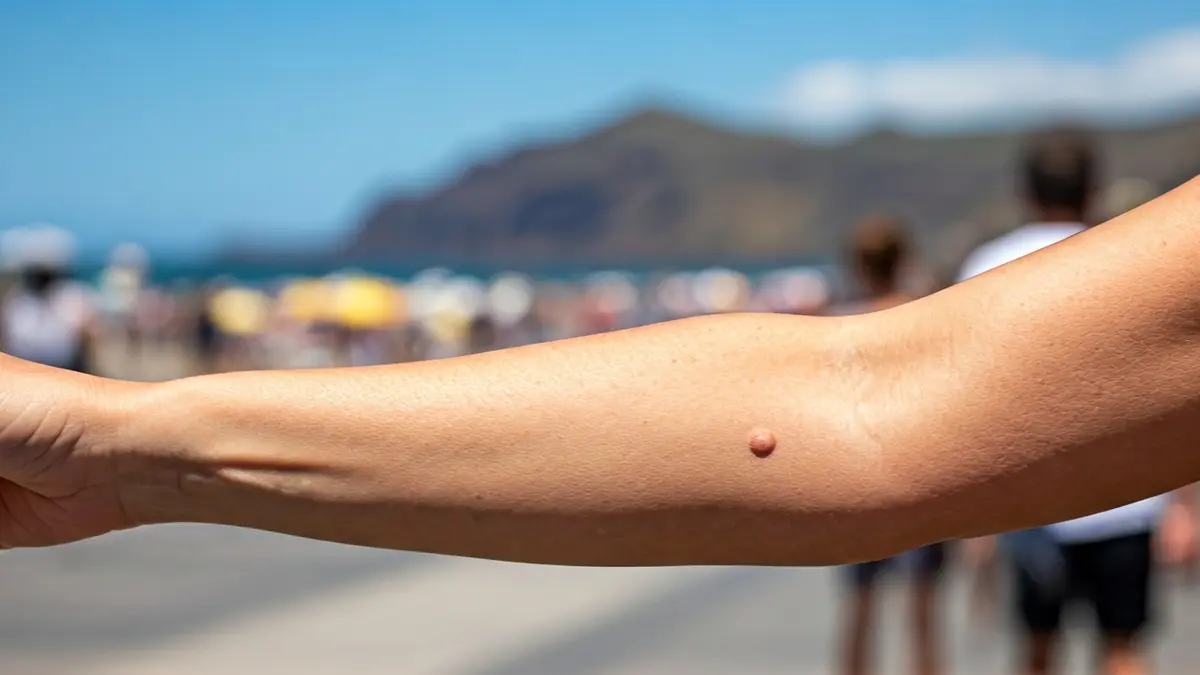
Early detection is crucial, and monthly self-examination is a fundamental tool. The dermatologist recommends the ABCDE rule to identify warning signs in moles or spots: A symmetry, irregular B orders, C olor (multiple shades), D iameter (greater than 6 mm), and E volution (changes, bleeding, or itching).
Should any of these signs appear, the recommendation is clear: "consult our dermatologist immediately, because in the case of melanoma, time is against us." Specialists affirm that early detection allows for the cure of up to 95% of patients, stressing that "in the Canary Islands, protecting your skin is not an option, it's a necessity," which implies daily use of protection, even on cloudy days, and avoiding exposure during peak radiation hours.