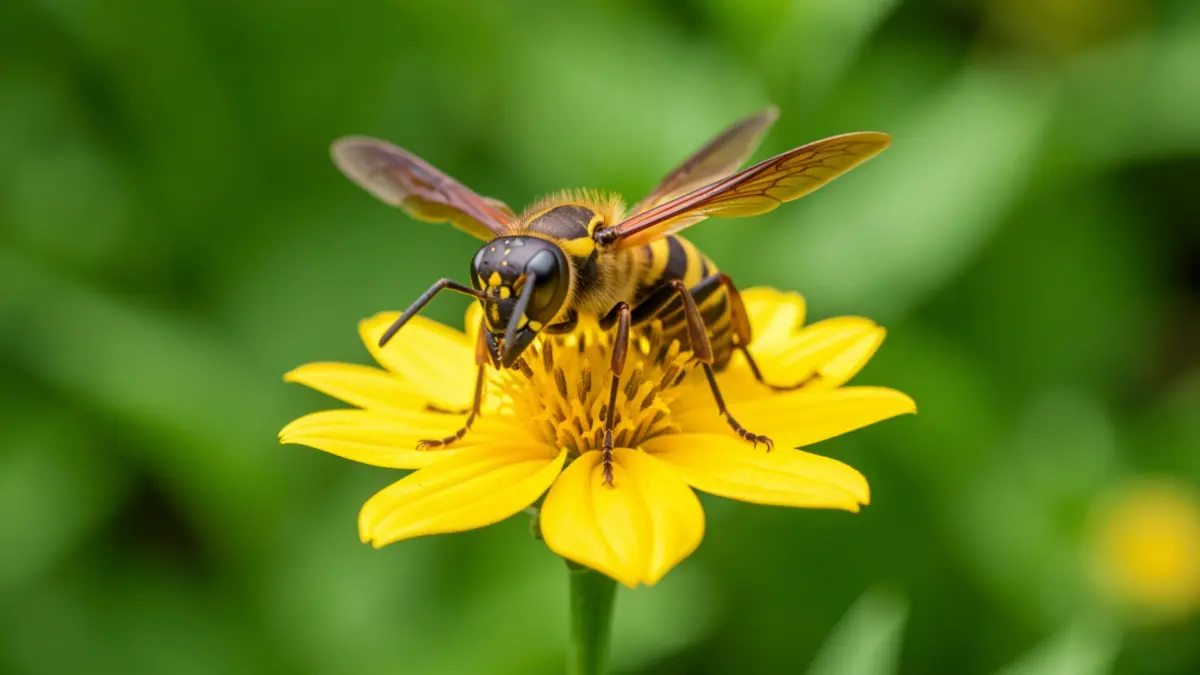
The presence of the Asian hornet (Vespa velutina), an invasive exotic species in Spain since 2010, has been confirmed for the first time in the Canary Islands. The finding of a nest with 93 specimens in Las Palmas de Gran Canaria has prompted the Government of the Canary Islands to implement an emergency protocol, including the installation of traps in urban areas, parks, and port zones to contain its spread.
Antonio Quesada, a beekeeper from Gran Canaria, has expressed his deep concern about the impact this insect could have on the local ecosystem and economy. Although its arrival was predictable due to intense maritime traffic, Quesada considers it an unprecedented threat.
“"It is a huge danger for beekeeping throughout the Canary Islands. It mainly feeds on bees."
The beekeeping sector faces a direct risk, with warnings of "massive colony losses" similar to those experienced on the mainland. Beyond the "economic disaster," Quesada highlights the danger to the islands' unique biodiversity, home to 146 bee species and numerous wild pollinators that could also become prey for the Asian hornet. "If, unfortunately, this species were to spread, it would wipe out all wild pollinators in the Canary Islands," he stated.
“"If, unfortunately, this species were to spread, it would wipe out all wild pollinators in the Canary Islands."
The Asian hornet also poses a risk to human health. Its larger size means it injects a greater amount of venom, and deaths have been recorded on the mainland due to its stings.
Quesada considers the hornet's arrival "inevitable" via maritime traffic and sees it as "fortunate" that the nest was detected in an urban area near the port of Gran Canaria, which facilitates containment. He trusts the "very strong institutional response" and the collaboration between the Government of the Canary Islands, the Cabildo, the City Council of Las Palmas, and the agricultural sector. However, he regrets the lack of direct contact with the sector from some authorities.
There is optimism about the possibility of eradicating the species before September, taking advantage of spring being a growth phase rather than a reproductive one for the colony. The main objective is to eliminate the queen, as escaped workers have a limited lifespan. If no new colonies appear by mid-July, this initial detection could be considered eradicated.
Public cooperation is requested: upon sighting, do not approach, take photos, geolocate, and call 112.