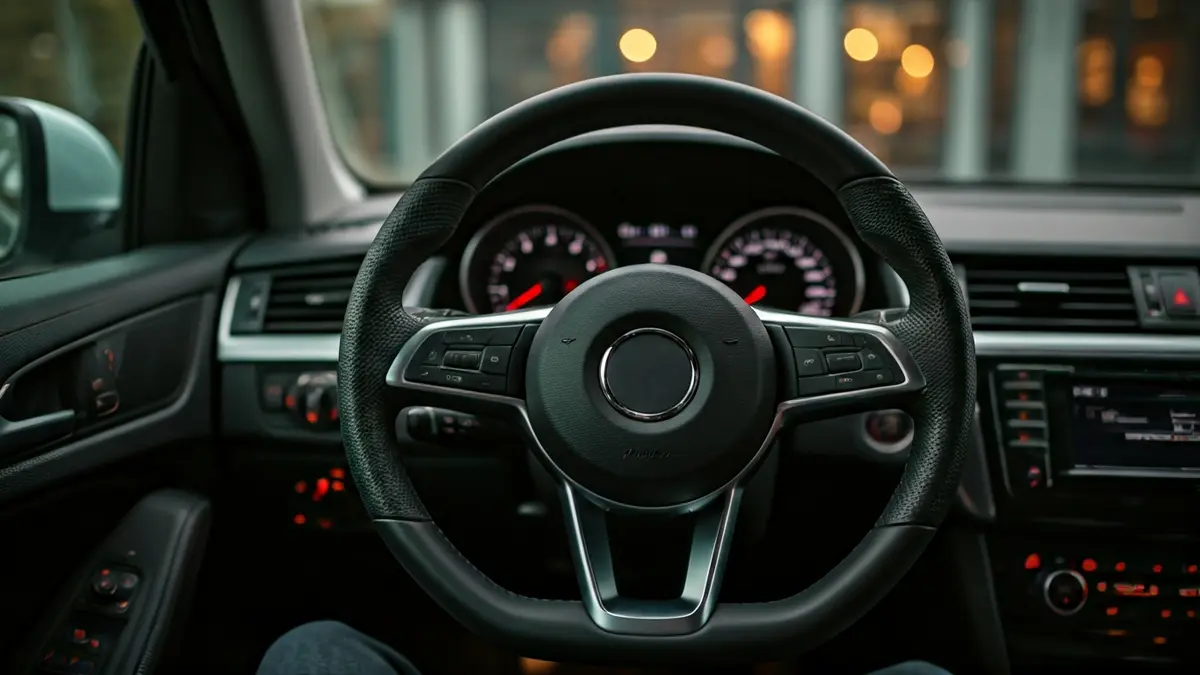
What was once an essential step towards independence, the driving license has transformed for Spanish youth into a process that is increasingly postponed. According to Javier Mateos, a teacher at Autoescuela Trébol, in an interview for 'Herrera en COPE Gran Canaria', the average age for obtaining a type B license has shifted from 18 to between 24 and 25 years old. This evolution is due to a combination of economic, social, and technological factors that are redefining urban mobility.
One of the main reasons for this change is the emergence of "micromobility." The rise of electric scooters and other personal mobility vehicles (PMVs), coupled with increasingly efficient public transport—and, in cases like Canarias, free—offers young people attractive alternatives for getting around without needing a car. Mateos notes that "public service offers a series of benefits that many young people, truthfully, find attractive and are delaying".
This is compounded by a challenging economic context. Job insecurity, high rental prices, and the general increase in the cost of living make obtaining a license and subsequently purchasing a vehicle seem like an "expense they don't want to incur so soon." Young people prefer to wait for greater economic stability to afford these costs. The financing model has also changed: "Previously, the costs of driving licenses were practically assumed by parents," explains the teacher, whereas today many depend on their own work or scholarships.
The car has ceased to be a priority and a symbol of independence, especially in large cities where driving and parking are increasingly difficult. This situation leads many to first opt for more affordable and practical permits for the urban environment, such as the moped (AM) license at 15 or the 125cc motorcycle (A1) license at 16.
“"The outlook for the type of student approaching driving schools is not encouraging."
Another key deterrent is the increasing difficulty of the driving test itself. Javier Mateos states that it is "much more" complicated to pass today than a few decades ago. The Dirección General de Tráfico (DGT) has significantly expanded the question bank for the theoretical test, making it less predictable. "It's impossible to know every single question that will come up," he asserts.
Furthermore, the content has been updated to include knowledge about technologies that did not exist before. Questions about advanced driver-assistance systems (ADAS) are now very frequent, requiring applicants to be familiar with concepts such as lane-keeping assist (LKA) and other technological aids in modern vehicles. This has led, in Mateos' words, to "the level of knowledge required having gone up a bit more."
Paradoxically, today's young people have more tools than ever to prepare, with online platforms and mobile applications allowing them to take tests and watch classes at any time. However, this independence does not always translate into better preparation. Although flexibility is an advantage, Mateos defends the value of in-person training: "When you are in front of a teacher, anything you don't understand immediately, you can ask."
Looking ahead, the forecast for a change in direction is not optimistic. Mateos believes that the trend will continue, and the average age could keep rising to 26 or 27, also driven by factors such as fuel price instability, which directly affects driving school costs.