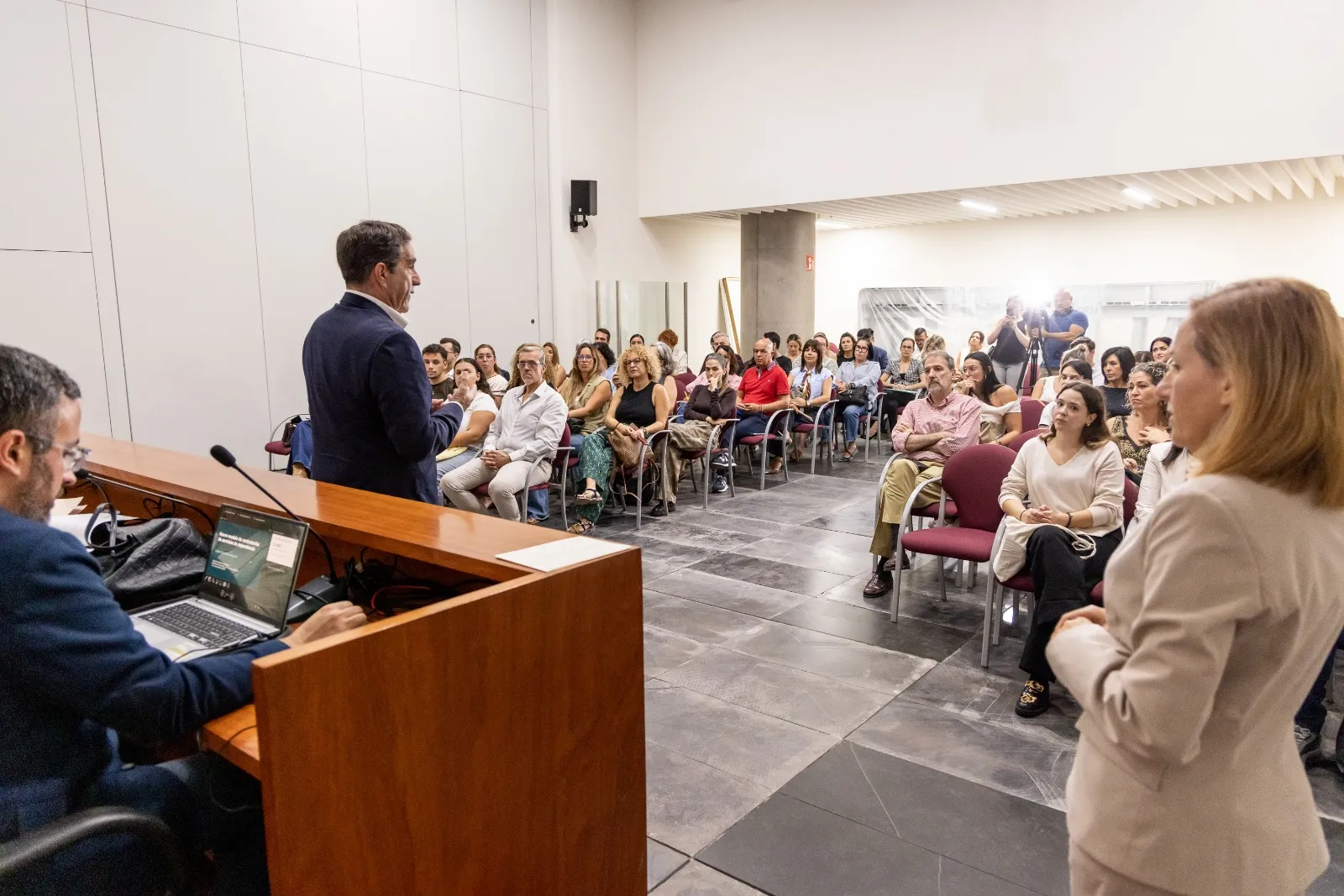
The new regulatory framework, presented in Gran Canaria, aims to ensure effective care in the usual environment through Home Help Services (SAD), Personal Autonomy Promotion (SPAP), and Day Centers. The Vice-Minister of Social Welfare, Francis Candil, and the Director General of Dependency, Concepción Ramírez, highlighted the technological and public management tool.
Francis Candil stated that the system "simplifies and streamlines the awarding of essential services." The main novelty is its open and flexible nature, allowing continuous incorporation of accredited providers during its initial two-year term (extendable for another two). The objective is for every dependent person to receive dignified, continuous, and high-quality care in their own environment, by caring for caregivers through better salary conditions and stability.
Concepción Ramírez explained that this model is a firm commitment to job quality and labor dignity, placing the well-being and remuneration of care professionals at the center of contract awards. The tender documents will include binding social clauses that positively value entities applying salary increases between 2.5% and 5%, as well as improvements in continuous staff training and leave coverage plans.
The work sessions, which will continue in Tenerife, aim to diagnose capacities and eliminate operational barriers. Currently, there are 520 accredited entities, 160 of which specialize in home help.
With quarterly monitoring of resolved PIAs and strict quality controls, the Government of the Canary Islands is taking a decisive step towards a fairer, more efficient, and socially responsible dependency care system.