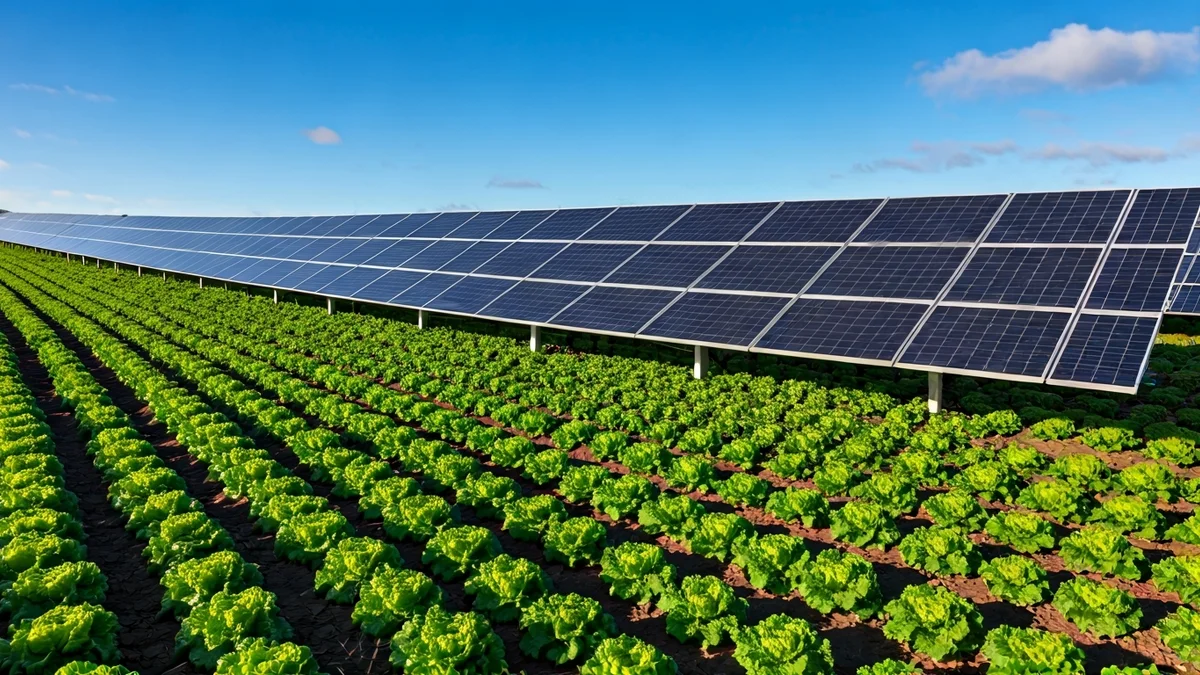
This initiative, led by the ministries of Agriculture, Livestock, Fisheries and Food Sovereignty and Ecological Transition and Energy, seeks to enable the cultivation of products such as tomatoes, papayas, or ornamental plants on the same land where photovoltaic panels are installed. Although it is a nascent discipline globally, with examples in Almería, the United Kingdom, and France, the Canary Islands aspire to be the first Spanish region with specific regulations.
“"If we manage to make it profitable for the farmer, we can also contribute our grain of sand to energy sovereignty."
To advance this project, the agrivoltaic board of the Canary Islands has been established, a forum bringing together key stakeholders from the energy and agricultural sectors, municipal organizations, and research centers. This space aims to resolve uncertainties regarding the implementation and efficiency of this practice, in order to develop a Regulation for Agrivoltaic Operations aimed at professional farmers.
A 2023 study by the University of Córdoba highlights benefits such as a 10% to 30% reduction in irrigation needs, climate protection for certain crops, and the creation of microclimates that moderate soil temperature. Crops like vines, cereals, and shade-tolerant vegetables (lettuce, spinach, root vegetables) would adapt well to these conditions.
In this initial phase, the Government of the Canary Islands is focusing on studying the viability of cultivating tomatoes and bananas under solar panels. The Minister of Ecological Transition, Julieta Schallenberg, explains that while some crops need a lot of radiation, others like strawberries already use methods to mitigate it. The primary objective, according to Eduardo García, is that food production per hectare does not decrease with the installation of panels.
“"The main objective is for the hectare to produce food, and the panels installed should not reduce that quantity. That is the fundamental basis."
The roadmap for the Government of the Canary Islands includes political, technical, and social meetings, scheduled for this April, to ensure a participatory process. The Deputy Minister emphasizes the importance of this initiative for an archipelago with limited territory and low food and energy sovereignty, making it vulnerable to geopolitical situations.
Additionally, the aim is to incentivize the cultivation of currently unproductive lands by offering additional income to farmers. Although the sector has shown a positive reception, there is caution pending the final articulation of the regulations. Pilot projects are already underway in Tenerife (orchid farm) and Gran Canaria (ornamental plants), and initiatives have been funded with Next Generation funds to lay the groundwork for the regulation.