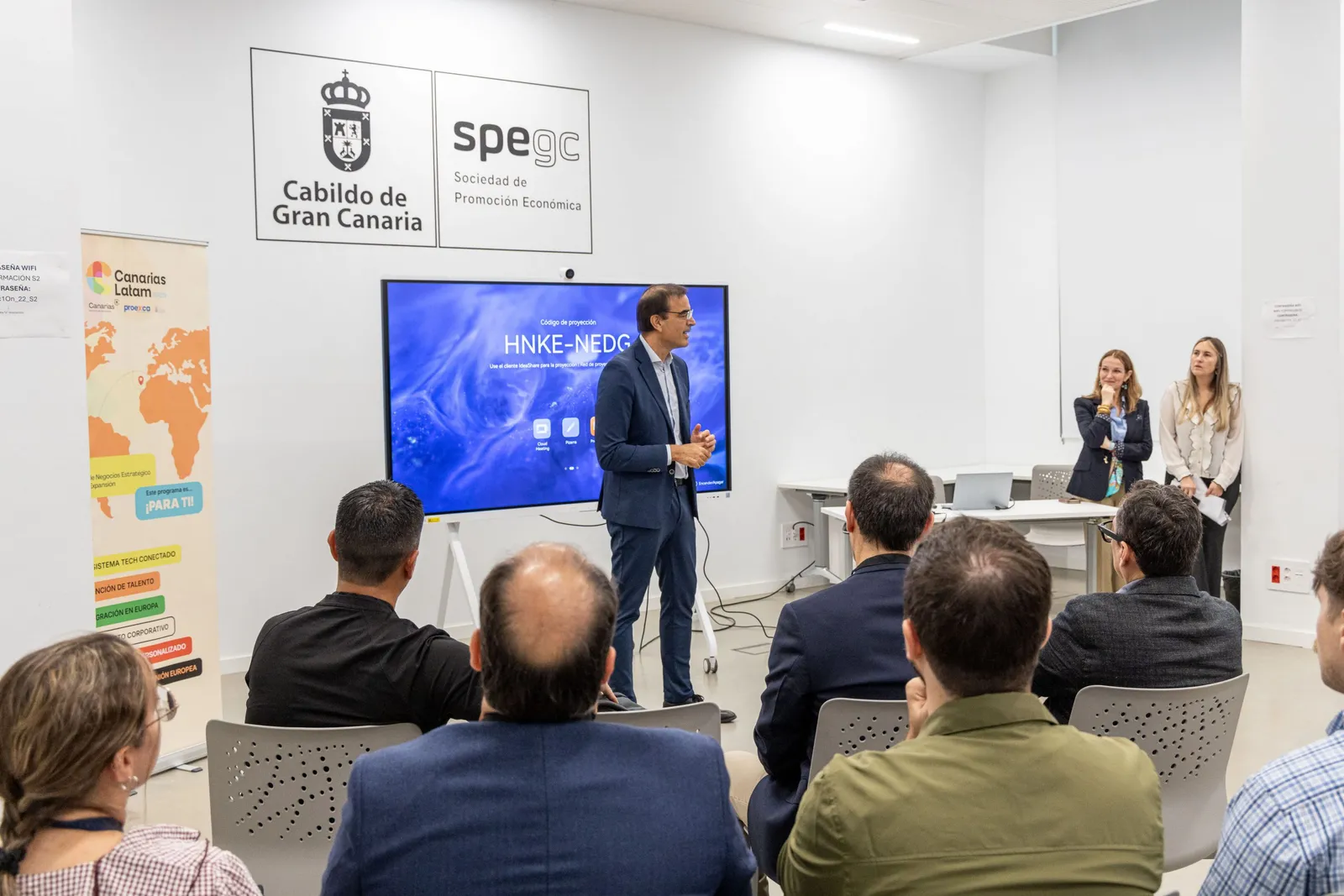
The Ministry of Social Welfare, Equality, Youth, Childhood and Families of the Government of the Canary Islands is driving the transition of the entire care network towards new quality standards in care. This was indicated by the Deputy Minister of Social Welfare, Francisco Candil, during a meeting held in Gran Canaria with managers, directors of residences, and administrators of socio-health service companies.
Candil highlighted that the sustained reduction in waiting lists for dependency rights recognition in the Canary Islands and the consequent increase in the development of Individual Care Programs (PIA) have significantly boosted the demand for residential places, day centers, and services on the islands. "It is essential that, while we increase the number of places and services, we also raise their quality to meet the principle of person-centered care," he stated. He emphasized that the new model requires placing user autonomy, desires, and preferences at the core.
This new dynamic of public-private collaboration and with the third sector accompanies the recent modification of state regulations and the regional decree on accreditation and inspection. As explained by Candil, the structural transformation of residences in the Canary Islands contemplates their progressive adaptation towards convivial units of a maximum of 15 people, in line with the European strategy of deinstitutionalization.
Furthermore, the Deputy Minister of Social Welfare stressed the need to move beyond decades-old care practices. Among the priorities of this new regulatory framework is the definitive elimination of mechanical and chemical restraints in socio-health centers, in strict compliance with the new quality criteria and the mandate set out in the Social Services Law of the Canary Islands of 2019.
The series of meetings will continue in the coming weeks across all islands to establish direct avenues for joint work with all entities managing socio-health resources in the autonomous community.