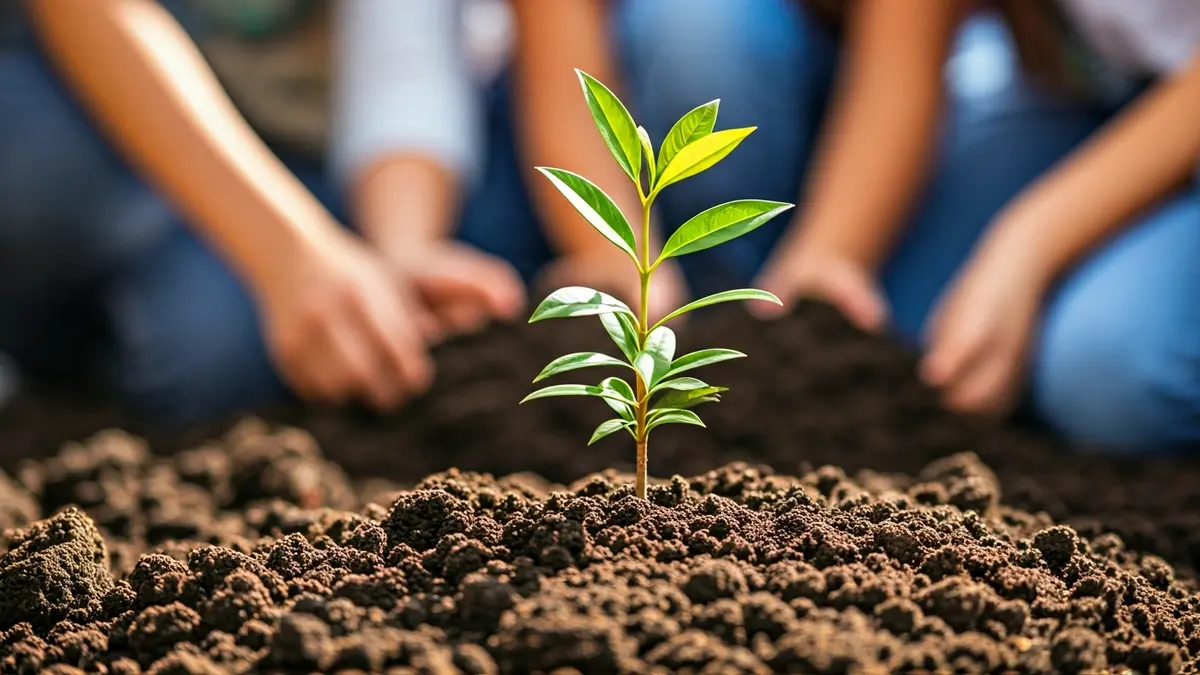
Last Thursday, in Arucas, the Sergio Alonso Foundation unveiled the expansion of the 'Trees Project', an initiative designed to transform educational centers in northern Gran Canaria by creating green spaces and integrating technology. This plan is the result of a public-private collaboration involving four key entities.
The agreement was formalized at the headquarters of the Mancomunidad del Norte, with the participation of the Mancomunidad de Ayuntamientos del Norte de Gran Canaria, the Sergio Alonso Foundation (FSA), the Canarian Foundation for Reforestation (Foresta), and the Acuorum Iberoamericana Canaria de Agua Foundation. The primary goal is to establish tree plantations in schools and institutes in municipalities that voluntarily join the program.
Key figures attended the presentation, including Nayra Moreno, director of the Sergio Alonso Foundation; Alicia Rodríguez, director of Foresta; María Soledad Iess, manager of the Acuorum Foundation; and María del Carmen Rosario, president of the Mancomunidad, accompanied by councilors and technical staff from various northern municipalities. This strategic alliance aims to raise societal awareness about the importance of trees in combating climate change, increase green areas in schools, and improve the quality of life for the educational community through natural shade.
A distinctive feature of the 'Trees Project' is its comprehensive approach, extending beyond mere planting. The initiative incorporates a technological phase where students from Dual Vocational Training will play a crucial role. These young talents will be responsible for installing and configuring electronic sensors to monitor the environmental impact of the trees, with data visualized on an interactive web platform.
Thus, the project not only beautifies school environments but also serves as a practical model of the «learning by doing» methodology, connecting environmental sustainability with technological employability and highlighting the potential of young talent in the Canary Islands.