An international team of researchers, led by the University of Alcalá de Henares and including participation from the ULPGC, has determined that the Cruz de la Esquina cave, located in the highlands of Gran Canaria, changed its function over time. Initially used as a granary, it later served as a funerary space between the 7th and 9th centuries AD.
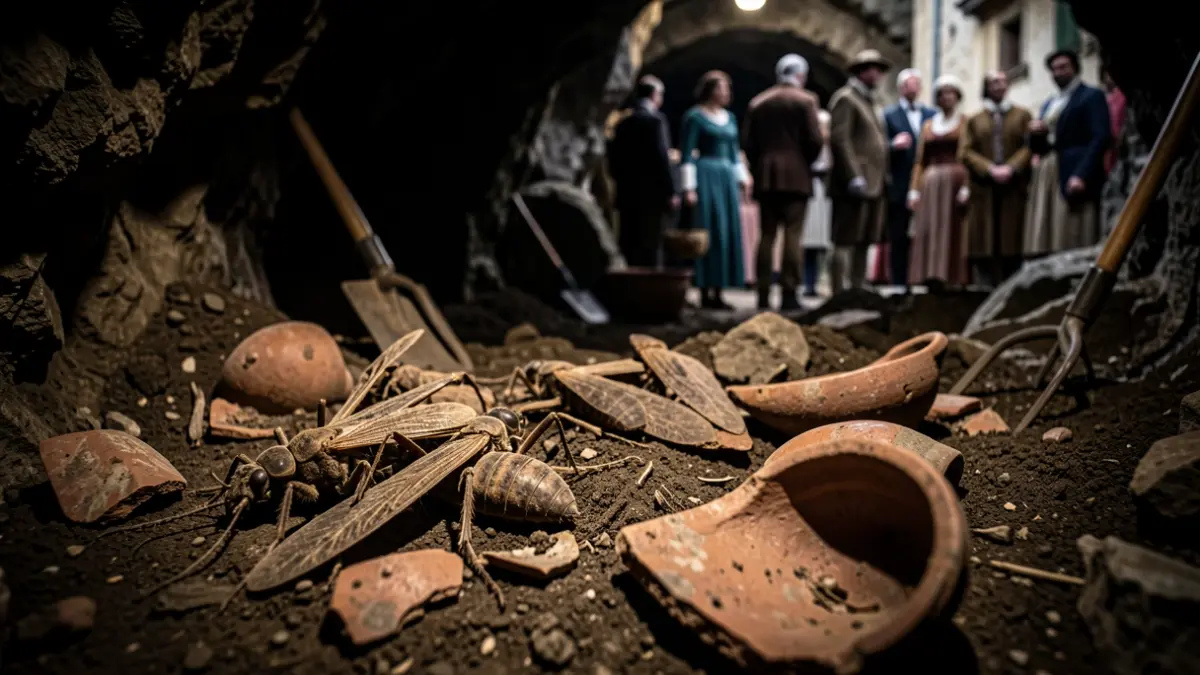
This conclusion is based on the analysis of over 8,000 arthropod remains found at the site, which were in an exceptional state of preservation. These remains have also allowed for the recovery of human bone fragments, wood, plant fibers, leather, and rope. The abundance of insects has been key to reconstructing the cave's uses and funerary processes.
The presence of weevils and other insects associated with grain storage indicates that the cave housed significant quantities of grain, exceeding what would be expected for simple funerary offerings. This confirms its initial economic function of food storage before its re-signification as a burial site.
This finding partially modifies the traditional interpretation of cave-excavated granaries in Gran Canaria. It suggests that some of the simpler granaries, previously classified exclusively as funerary spaces, might have gone unnoticed until now.
The archaeoentomological study also provides insights into the aborigines' funerary practices, reinforcing previous conclusions that questioned the belief that bodies were always desiccated in the sun before being moved to burial caves. The insects associated with cadaveric decomposition suggest that bodies were brought to the caves shortly after death.
The results highlight that caves could be reused and transformed, transitioning from economic activities related to storage to acquiring ritual and funerary functions, and were not necessarily static spaces with a single purpose.
The research opens the possibility of re-examining other sites in the archipelago previously interpreted solely as burial caves. The team plans to apply the same methodology to other cavities in Gran Canaria to determine if Cruz de la Esquina is an isolated case or part of a broader pattern of reusing old storage spaces. The work further demonstrates the potential of archaeoentomology in recovering activities and processes that are difficult to identify through other types of evidence.
This research has been published in the journal Antiquity.