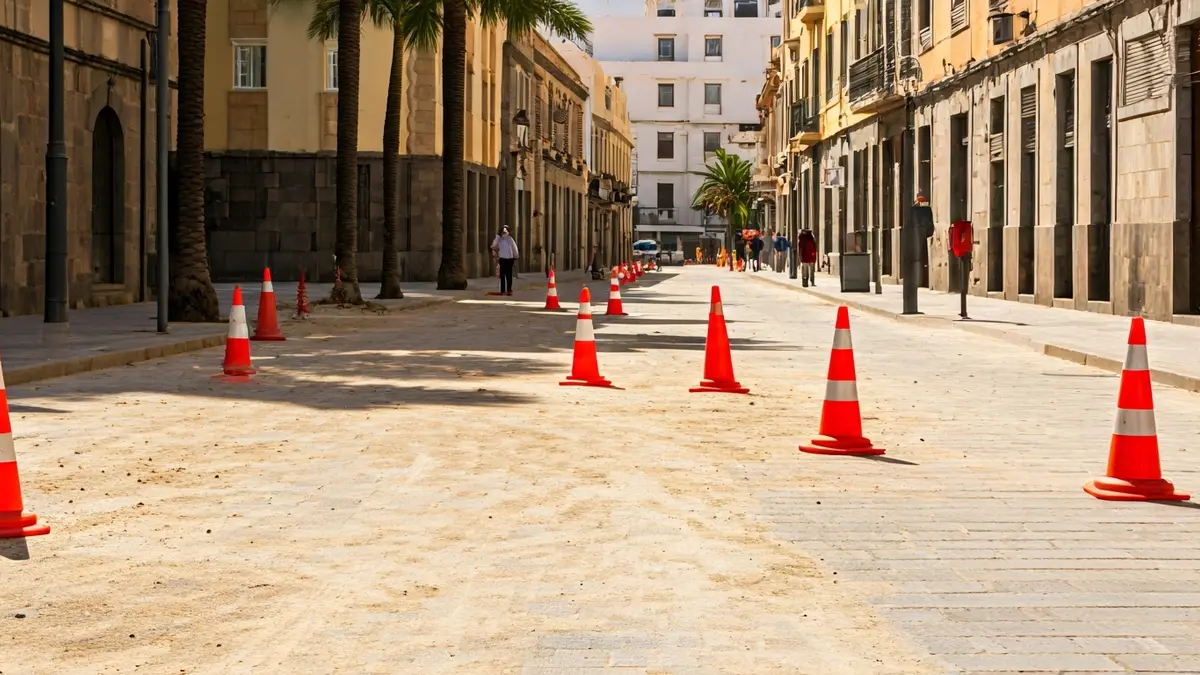
Despite not yet being inaugurated, the Barranquillo Don Zoilo bike lane presents an image of neglect. Construction of this infrastructure has faced four extensions since its start in September, delaying the completion of a project already mired in controversy. Although its completion was scheduled for Saturday, April 4, its official opening has not been announced. In the area, two workers were seen yesterday on an electrical box for the lane's reflectors, and some sections still needed painting. There is little cyclist traffic, but pedestrians frequently use the lane.
“"I usually come along the sidewalk, but the rest of the time I use the lane to walk so I don't have to go all the way around."
The human tendency to seek the shortest path has led pedestrians to appropriate the bike lane in some sections, turning it into a natural walkway. This situation could pose risks if cyclists or scooter users travel at high speeds. Resident Rita González, who walks daily along Párroco Villar Reina Street, frequently observes people using the lane as an extension of the sidewalk, especially where pedestrian crossings are distant. Furthermore, González has noticed an increase in traffic congestion since the lane's creation, prompting her to walk instead of drive.
The infrastructure shows signs of disrepair, with cones, construction tape, and a fallen fence in some areas. On Juan XXIII Avenue, four median barriers—which separate cyclists from the road and provide lighting—have been found torn out and abandoned on the sidewalk, leaving exposed screws that could damage vehicle tires.
Susana Domínguez, another resident, passes through the area daily and has noted the scarce presence of cyclists, apart from an occasional delivery worker. She believes that this part of the city lacks a strong cycling culture compared to Ciudad Baja and thinks the car lane should have been maintained, as parking difficulties force her to use public transport. However, the project has increased parking spaces from 123 to 125.
Conversely, Francisco Rodríguez, a resident of Tamaraceite, frequently visits Barranquillo and has found parking more easily since the road changes. Despite being too old to cycle, he views the lane positively, stating that congestion only occurs during peak hours and that the infrastructure is "worth it" for the area.
The works were highly controversial due to the road safety issues they created, such as difficulties for large vehicles on curves and the relocation of reserved parking spaces, affecting people with reduced mobility. These complaints led the City Council to meet with affected residents and the neighborhood association to reorder traffic and modify the project, aiming to resolve the main conflicts.