These initiatives, funded by the Department of Education and Youth of the Gran Canaria Island Council, return after the success of their first editions with the aim of fostering ocean awareness, scientific thinking, and active learning for students and teachers, combining science, technology, and sustainability for knowledge of the marine environment.
Both EduBlue and EduSen offer theoretical-practical sessions, teacher training in innovative methodologies, and student participation in the Junior Marine Congresses, where they will present their work in scientific poster format.
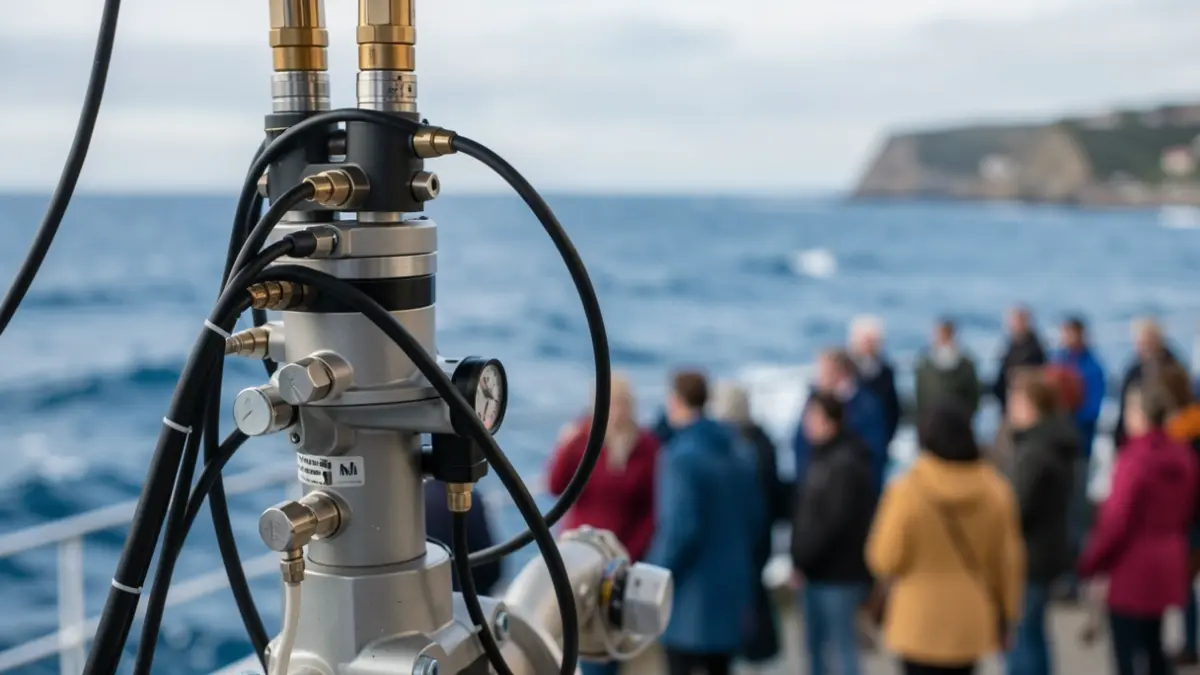
The EduBlue project focuses on understanding oceans, marine renewable energies, and environmental impact. It is aimed at students and teachers of 2nd and 3rd year of ESO, particularly linked to the subject of Technology and Digitalization, for 15 educational centers in Gran Canaria. Participants will build models of floating devices for renewable energy generation and hydrogen production, and conduct underwater noise and CO₂ emission measurements.
The registration period for EduBlue will be open until November 18. Participation rules and the registration form are available on the PLOCAN website.
Meanwhile, EduSen aims to bring marine science closer to students through the use of sensors and sample collection in local coastal environments. It is aimed at students and teachers of 1st year of Bachillerato, especially in Biology, Geology, and Environmental Sciences, for 10 educational centers in Gran Canaria. The data obtained will help understand the functioning of marine ecosystems.
The registration period for EduSen also closes on November 18. Interested parties can consult the rules and the registration form on the PLOCAN website.
Through these initiatives, PLOCAN reaffirms its commitment to scientific and environmental education, promoting knowledge of the marine environment, sustainability, and technological innovation from the classrooms of Gran Canaria.