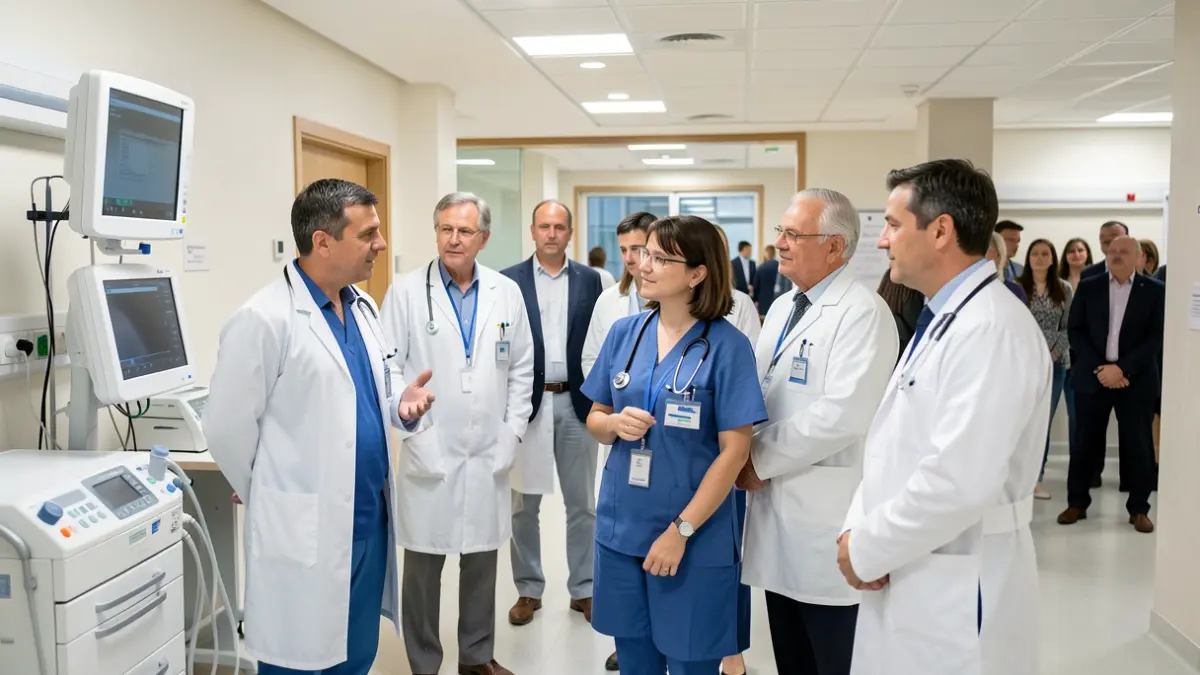
A delegation of six Argentine specialists, from various provinces and centers such as the Regional Integration Oncology Center (COIR) in Mendoza and the Municipal Hospital of Agudos Dr. Leónidas Lucero in Bahía Blanca, met with SCS director Adasat Goya to learn about the home administration model for antineoplastic treatments. The objective is to analyze its potential adaptation to the Argentine healthcare system.
This initiative, launched in 2025 by the SCS and the Canary Islands Health Research Institute, is already implemented in public hospitals in Gran Canaria and Tenerife. The specialists, interested in Canarias' experience in decentralizing subcutaneous treatments and home administration of oncological therapies (known as DESUCAN), visited the Oncology service and the Day Hospital of the HUC and the University Hospital Insular of Gran Canaria.
Also participating in the sessions were the scientific director of the Canary Islands Health Research Institute, Fernando Gutiérrez, and the heads of Medical Oncology service at the HUC, Juana Oramas, and the Hospital Insular of Gran Canaria, Delvys Rodríguez. They presented the regional strategy for decentralizing oncohematological care, the results of the DESUCAN program, and the logistical organization for home treatment administration.
Adasat Goya highlighted that home administration represents a significant advancement for Canary Islanders, avoiding hospital travel and offering greater comfort. He noted that it is made possible by progress in medical and pharmacological technology, such as subcutaneous biological treatments, which facilitate offering this service safely and on an outpatient basis.
The program provides clinical, pharmaceutical, logistical, and safety guarantees, building upon similar prior experience from the University Hospital of Gran Canaria Doctor Negrín in administering chemotherapy and immunotherapy at home.
The University Hospital of Canarias has spearheaded this care model since late 2024, treating 47 patients at home with 427 administrations, reporting no adverse effects and high patient satisfaction, thanks to close coordination between Medical Oncology, Hospital Pharmacy, and the Day Hospital.
Meanwhile, the University Hospital Insular of Gran Canaria, through its Oncohematological Day Hospital, offers eligible patients care that combines home treatment administration with decentralized care at Specialized Care Centers (CAE). In its initial months, it continuously serves 19 patients at home with 151 administered treatments, while 87 patients have been treated at the CAEs.
The program stipulates that the first chemotherapy sessions are offered in the hospital until the responsible physician verifies treatment tolerance and effectiveness. Once the regimen is stabilized, the patient can continue treatment at home if both the physician and patient deem it appropriate.
Administering antineoplastics at patients' homes leads to greater satisfaction as they remain in their private and family environment, and it also reduces the risk of nosocomial infections, lessening physical and emotional stress and improving their quality of life.
The nursing collective plays a fundamental role in this project, highlighting the positive impact of these professionals on the quality of life for cancer patients by ensuring the success of home antineoplastic treatment administration.