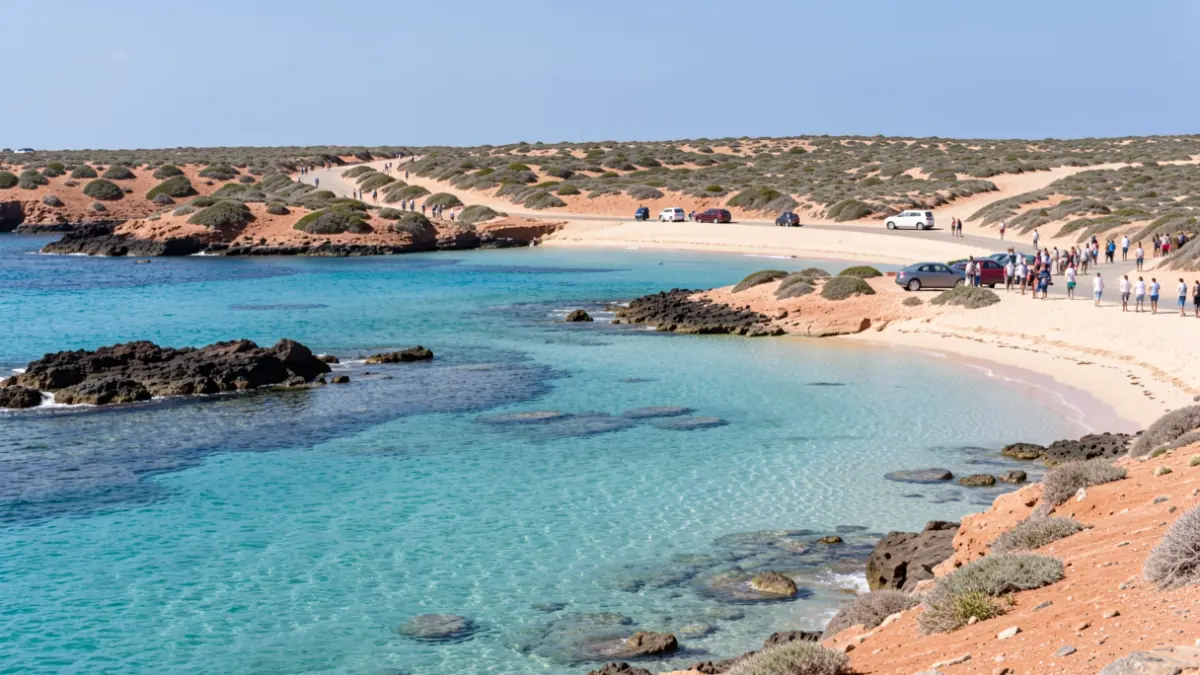
Researchers from the Group of Geography, Environment and Geographic Information Technologies, affiliated with the Institute of Oceanography and Global Change (IOCAG) at the ULPGC, have analyzed 24 natural beaches on the northern coast of Fuerteventura. The objective is to determine their carrying capacity and, based on this, plan parking management to achieve a balance between recreational use and environmental conservation.
This research stems from the need for objective tools for managing natural beaches with high tourist influx, identified in the Restoration Plan for the North Coast of Fuerteventura. Parking and the lack of access infrastructure are key factors that condition the visitor capacity in these coastal areas.
The study calculated the physical carrying capacity of each beach, differentiating between sandy and rocky substrates. Subsequently, the real carrying capacity was obtained, considering factors such as wind (relevant for sports activities), the ecological sensitivity of protected avifauna in ZEPA (Special Protection Areas for Birds), and precipitation. Finally, the effective carrying capacity was determined, adjusted for services such as access, parking, and lifeguards.
The results reveal that the high fragmentation of the coastline, with numerous small coves, and the scarce provision of permanent facilities are the main limitations in the studied area. In response, researchers have proposed a parking plan that serves as a tool for these and other protected areas with high tourist pressure.
Among the proposed solutions is the use of intelligent monitoring systems to track parking usage in real-time. Researcher Eloy del Rosario Rodríguez emphasizes that the goal is not to restrict access but to plan it to balance environmental conservation, socioeconomic activity, and visitor quality, ensuring the future enjoyment of the beaches.
The research has been published in the journal Journal of Outdoor Recreation and Tourism and is authored by Eloy del Rosario Rodríguez, Professor of Physical Geography Emma Pérez-Chacón Espino, and researcher Leví García Romero.