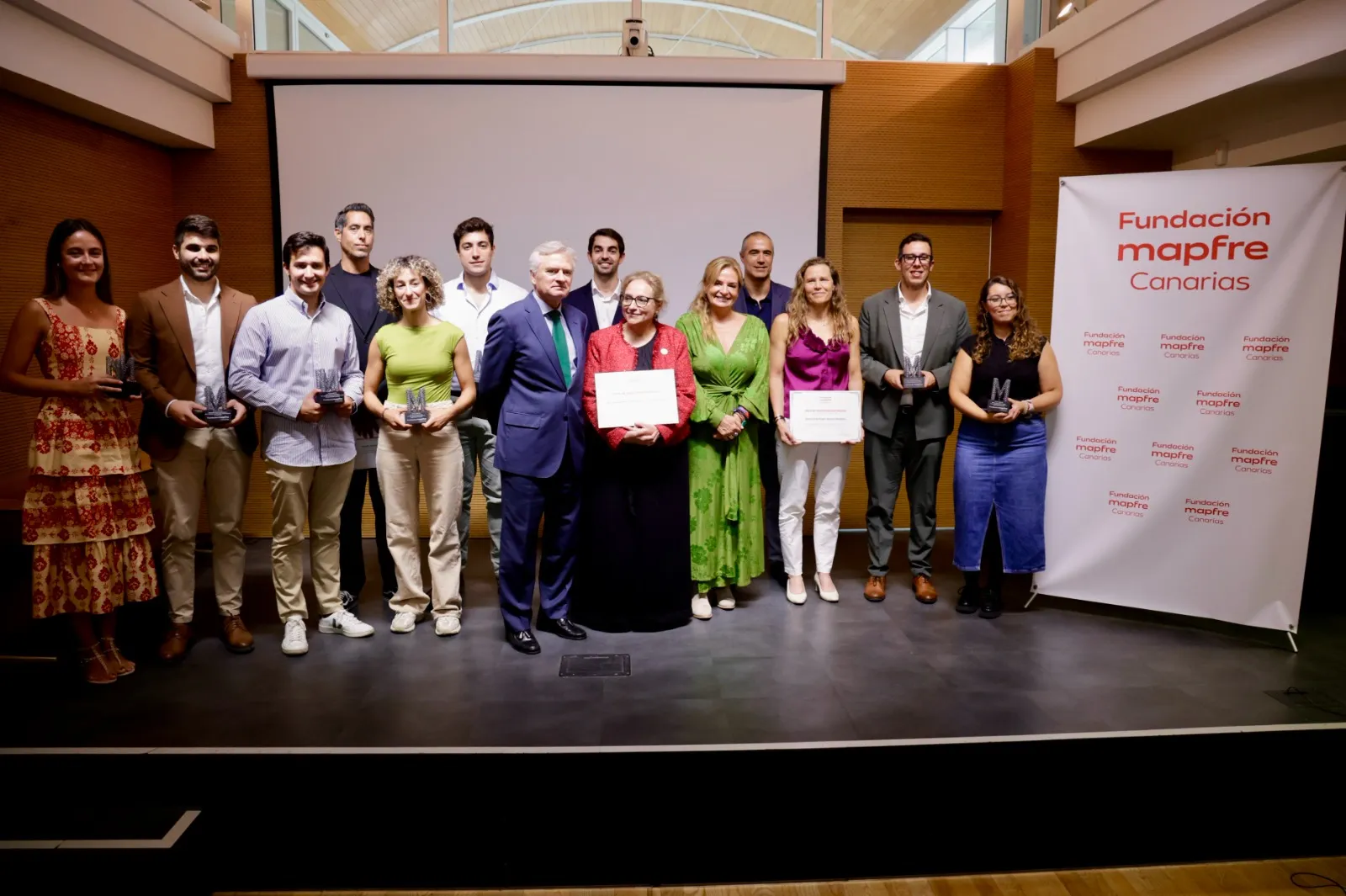
A total of nine medical professionals from the Canarian Health Service (SCS) were recognized in this edition of the awards, which distinguish the most outstanding Resident Intern Doctor (MIR) in the hospital teaching units and Primary Care of Gran Canaria and Tenerife.
During the event, held at the institutional headquarters of Fundación Mapfre, the Medical Research Grants for the 2026 call were also awarded, supporting four research projects at the university hospitals of both capital islands. Minister Esther Monzón, accompanied by the president of Fundación Mapfre Canarias, Ignacio Baeza, thanked the entity for its support of public healthcare and highlighted the importance of these awards for the research work of medical professionals.
Monzón stated that this collaboration is a "perfect example of joint work that allows us to position ourselves at the forefront of medicine and make a difference in the lives of our patients and the community in general, with new applications and discoveries."
The role of the Canary Islands Health Research Institute Foundation (FIISC) was also recalled as the executive instrument for the SCS's research policies, complementing project funding and aligning with the Sustainable Development Goals of Agenda 2030.
In the category of outstanding MIR residents, the awardees were Alejandro Herrera (University Hospital of the Canaries), Juan Francisco García (University Hospital of Gran Canaria Doctor Negrín), Pablo Alonso (Insular University Hospital Complex – Materno Infantil), Alejandro Hueso and Almudena Monllor (both from the University Hospital Nuestra Señora de Candelaria). In Family and Community Medicine, the ex aequo awardees in the province of Las Palmas were Pablo Castellano and Álvaro Pérez, while in Santa Cruz de Tenerife, Beatriz Franco and Marta Hernández shared the recognition.
The four medical research grants, endowed with an annual budget of 80,000 euros, were awarded to the study on the genetic bases of type 1 diabetes in the Canary Islands by Yeray Novoa (University Hospital of the Canaries), the pilot study for lung cancer screening 'LUCAS 2.0' by María Cecilia Martín (University Hospital Nuestra Señora de Candelaria), the work on eosinophilic subtypes by Carlos Cabrera (University Hospital of Gran Canaria Doctor Negrín), and the analysis of genomes of patients with familial hypercholesterolemia by Rosa M. Sánchez (Insular University Hospital Complex - Materno Infantil).