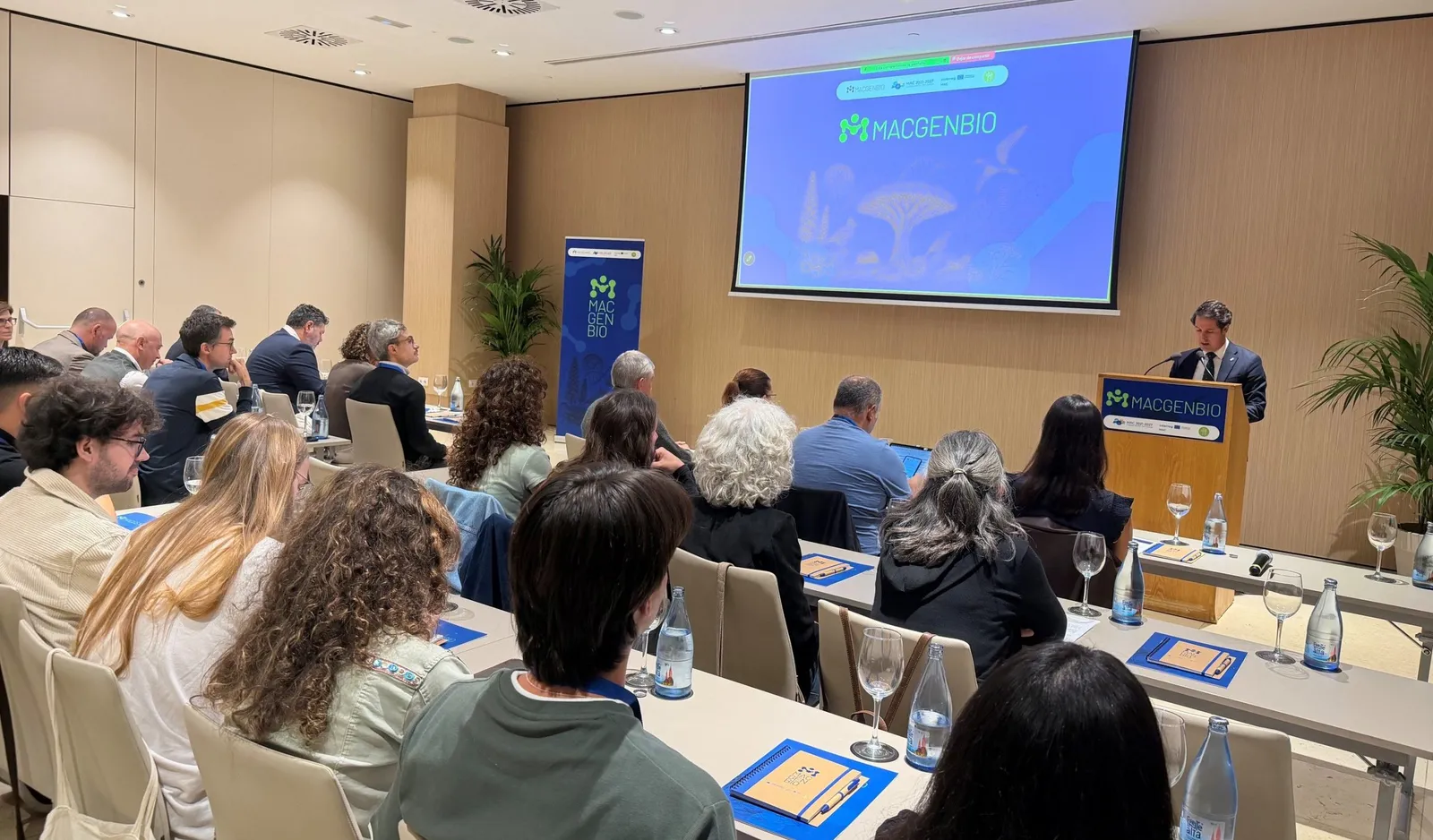
The Department of Ecological Transition and Energy of the Government of the Canary Islands, led by Mariano H. Zapata, hosted the first meeting of partners for the MACGENBIO project, the Transnational Network for the Management and Conservation of Biodiversity in Macaronesia and West Africa. The project, co-financed by the European Union through the Interreg VI-D Madeira-Azores-Canarias (MAC) Territorial Cooperation Programme 2021-2027, will take place from November 17 to 19 in Tenerife and Gran Canaria.
During the opening, the Director General of Environmental Quality, Ángel Montañés, highlighted the creation of the "first molecular reference library for an island region," which will place genetic data at the service of managing protected areas. This scientific tool will help anticipate shared threats in Macaronesia such as climate change or the spread of invasive alien species, facilitating informed decisions to protect ecosystems.
The MACGENBIO project establishes a collaborative system among public administrations, universities, and research centers from the Canary Islands, Madeira, Azores, Cape Verde, São Tomé and Príncipe, and Senegal. The goal is to establish protocols and accurately diagnose the state of flora and fauna in territories sharing a valuable natural heritage. The establishment of biodiversity banks in Madeira and Cape Verde and the upgrade of existing infrastructures in the Azores and the Canary Islands are planned.
The initiative will also focus on training and capacity building with African partners, respecting the sustainable use of genetic resources and the fair and equitable sharing of benefits, in accordance with the Nagoya Protocol. The work program began on Tuesday, November 17, in San Cristóbal de La Laguna, with a technical visit to the IPNA-CSIC. The meeting will conclude on Thursday, November 19, in Gran Canaria, with a visit to the Canary Islands Botanical Garden Viera y Clavijo.
In addition to the Government of the Canary Islands, partners include the IPNA-CSIC, the Canary Islands Botanical Garden Viera y Clavijo, the University of Madeira, the University of the Azores, the Regional Directorate of Environment and Climate Action of the Azores, the Institute for Forests and Nature Conservation of Madeira, the National Institute of Agrarian Research and Development of Cape Verde, the Directorate of Environment and Climate Action of São Tomé and Príncipe, and the Directorate of National Parks of Senegal. Associated participants also include the ITER, the ULPGC, and the ICIA.