Jesús Ramos, deputy spokesperson for the Gomera Socialist Group (ASG), stressed the importance of island councils playing a "fundamental" role in the renewable energy implementation process. According to Ramos, the councils "know the island's territory best and best know what is good for their island," thus advocating for the delimitation of renewable acceleration zones to be carried out with the greatest possible consensus, including local town halls.
While acknowledging the Council's mediating role, Ramos warned that the Canary Islands cannot afford an indefinite blockade of the renewable energy debate. "We cannot stand idly by or let this drag on indefinitely," he stated, recalling that the 58% renewable penetration target for 2030 seems "too ambitious" and difficult to achieve at the current pace.
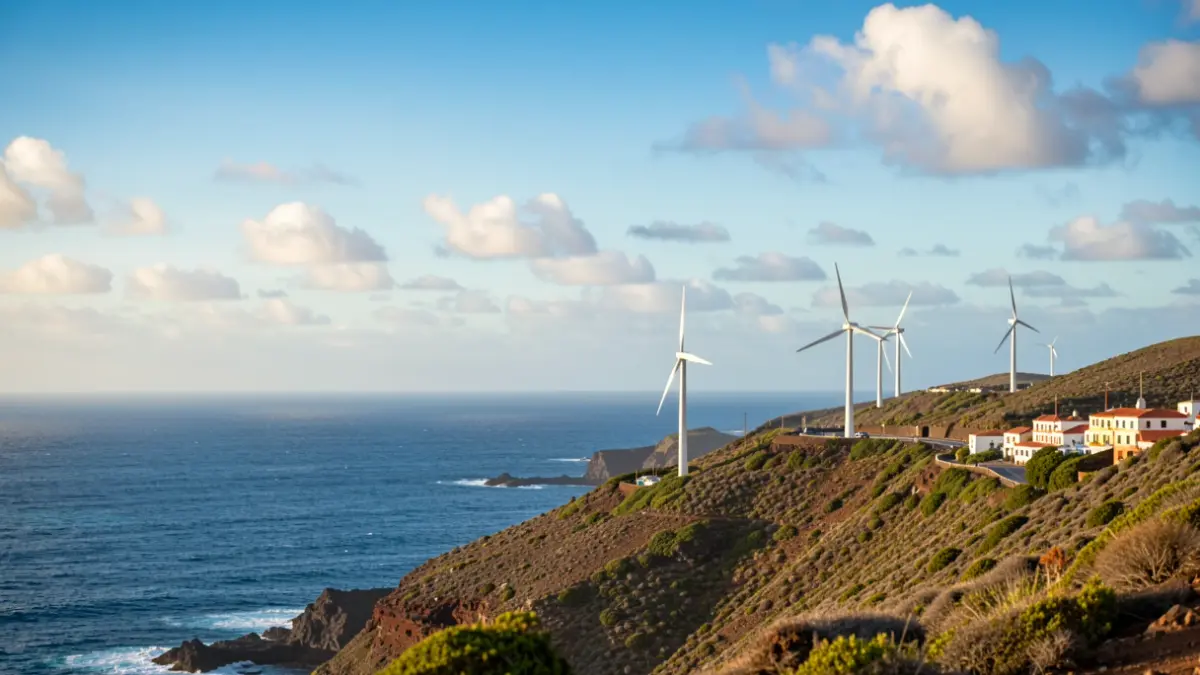
The ASG deputy insisted on the need for the Archipelago to continue "growing and believing in the energy transition," but cautioned that installing new generation infrastructure must be accompanied by strengthening electrical grids and distribution capacity. He cited La Gomera as an example, where wind farms cannot utilize their full production capacity due to "lack of grid capacity," using only 10% during peak hours.
Ramos also highlighted the significance of inter-island electrical interconnections, describing the connection between La Gomera and Tenerife as "a qualitative leap" for improving renewable integration. He mentioned projects like "La Gomera 100% Sustainable" and the "Gomera 36 Strategy" as initiatives aimed at decarbonization and a cleaner, safer energy model, concluding that "there is still a lot of work ahead, but it must be done with dialogue, consensus, and responsibility."