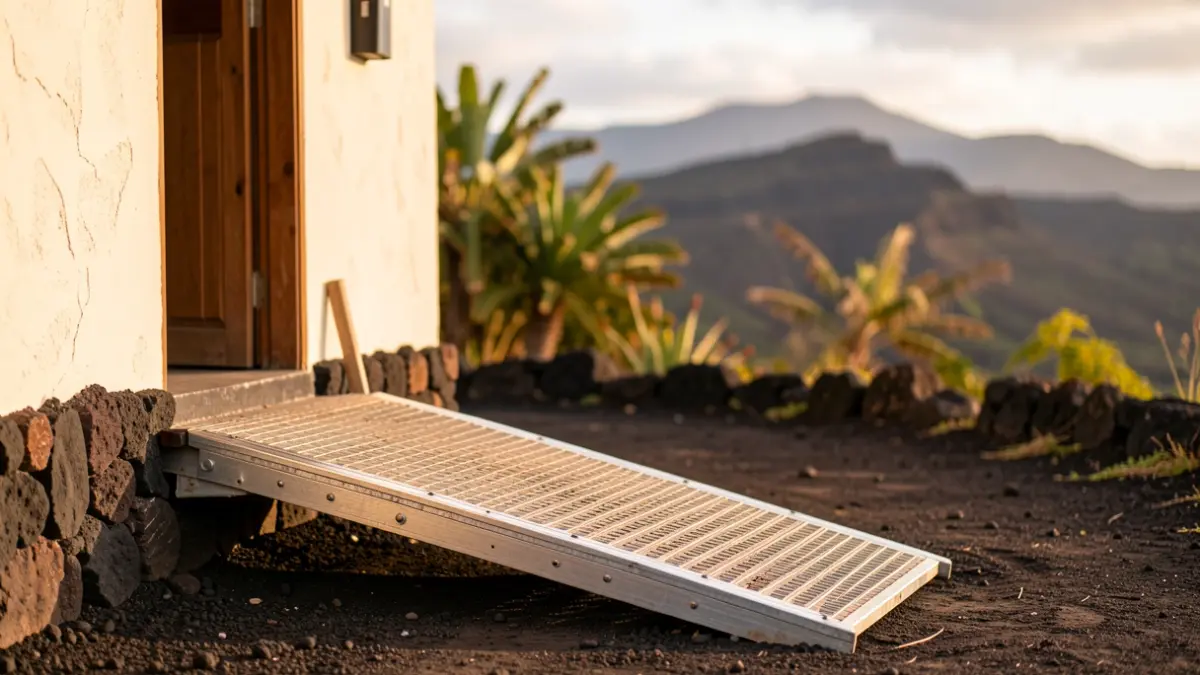
Improvement works for accessibility in the homes of participants in the “Gomera Accesible” program have started on the island of La Gomera. These renovations are fully individualized, tailored to the specific needs of each beneficiary. Planned actions include replacing bathtubs with shower trays, widening doorways, installing handrails, and improving home access with ramps, among other enhancements. All interventions will be carried out exclusively within the residents' private property.
This year, the program aims to improve the accessibility of homes for 30 individuals, with an additional 22 planned for 2025, bringing the total number of homes addressed since its inception to 52. The project is supported by the collaboration and funding of the Cabildo Insular de La Gomera and co-financed by the Government of the Canary Islands.
“"Ensuring they can remain in their homes under dignified and adapted conditions also reinforces their autonomy and quality of life."
The president of the Cabildo de La Gomera, Casimiro Curbelo, emphasized the island institution's commitment to improving home accessibility for individuals with mobility challenges. The Cabildo is allocating 350,000 euros this year to this program, executed by Provivienda, an entity whose technical and support work he praised.
In addition to physical renovations, the program incorporates an individualized social support plan to prevent unwanted loneliness and avoid institutionalization, strengthening participants' relational and community networks.
This year, the profile of participants is broadened. In addition to individuals over 64 with mobility issues, people with functional diversity of any age will now participate. Beneficiaries are referred by the social services of local councils, social entities, or apply on their own initiative. To access the program, they must own their habitual residence, not exceed a maximum income threshold, and the improvements must be made to their primary home.
“"More than 80% of this project's impact directly translates into improving the living conditions of the participants. We enable them to stay in their homes longer and prevent unwanted institutionalization."
Fernando Rodríguez, director of Provivienda in the Canary Islands, highlighted the program's impact on users' quality of life and autonomy, which also eases the physical effort for formal and informal caregivers.
Provivienda is a non-profit organization declared of public utility, working since 1989 to promote residential inclusion and the right to housing under equal conditions in Spain. It has assisted over 172,000 people and managed more than 72,000 homes.