The Cabildo of La Gomera launched its 2026 forest fire prevention and extinction campaign this Monday. The operation will mobilize over 200 individuals, including staff from various administrations, collaborating entities, and volunteers, with an annual investment of 2.5 million euros.
During the presentation, the island's president, Casimiro Curbelo, emphasized that the campaign prioritizes prevention, coordination, and rapid response to safeguard the forests, rural settlements, and the natural heritage of the Garajonay National Park.
Curbelo called for citizen responsibility, urging increased caution to prevent fires with severe consequences. "We ask for prudence, common sense, and adherence to recommendations," he stated, highlighting that the conservation of La Gomera is a shared responsibility.
The operation involves entities such as the State Security Forces and Corps, Volunteer Firefighters from Valle Gran Rey and La Gomera, Civil Protection, Anaga Emergency Aid, the Foundation for General Sociosanitary Services of La Gomera, Red Cross, Tragsa, EIRIF, the Cabildo's Environmental Unit, and the Garajonay National Park.
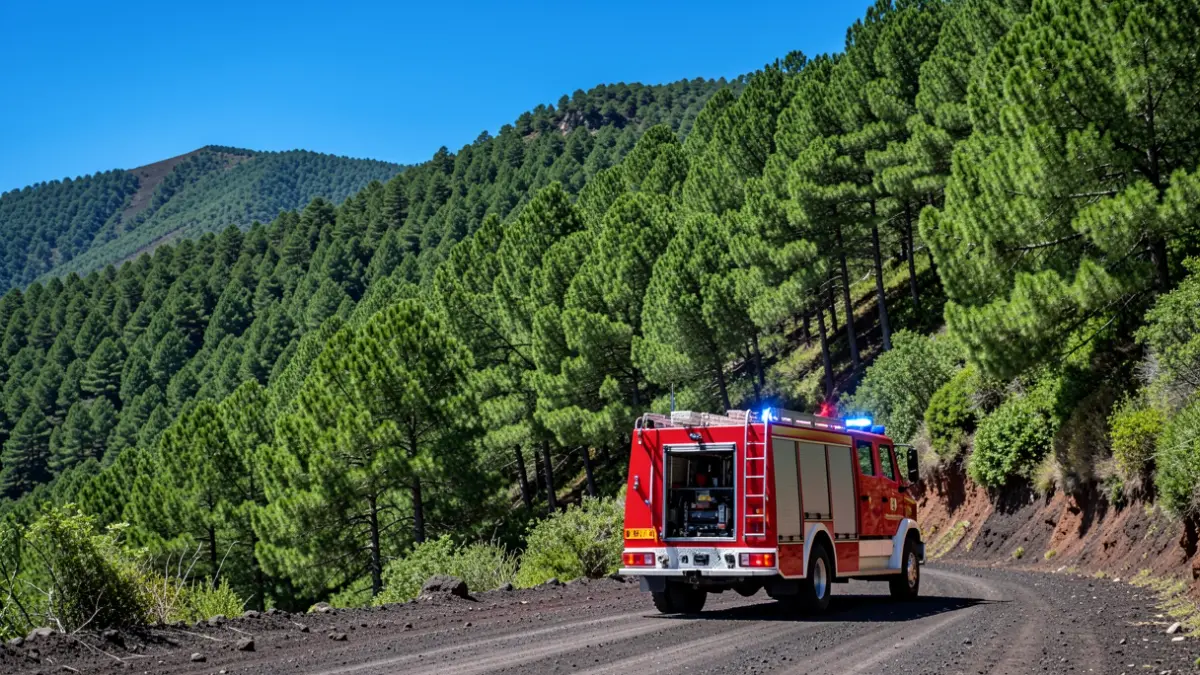
The system, active from today until October 31st, includes approximately twenty firefighting vehicles and two aerial resources based on the island, supplemented by drones and portable water tanks for aerial support. Coordination is managed through CECOPIN, operating as a unified team based on safety, efficiency, and organization.
Preventive work has been intensified in ravines, sensitive areas, and interface zones between forests and populated areas, with particular focus on municipalities like Vallehermoso, Hermigua, Valle Gran Rey, and San Sebastián, as well as rural settlements in the midlands and higher elevations.
The Minister of Emergencies, Héctor Cabrera, stressed the importance of institutional cooperation, continuity, and citizen commitment for territorial protection, reminding the public about cleaning private plots and respecting authorities' instructions, especially during heatwaves or windy conditions.
The 2026 campaign continues a year-round planning strategy that includes conservation, prevention, and maintenance activities. In the last two years, over 8 million euros have been invested in environmental conservation, with more than 200 interventions carried out on the island.
Curbelo emphasized that prevention is an ongoing task involving cleaning, maintenance, invasive species removal, and the creation of safety cordons, underscoring the vital role of volunteers and surveillance teams in ensuring island security.
Recent projects contributing to environmental improvement include the eradication of "rabo de gato" (700,000 euros), silvicultural treatment in Majona (360,000 euros), work in the Ingenio-Macayo ravine (354,000 euros), and the upgrade of the fire-fighting deposit in Chipude (89,000 euros).
Additionally, an annual budget of 2.5 million euros is allocated for ravine work, including prevention and exotic species removal. The "Replantea" project, funded by 1.6 million euros from NextGenerationEU, focuses on controlling common reed and renaturalizing watercourses in Hermigua and Valle Gran Rey.