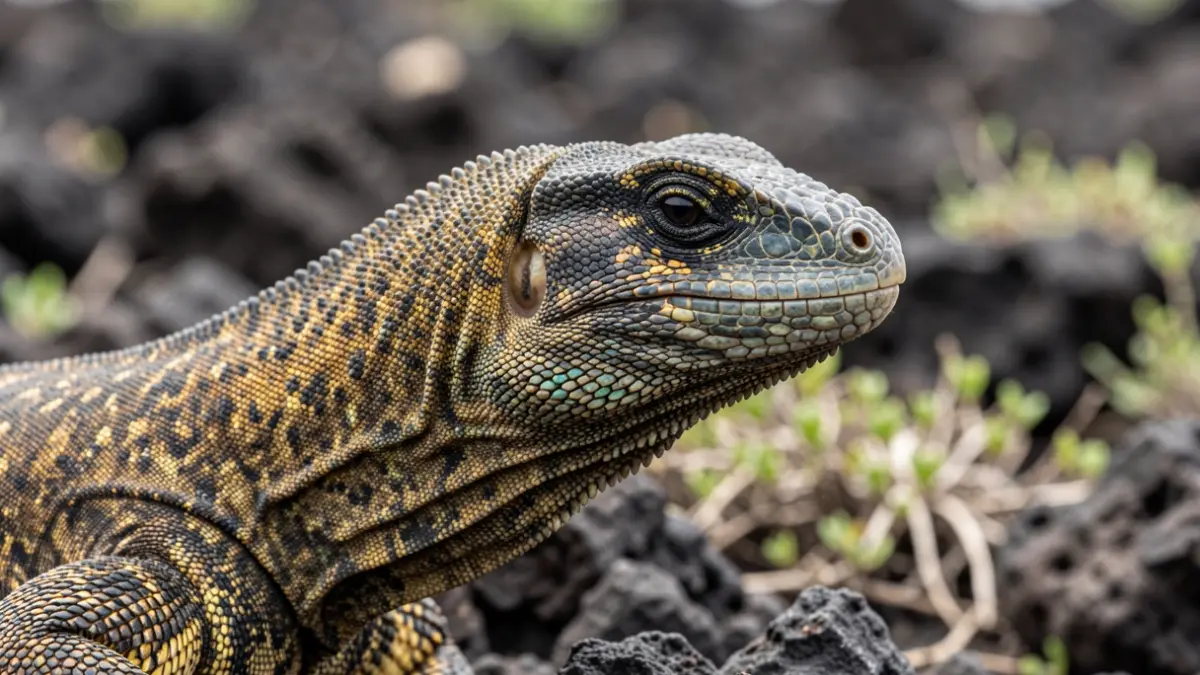
This initiative aims to strengthen the monitoring and protection of specimens reintroduced into the natural environment between 2022 and 2024. The goal is to understand the evolution and survival of these populations and facilitate future reintroductions.
Island president, Casimiro Curbelo, highlighted that the measure continues the work to recover the lizard, incorporating crucial monitoring and protection after reintroductions. "It is not enough to release specimens into the wild. Continuous monitoring is necessary to understand their adaptation and survival capacity, while simultaneously reducing factors that could jeopardize the consolidation of new populations," he stated.
Actions will concentrate on key areas such as the Corrales de Heredia in Taguluche, the Risco de La Mérica, and the Giant Lizard Recovery Center of La Gomera in Valle Gran Rey. Protection, monitoring, predator control, and space adaptation measures will be carried out there.
Planned tasks include controlling cats and rats in reintroduction zones, detecting their presence through tracks or remains, and conducting nocturnal monitoring with camera traps. A cat-proof fence will be installed, and censuses will be performed using capture-mark-recapture techniques to assess the evolution and survival of the specimens.
At Risco de La Mérica, security systems will be reviewed and replaced, the natural population will be surveyed, and installed cameras will be monitored. The program also includes new reintroductions, transferring specimens from the recovery center to selected areas, thus combining protection with scientific knowledge.
Curbelo emphasized that conservation requires planning and continuity. "The data obtained through censuses and monitoring will provide essential information to guide future actions and adopt necessary measures at any given time," he affirmed.
The work program will span three years. The first year will focus on fauna control, monitoring, and cameras. The second year will continue with camera and security system reviews, and the third will include new reintroductions and monitoring of survivors. Activities will be adapted to species biology, concentrating predator searches and censuses in May and June, and reintroductions in October.