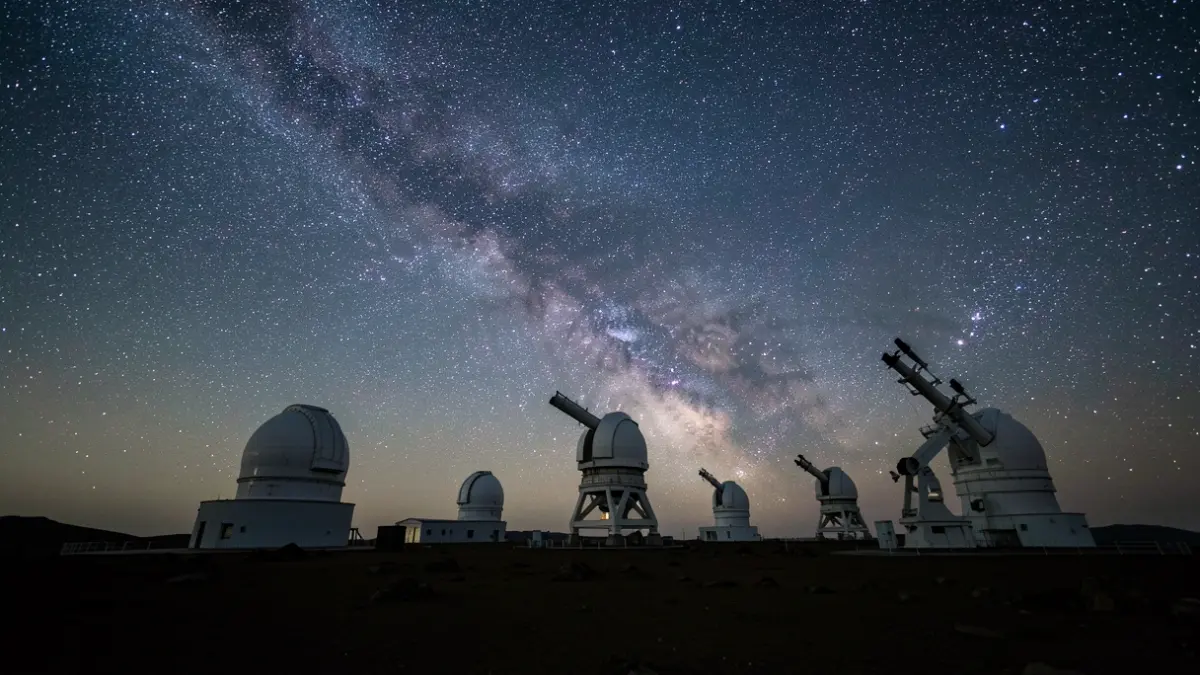
The Cherenkov Telescope Array Observatory (CTAO) consortium, set to become the world's largest and most powerful gamma-ray astronomy observatory, is steadily progressing towards its initial operational phase. This advancement will be marked by the upcoming inauguration of the four Large-Sized Telescopes (LST) at the Roque de Los Muchachos Observatory in La Palma on October 15, 2026.
A joint press conference held on the island, coinciding with the CTAO ERIC Council meeting that gathered delegates from over 10 countries, served to highlight the project's move towards pioneering science. Representatives from the European consortium, the LST Collaboration, the La Palma Island Council, and the Canary Islands Institute of Astrophysics (IAC) reaffirmed the island's commitment to scientific excellence. The unique conditions of the Roque de Los Muchachos Observatory and European funding were emphasized as vital factors for developing these cutting-edge infrastructures.
The vice-president of the La Palma Island Council, Juan Ramón Felipe San Antonio, conveyed institutional support for the island's technological and scientific advancements, calling La Palma a "world capital of science" and "one of the clearest windows to look at the sky." He highlighted the exceptional conditions of the La Palma sky, protected by law, making it a "sanctuary for the study of the Universe."
For his part, the director of the IAC, Valentín Martínez Pillet, underscored inter-institutional collaboration and social support as key to the telescope inauguration. He noted that the island is a global benchmark in Astrophysics and that the relationship between society and administrations is a model of success, mentioning the support from the Spanish Government with ERDF funds, as well as from the Government of the Canary Islands and the La Palma Island Council.
Francisco Colomer, President of the CTAO ERIC Council, expressed his pleasure in hosting international delegations at the Northern Hemisphere site, emphasizing CTAO's global reach and its national and local impact. He stressed that hosting CTAO-North positions Spain at the forefront of next-generation science and represents a significant strategic commitment to the future of European astrophysics.
The observatory's construction is progressing at an "exceptional pace." The CTAO team on the island is rapidly expanding, having welcomed five new members since 2025, with more employment opportunities anticipated. The CTAO's Chief Scientist, Roberta Zanin, stated that the project is bringing us closer to "answering some of the most exciting questions in astronomy, such as the nature of dark matter," and assured a commitment to involving the local community through outreach and education programs.
The LST Collaboration, comprising over 500 international members, is responsible for the design and construction of the large-sized telescopes. Its chairman, Juan Cortina, described the upcoming inauguration as a "historic milestone" that culminates the construction phase, an achievement to be celebrated with global partners, including world-renowned scientists like Nobel laureate Takaaki Kajita.
The October inauguration is a key step towards the observatory's full realization. Following this, the LST Collaboration will continue with the technical tests required for the telescopes' official acceptance and operation by the Central Organization, integrating them into the CTAO-North network.
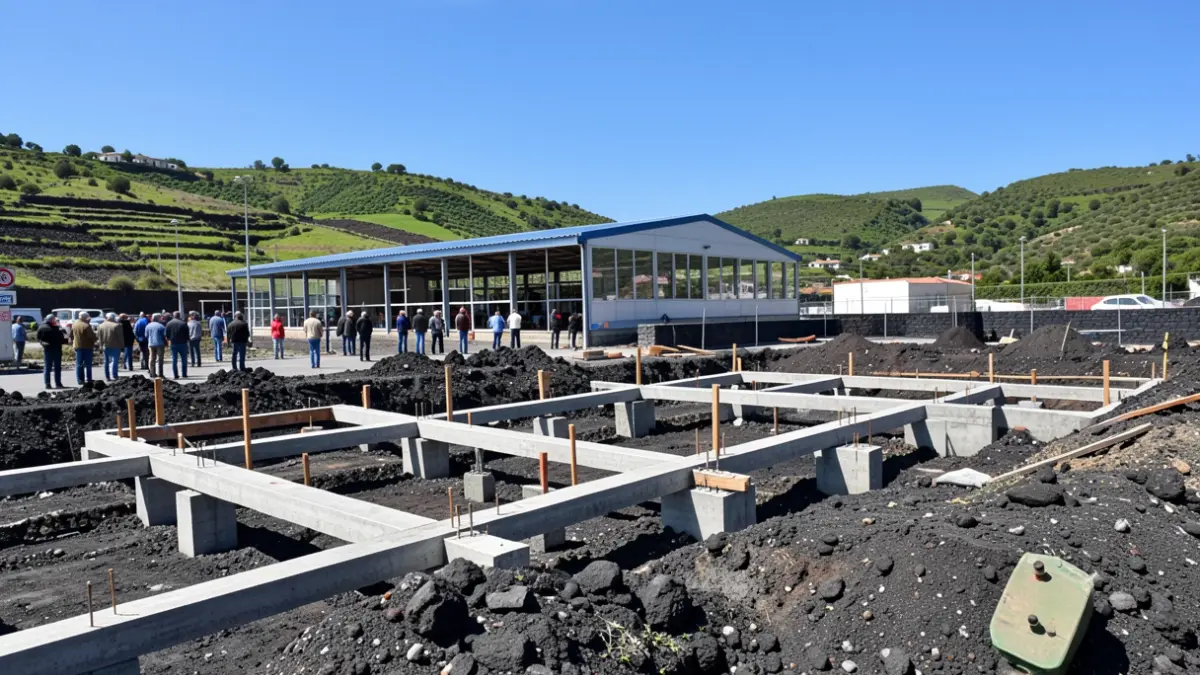
International delegations visited the Roque de los Muchachos Observatory to witness firsthand the project's scale and impact. The tour of the CTAO-North site was led by Patricia Márquez, head of the CTAO-North Station, while the detailed LST telescope tour was guided by Daniel Mazin, project manager for the LST Collaboration.
With the imminent inauguration of the LSTs and the ongoing expansion of CTAO operations and its team on the island, a new era in gamma-ray astronomy is dawning, with La Palma at the heart of unprecedented discoveries.