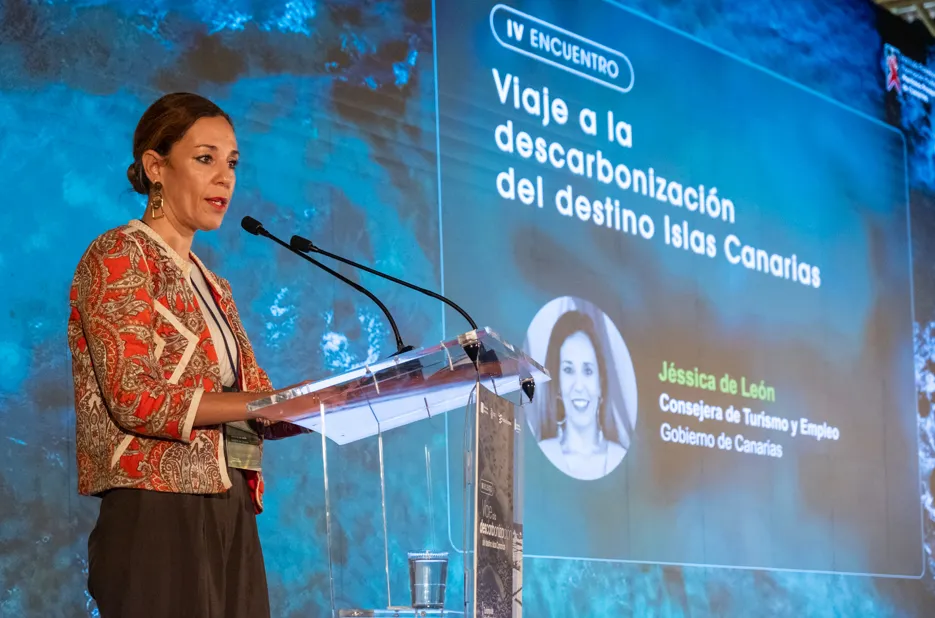
The Department of Tourism and Employment of the Canary Islands Government, led by Jéssica de León, highlighted that this strategy aims to anticipate climate change effects and minimise the sector's environmental impact. During the opening of the meeting in Lanzarote, the councillor recalled the commitment to the Glasgow Declaration and the Climate Change Law, which requires companies to measure their footprint from 2027.
The digital tool Journey to Decarbonization, launched by Tourism of the Canary Islands, allows companies to measure emissions, set targets, and plan reduction measures. Currently, it has 292 registered companies, of which 131 have completed the calculation. To support this process, private appointments with environmental sustainability specialists are offered.
“"While large corporations continue to advance, we are closing the gap with those who need it most, SMEs."
The training is complemented by six in-person workshops and 33 online sessions held this year, with a total of 614 attendances. A new training platform with on-demand materials will soon be launched, focusing on the practical guide 'How to decarbonize your tourism business', linking calculations to management decisions such as energy, mobility, and waste.
During the meeting, the General Manager of Tourism of the Canary Islands, José Juan Lorenzo, presented data on sector emissions. In 2025, estimated tourism activity emissions amounted to 1,055,001 tons of CO2 equivalent, a 3% increase over 2024. Aviation associated with the Canary Islands generated 6,572,149 tons of CO2e, a 4.6% increase over the previous year.
The event also served to present the Climate Action Plan for the tourism activity of Lanzarote and La Graciosa, presented by Héctor Fernández, CEO of SPEL-Tourism Lanzarote. Projects such as the intelligent mobility system and the urban renaturalization pilot in Arrecife were highlighted, as well as collaboration with CSIC and local universities through the blue tourism agreement.