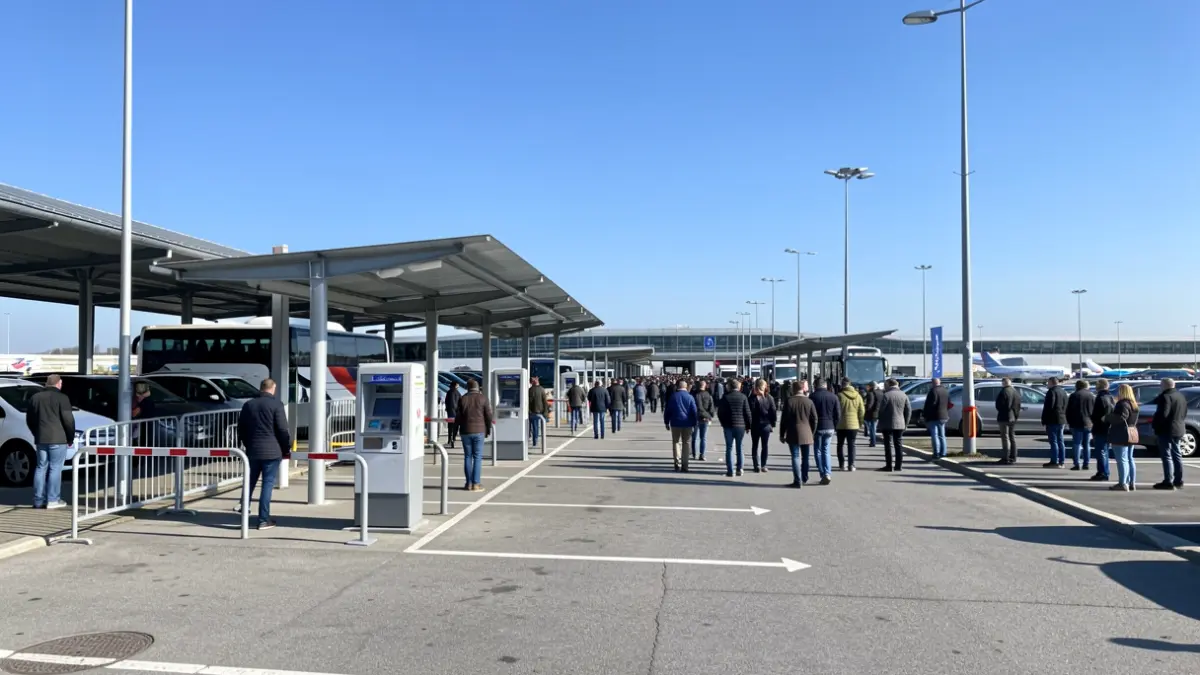
After several weeks of testing, the specific parking area for buses at Lanzarote César Manrique Airport will begin charging on Wednesday, July 1st. The measure, which has faced resistance from transport companies, will be implemented despite sector opposition.
Warning signs have been placed at strategic points within the parking area, informing users of a free grace period for each service. This grace period will ensure that usage is not charged from the first minute, distinguishing it from the parking facilities for the general public located near the terminals.
The signs also detail the procedure for making bank deposits, which will require each company to make a deposit based on the size of its fleet. The license plates of buses that regularly use the parking facility must be provided.
“"it will allow for much higher rotation and improve the flow of all transport means in the airport's arrivals area," it was defended, "so that high-occupancy mobility agents (buses), which have also been increasing in recent years, can use this parking for passenger pick-up and ensure adequate rotation." It will also help "discourage incorrect use of the parking lot."
The official justification for this initiative, which began with the infrastructure contracting in late 2024, is to enhance rotation and traffic flow in the arrivals area, facilitating passenger pick-ups by buses, the number of which has grown in recent years. It is also argued that it will help discourage improper use of the parking lot.
For their part, the employers' association believes the measure is primarily for revenue generation.
The investment for installing the barriers, payment machines, and other control elements amounted to an initial outlay of just over 172,000 euros, including taxes, in late 2024.