The island of Lanzarote has become this week the epicenter of the gastronomic and coastal heritage of the Canary Islands, hosting the eighth edition of the Agrocanarias 2026 contest. A total of twelve Canarian salt productions are participating in this event, organized by the Canarian Institute of Agri-food Quality (ICCA) and the Island Council, with the aim of recognizing and promoting the best artisanal creations in the archipelago.
The competition brings together samples from Gran Canaria, Fuerteventura, La Palma, and Lanzarote itself. During the inauguration, the Minister of Agriculture of the Government of the Canary Islands, Narvay Quintero, along with island minister Samuel Martín and ICCA director Luis Arráez Guadalupe, highlighted the sector's significant effort. Quintero emphasized the connection of these artisanal productions with the territory and environmental conservation, seeking to enhance their commercial value and viability.
Samuel Martín, for his part, underscored the historical importance of this activity in the Canarian rural world. The commitment to Lanzarote's salt not only strengthens food sovereignty but also promotes the recovery of old salt pans. Currently, the Canary Islands have six operational salt pans producing around 2,700 tons annually, with the "conejera" geography concentrating 56% of the regional productive surface.
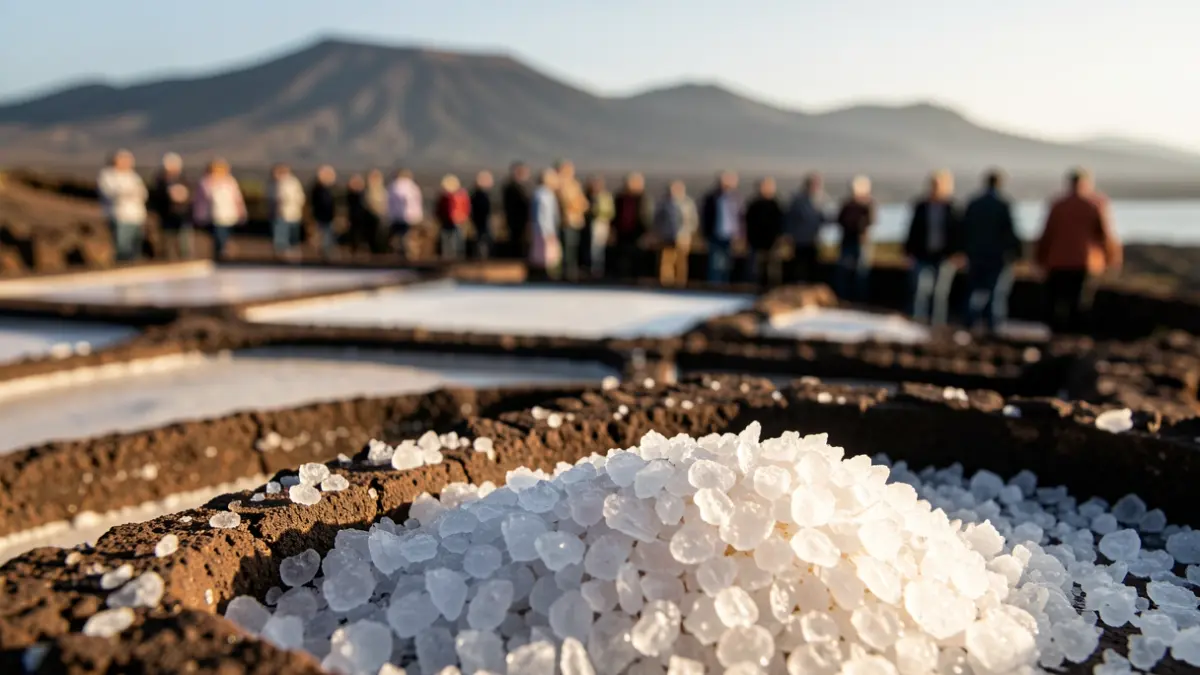
In parallel to the blind tasting competition, the Producers' Conference is being held. Experts, researchers, and salt workers will discuss diversification, training, and the coveted European protected designation of origin. The event will feature speakers such as researchers Katia Hueso and Macarena Castro, and will move on Friday the 18th to the emblematic Janubio Salt Flats.
The awarded companies in the categories of Best Sea Salt, Organic, and Innovation will be announced in the coming weeks at a public ceremony. It will then be revealed whether Lanzarote's salt achieves the highest award, demonstrating the vitality of its tradition.
The value of Canarian salt pans extends beyond culinary aspects, having a significant economic and tourist impact. The artisanal production of fleur de sel, flakes, and wet salt is in high demand, with over 38% of sales directed to consumers, largely driven by sustainable tourism. The salt pans have successfully diversified, offering guided tours, interactive workshops, and unique gastronomic experiences, which help promote the meticulous work of salt workers and ensure the survival of a centuries-old craft that continues to shape the beauty of the coastal landscape.