The technical report from the Environment Area of the Cabildo of Lanzarote and La Graciosa warns of potential significant impacts on protected species, including the Canarian hubara, listed as endangered. The principle of precaution is applied due to the possibility of irreversible damage.
The two projects, which would have a combined power of 5.7 megawatts and occupy nearly nine hectares, have received an unfavorable technical opinion supporting the institutional position previously announced. The Cabildo recalled that the implementation of renewable energies must follow ordered planning with maximum protection of rural land.
The president of the Cabildo, Oswaldo Betancort, stated that “the energy transition is necessary, but it cannot come at the cost of our natural heritage or through indiscriminate occupation of rural land. Lanzarote has a roadmap, and we will defend it.” The report alerts to the potential presence of up to 37 protected bird species, including the Saharan wheatear (vulnerable) and the Canarian hubara (endangered).
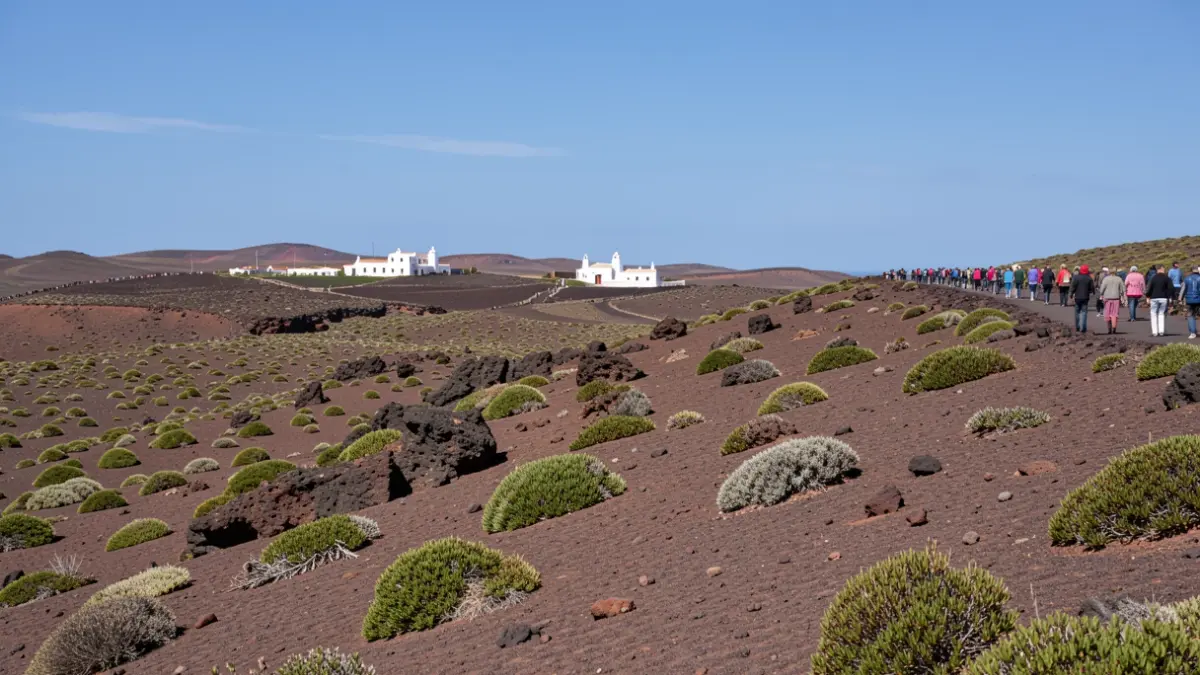
The Minister of Environment, Samuel Martín, emphasized that “this is not an opposition to renewable energies, but a demand for them to be implemented with rigor, planning, and guarantees.” He noted that the site is located within the Lanzarote Biosphere Reserve and the UNESCO World Geopark, and close to protected areas like La Geria.
The Cabildo has proposed a technical alternative to the municipalities, reducing the proposed area for Renewable Energy Acceleration Zones (ZAR) from 3,163 to less than 200 hectares. This plan prioritizes roofs of public and private buildings, parking lots, and existing infrastructure, minimizing the occupation of rural land.
The report concludes unfavorably, considering that irreversible harm to protected natural elements cannot be ruled out. The Cabildo maintains its stance of ensuring the development of renewable energies is compatible with the protection of Lanzarote and La Graciosa's landscape, biodiversity, and territorial model.