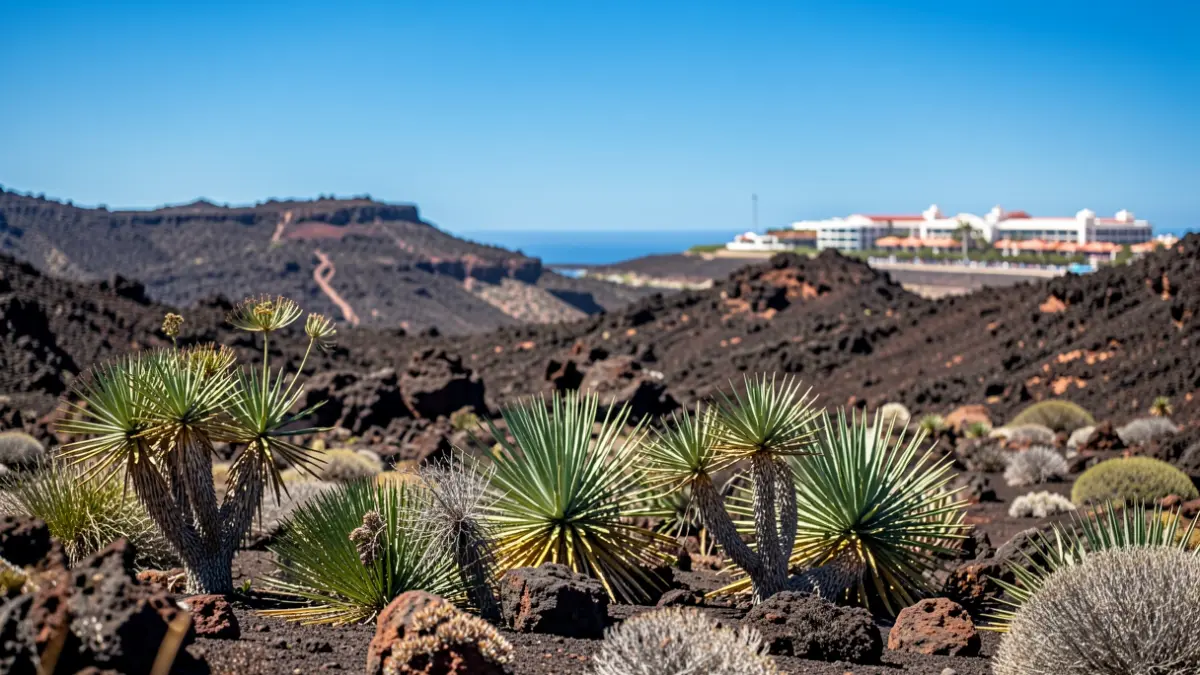
The connection of the Canary Islanders to their natural environment is profound, a concept of 'biocultural diversity' defining their rootedness in a landscape with globally unique species. The destruction of this natural wealth directly impacts the community's well-being and identity.
Botanical biologist Atteneri Rivero notes that the landscape acts as a mirror, and the destruction of unique habitats, particularly in the southern islands where the tourist model has prevailed, leads to a disconnect from the environment. A report by SOS Costas Canarias reveals the archipelago loses a kilometer of coastline every three months, driven by touristification.
Despite the pressure, the Canary Islands host dozens of endemic species, such as the Tajinaste del Teide, the lirio del jable, and the cardón. Restoration projects have successfully recovered threatened species like the retamón palmero and the rosal del Guanche. However, habitats like the cardonal-tabaibal are critically endangered, threatened by coastal tourism exploitation.
The natural wealth extends to the ocean, home to species like tropical pilot whales and the critically endangered angelshark. Documentalist Felipe Ravina emphasizes the importance of protecting these species, highlighting the high mortality of sperm whales due to collisions with high-speed vessels and the overfishing, both professional and recreational, that depletes marine life.
Marine Reserves, such as that of La Graciosa e Islotes del Norte, and projects like the Angels Shark Project demonstrate that regulation and science are key to conservation. The recovery of the guirre, a critically endangered endemic subspecies, is another example of hope, with an increase in detected individuals and a return to nesting in areas like Lanzarote and Fuerteventura.
Public collaboration is crucial for the conservation of the guirre, respecting signage and avoiding disturbance during nesting. Experts stress that respect for these areas allows the species to recover, with approximately 30 to 40 new individuals annually on the island.