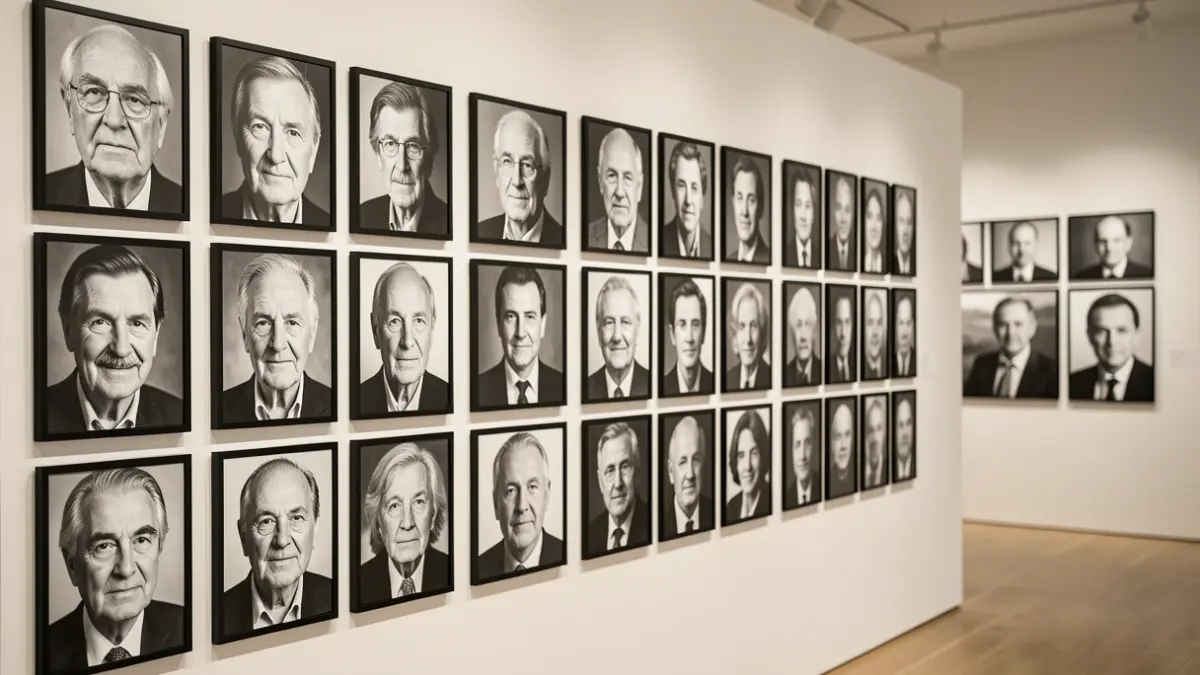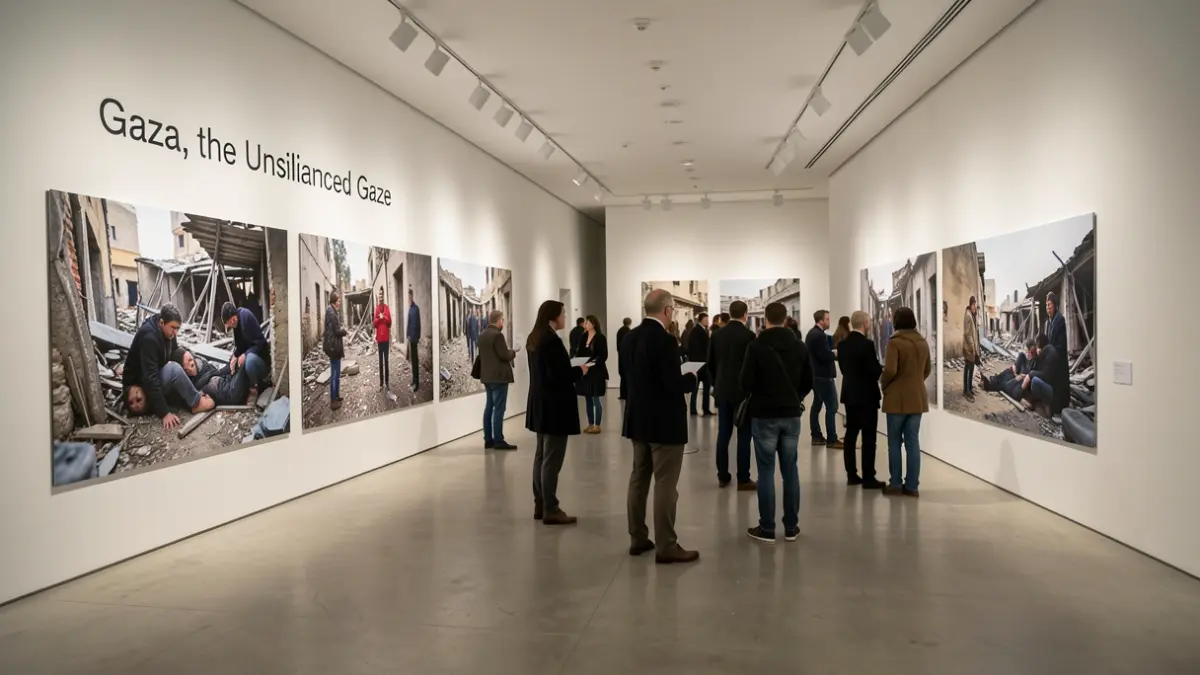
The Gáldar City Council inaugurated the photographic exhibition ‘Gaza, the Unsilenced Gaze’ this Tuesday, September 15. The exhibition brings together images taken by Palestinian professionals working on the ground for UNRWA in Gaza, aiming to bring the reality of the civilian population amidst the conflict closer to the public.
The exhibition will be open to the public until Sunday, September 27, at the Sala Sábor in the Casas Consistoriales of Gáldar. Visiting hours are Tuesday to Friday, from 9:00 AM to 5:00 PM; and Saturdays and Sundays, from 10:00 AM to 3:00 PM.
In a context marked by information blockade and difficulties for international press access, the work of local journalists has become a primary source for documenting events in Gaza. For security reasons, the authors of the images remain anonymous. The photographs show both the visible effects of bombings and infrastructure destruction, as well as the human consequences of the conflict, including collective trauma, forced displacement, and the population's struggle to maintain daily life amidst devastation.
The exhibition is conceived as a visual archive built from within Gaza, aiming to maintain attention on a humanitarian crisis affecting over 2.1 million people in a strip of just 365 square kilometers. According to data provided by UNRWA, more than 200 Palestinian journalists have died since the offensive began while documenting events. In this context, the images gathered acquire significant testimonial value and serve as a tool to preserve the memory of what has happened.
‘Gaza, the Unsilenced Gaze’ is supported by El Patio de las Culturas, an entity that has promoted intercultural dialogue since 2004, and the organization Mujeres por la Paz y Acción Solidaria con Palestina, which has been disseminating information about the historical and political context of the Palestinian territory and promoting international solidarity initiatives since 2005.
Through this initiative, the Gáldar City Council emphasizes its firm stance against injustice and inequality, using photography as a tool for memory, testimony, and reflection, bringing images taken from within Gaza to citizens and giving visibility to those who, despite the circumstances, continue to document a reality that must not be silenced.