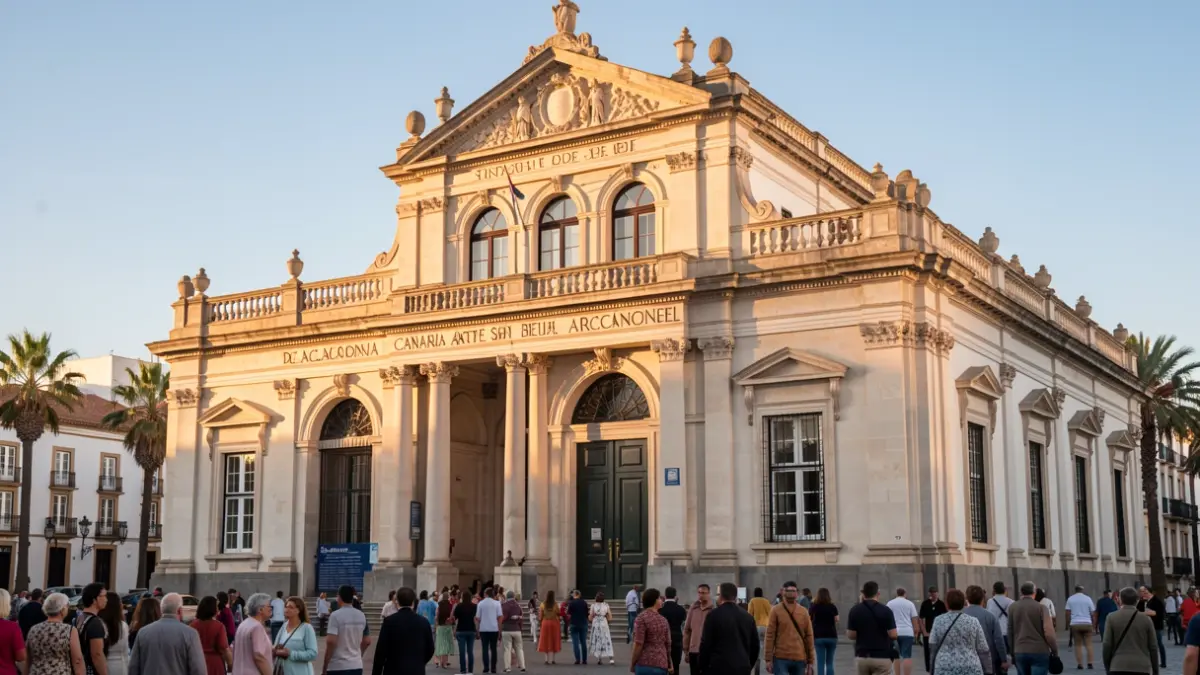
The renowned artist Pepe Dámaso, originally from Agaete and aged 92, was the focus of an emotional tribute held at the Gabinete Literario in Las Palmas de Gran Canaria. The event, jointly organized by the Parliament of the Canary Islands and the Royal Academy of Fine Arts San Miguel Arcángel, recognized his profound contribution to art and culture, particularly Canarian culture.
Visibly moved, Dámaso expressed his gratitude, emphasizing the importance of the tribute coming from women and recalling the support he received during difficult times, marked by repression due to his homosexuality and political intolerance. The ceremony concluded with a warm ovation from the audience and the presentation of a sculpture symbolizing a dragon tree, acknowledging his deep connection to the islands.
During his speech, the artist dedicated the tribute to all Canarian artists striving in a challenging present for the cultural sector. He advocated for culture as a fundamental space for freedom, memory, and the future. He also remembered figures like César Manrique and Néstor de la Torre, reiterating his motto: 'Art, if you are faithful to it, always pays off in the end'.
Dámaso recalled his beginnings, influenced by the painter Miro Mainou in Agaete, and his first exhibition in La Palma, which marked the start of his successful career. He shared his enthusiasm for the works he is currently undertaking, including a project honoring the Virgen del Pino and the publication of his correspondence with César Manrique.
The event, hosted by Ana María Quesada Acosta, vice-president of the Royal Academy of Fine Arts, included the screening of the documentary 'Pepe Dámaso y el Tríptico de Agaete'. The president of the Parliament of the Canary Islands, Astrid Pérez, highlighted the connection of Dámaso's work with the Canary Islands, stating that he has made the land a universal voice without ever renouncing its roots.
Astrid Pérez emphasized that Dámaso has transformed the memory, traditions, and emotional landscape of the Canary Islands into his own artistic language, which is free and profoundly brave, asserting that his work remains an essential part of the islands' cultural identity. Academician Juan Gómez-Pamo praised Dámaso's figure, calling him 'one of the most beloved in the Canary Islands for his work and his closeness'.