The applications for the registration of Protected Geographical Indications (PGI) ‘Canarian Tomato’ and ‘Agaete Coffee’ have been submitted to the European Commission by the Ministry of Agriculture, Fisheries and Food. These requests were promoted by the Provincial Federation of Associations of Exporters of Horticultural Products of the province of Las Palmas (FEDEX) and the Cabildo of Gran Canaria for the tomato, and by the Agroagaete Association together with the Agaete City Council for the coffee. The Government of the Canary Islands, through the Canarian Institute of Agri-food Quality (ICCA), has processed these applications.
The European Commission will have a maximum of six months to study the proposals. If necessary, it may request additional information from the ICCA. Once validated, the applications will be published in the Official Journal of the European Union (OJEU), opening a three-month period for public information and opposition at the European level. After this phase, the Commission may proceed with the definitive recognition of the PGIs.
Luis Arráez Guadalupe, director of the ICCA, described this European review period as a “decisive step for the legal protection of differentiated quality products that hold great value for the Canary Islands in general, and for the island of Gran Canaria in particular”. Currently, both designations have temporary national protection while the European procedure concludes.
The resolutions published in the Official Gazette of the Canary Islands (BOC) in late July and early August represented the step prior to the request to Europe and support the “rigorous work of both sub-sectors”.
These designations guarantee that the quality or reputation of the product is due to the geographical environment, including natural and human factors. They constitute a differentiating mark and protection against other productions. PGIs boost the rural economy, especially in areas with limitations or specific constraints, such as the Outermost Regions (ORs), where production costs are high. These quality schemes complement rural development policies and those supporting marketing within the Common Agricultural Policy (CAP).
Currently, Canarian products with PGI are Gofio Canario, Ronmiel de Canarias, and Plátano de Canarias. Those recognized with a Protected Designation of Origin (PDO) include Queso Palmero, Queso Majorero, Queso Flor de Guía / Queso de Media Flor de Guía / Queso de Guía, Papas Antiguas de Canarias, Miel de Tenerife, Cochinilla de Canarias, and eleven Canarian wine PDOs.
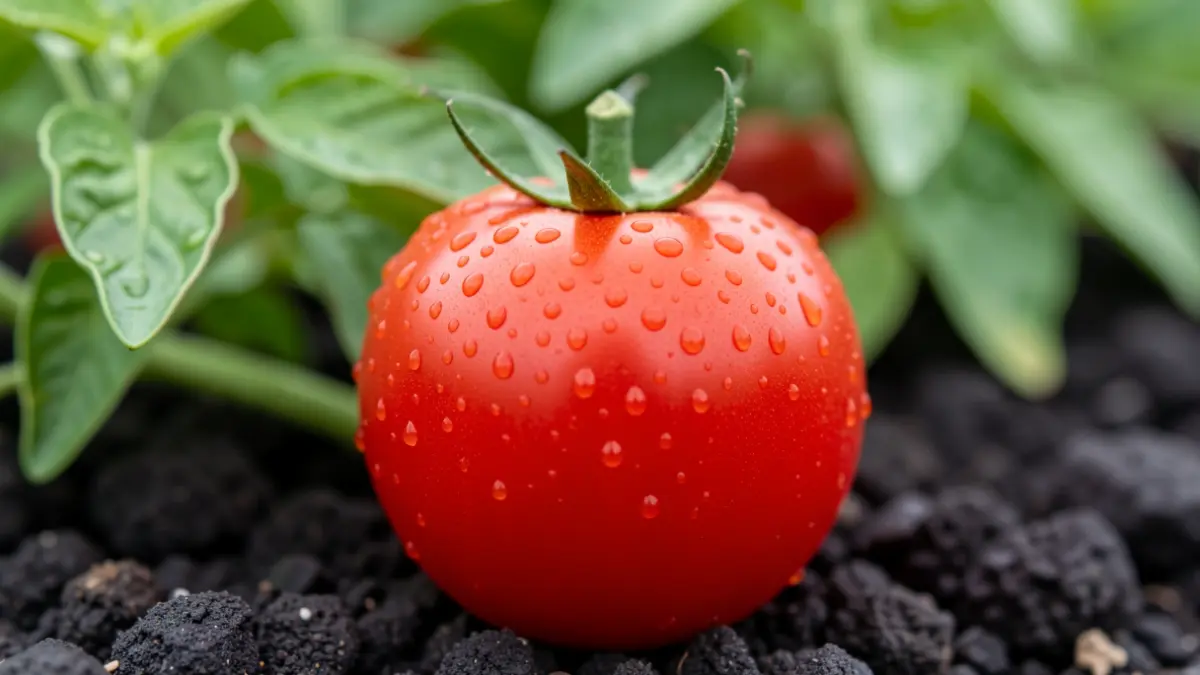
The PGI application for Canarian Tomato, initiated two decades ago, aims to protect the production against imitations. After a first attempt ten years ago, the current dossier, with solid backing from natural, geographical, historical, economic, social, and cultural factors, proves its territorial link and its role in the Archipelago's agricultural development for over a century.
The climatic conditions of the Canary Islands, such as mild temperatures, hours of sunshine, and the influence of trade winds, along with the accumulated knowledge of generations of farmers and technicians, give the Canarian Tomato differentiated characteristics and consolidate its international prestige.
The PGI proposal for Agaete Coffee would cover green bean, roasted bean, and ground coffee, cultivated in the municipality of Agaete, in Gran Canaria. This cultivation of Coffea arabica L., Typica variety, is developed at altitudes between 150 and 550 meters, in the specific agroclimatic conditions of the Agaete Valley.
Agaete holds a prominent place on the national agricultural map as the only territory in Spain and Europe where coffee is grown, with a documented tradition since the 19th century and international recognition at the 1889 Paris Universal Exposition. All phases of the process are carried out in this enclave to guarantee the unique quality of the production.