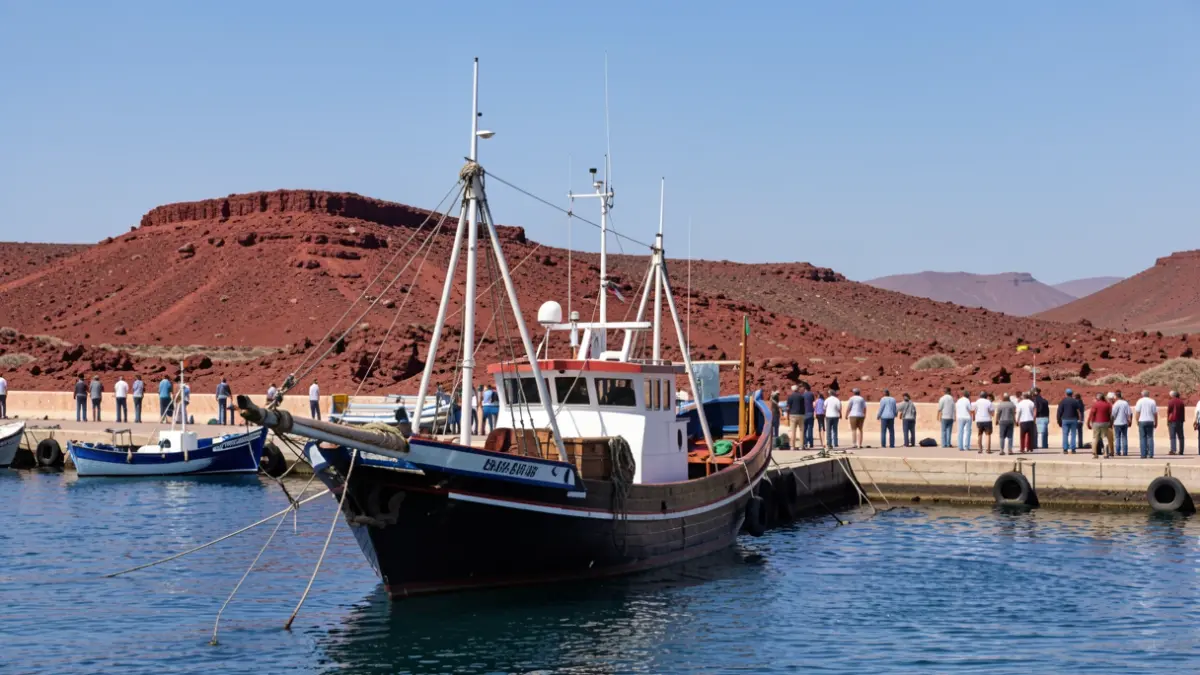
The initiative, promoted by the Cultural Heritage Service, is part of the 'Encounters with Heritage' cultural series and aims to recover and highlight the memory of the island's fishing heritage, with a special focus on the municipality of La Oliva.
The event seeks to acknowledge the knowledge of the men and women of the sea, whose ways of life have been crucial in shaping the identity of northern Fuerteventura over generations.
Corralejo's Muelle Chico, a location intrinsically linked to the municipality's maritime history, will serve as the ideal setting for this activity. The choice of venue underscores the importance of holding the event in an environment that evokes coastal life and maritime memory.
Through dialogue and the sharing of knowledge, the colloquium will offer a unique perspective on the fishing legacy of La Oliva. The goal is to bring to the public a piece of local history that, while not always documented, remains alive in the memories, practices, and experiences passed down through generations.
The protagonists of this day will be the men and women who have been an essential part of Fuerteventura's maritime culture. Their knowledge, routines, and deep relationship with the sea constitute a valuable intangible heritage for the island.
Beyond fishing as an economic activity, the colloquium will address daily life connected to the sea, the customs of fishing families, and the importance of preserving a collective memory that forms an integral part of the Majorero cultural legacy.