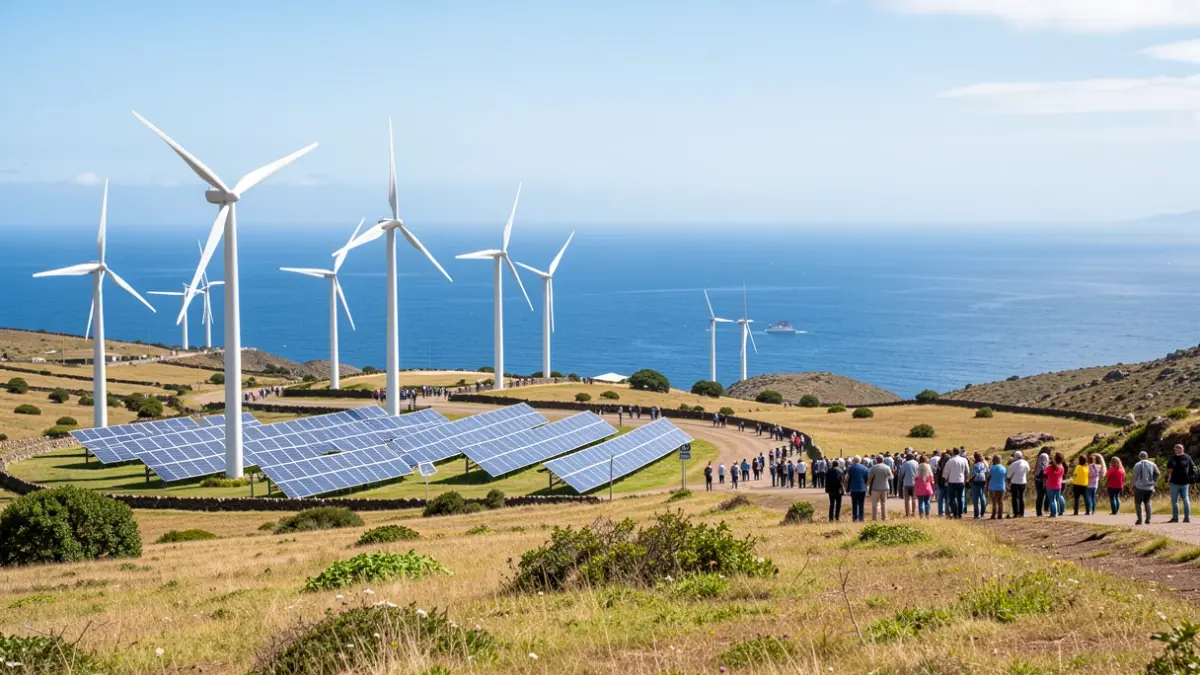
In Lanzarote and La Graciosa, electricity generation from wind turbines and photovoltaic panels represented a relatively low percentage in 2025, barely reaching 10.3% of the total energy demanded. This data, from a Red Eléctrica report included in the digital publications of the Cabildo, places the islands at the bottom of the Canary Islands in the use of clean energy, surpassed only by La Palma in this regard.
Little variation is expected by the end of 2026, as the wind infrastructure remains the same and there are no substantial changes in solar energy utilization. The five wind farms operational in 2025 generated 9% of the electricity demanded, while photovoltaic panels, in both public and private properties, contributed the remaining 1.3%. For reference, in Fuerteventura, wind energy covered 15.7% of its demand.
The majority of electricity consumption in Lanzarote and La Graciosa during 2025 was covered by Endesa's thermal power plant, located near Las Caletas. This plant, which burns petroleum derivatives, was responsible for 88.8% of the demand. Additionally, gas was used for electricity generation, contributing slightly over 0.8% of the demand, a source considered non-renewable.
In contrast, in Fuerteventura, crude oil derivatives covered approximately three-quarters of the general demand, benefiting from a more extensive clean energy network. No significant production from combined cycles, cogeneration, or hydro-wind means was recorded in the seven municipalities of Lanzarote and La Graciosa last year, unlike in other parts of the archipelago.
Red Eléctrica's report details that the Canary archipelago demanded 8,998 gigawatt-hours in 2025. Lanzarote and La Graciosa required 8.8% of the global consumption, slightly behind Fuerteventura. The energy demand of the Canary Islands represented 3.5% of the state demand, with Tenerife exceeding Gran Canaria in consumption.