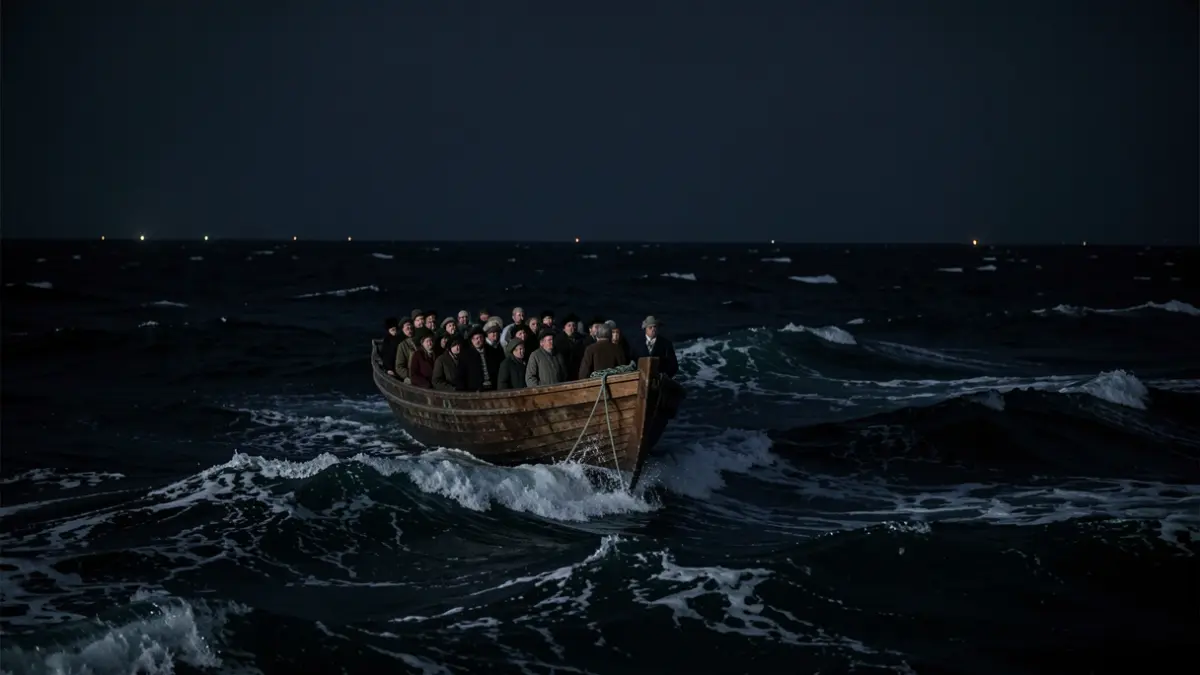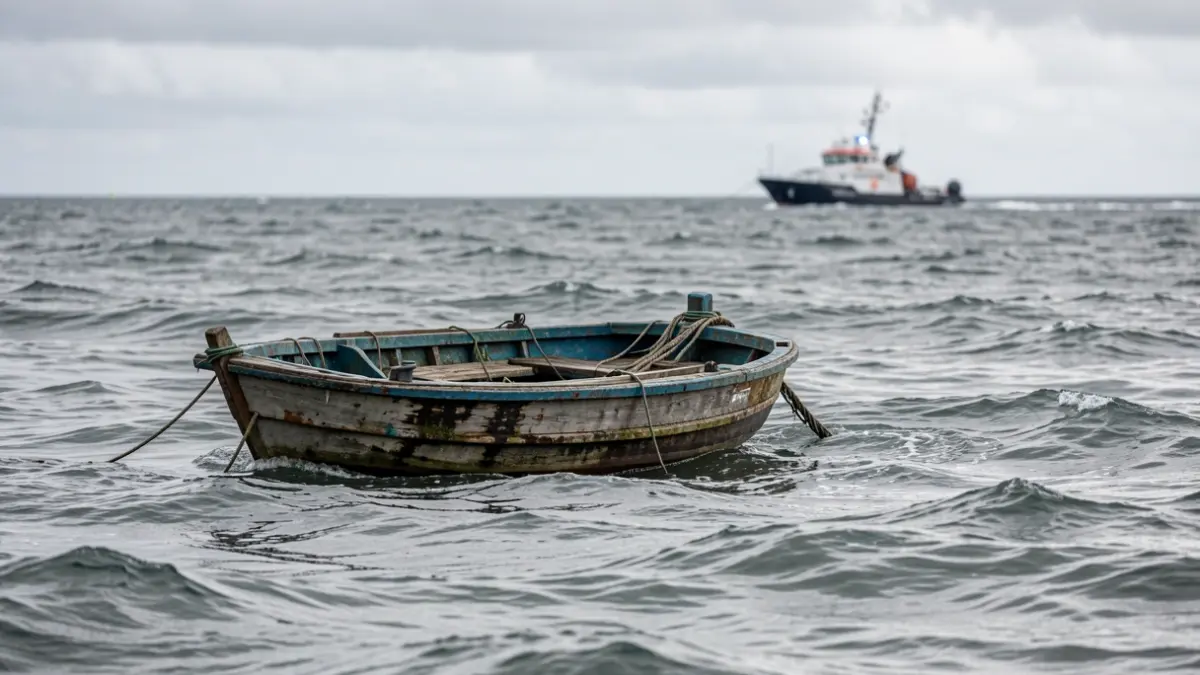
Maritime Salvage teams managed to reach the vessel after 26 days at sea, finding the occupants in a state of extreme weakness. The rough seas significantly hampered rescue efforts, as described by the workers themselves.
The boat was located by a Maritime Salvage plane on Wednesday afternoon. The Guardamar Urania vessel was dispatched to meet it for an operation described as "especially complicated" due to the adverse sea conditions.
“"Bad sea conditions, very complicated to get these people out."
Upon reaching the cayuco, approximately 45 people were still alive. Three of them had to be evacuated by helicopter due to their critical health condition. Another person was so disoriented that they had to remain on the boat during the operation.
Rescuers also identified five bodies inside the cayuco. However, the sea conditions prevented their immediate recovery. The state of the boat's interior, partially flooded and filled with belongings, made it difficult to ascertain if there were more deceased individuals.
“"Possibly there were more than five on the cayuco."
The survivors were transferred to the Arguineguín dock, where they received assistance from the Red Cross. According to the survivors' accounts, the vessel had departed from Gambia on August 7th. The Civil Guard has confirmed that the markings on the hull match those of a boat that left at that time with 128 occupants.
During the weeks of the journey, people on board died and their bodies were thrown into the sea. The figure of over 80 deceased, which has been circulating, is an estimate based on the initial number of occupants and those rescued; the final toll is still not closed. The five bodies found remain on board the cayuco due to the impossibility of a safe extraction.