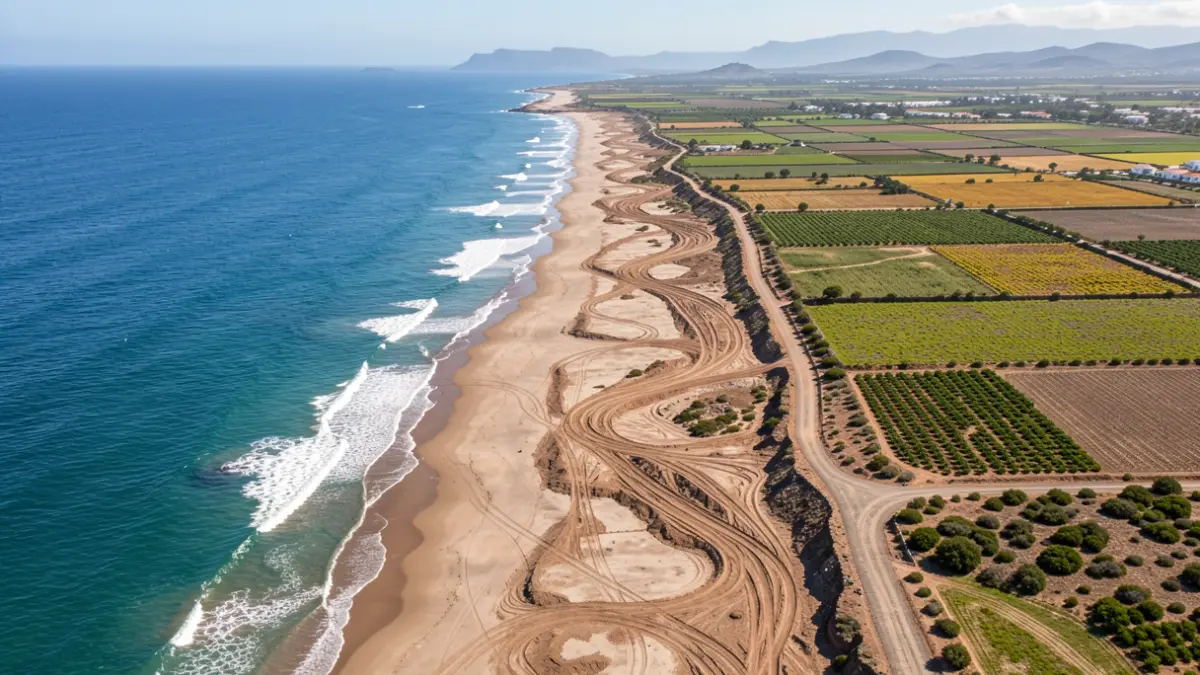
Grupo Lopesan has issued a statement to clarify its intervention on Veneguera beach and its backshore area in Mogán, following complaints from several groups. The company emphasizes that the actions carried out at the ravine's mouth focused on redistributing aggregates and correcting artificial reliefs to restore the cove's original morphology, seeking a balanced transition between the coast, the ravine's course, and the cultivated fields. According to the group, these actions are based on criteria of landscape recovery and coastal renaturalization, enhancing terrain stability and safety for public enjoyment, and they categorically rule out any type of urban development or tourist exploitation in the area.
Furthermore, Lopesan reiterated its commitment to the recovery project of the Veneguera agricultural estate, an enclave of significant agricultural, landscape, and ethnographic value in the southwest of Gran Canaria. The plan aims to revive traditional crops, restore rural infrastructure, and optimize the coastal environment, always under rigorous technical evaluation of each action.
All interventions are carried out under the corresponding technical direction, within the administrative framework and in full compliance with current regulations, maintaining constant collaboration with competent authorities to protect this unique environment. The technical roadmap includes the refurbishment of old warehouses, roads, wells, hydraulic channels, and buildings linked to the site's original activity.
These actions are part of the firm's global sustainability strategy under the Lopesan for Good seal, focused on the circular economy and supply chain efficiency. The Veneguera agricultural estate produced 1,224 tons of zero-kilometer fruit and vegetables in 2025, covering approximately 21% of the fresh product consumption for guests at hotels in Gran Canaria. This proximity logistics significantly reduces the carbon footprint and revitalizes the island's primary sector, restoring economic dynamism to farmland that had suffered prolonged disuse.