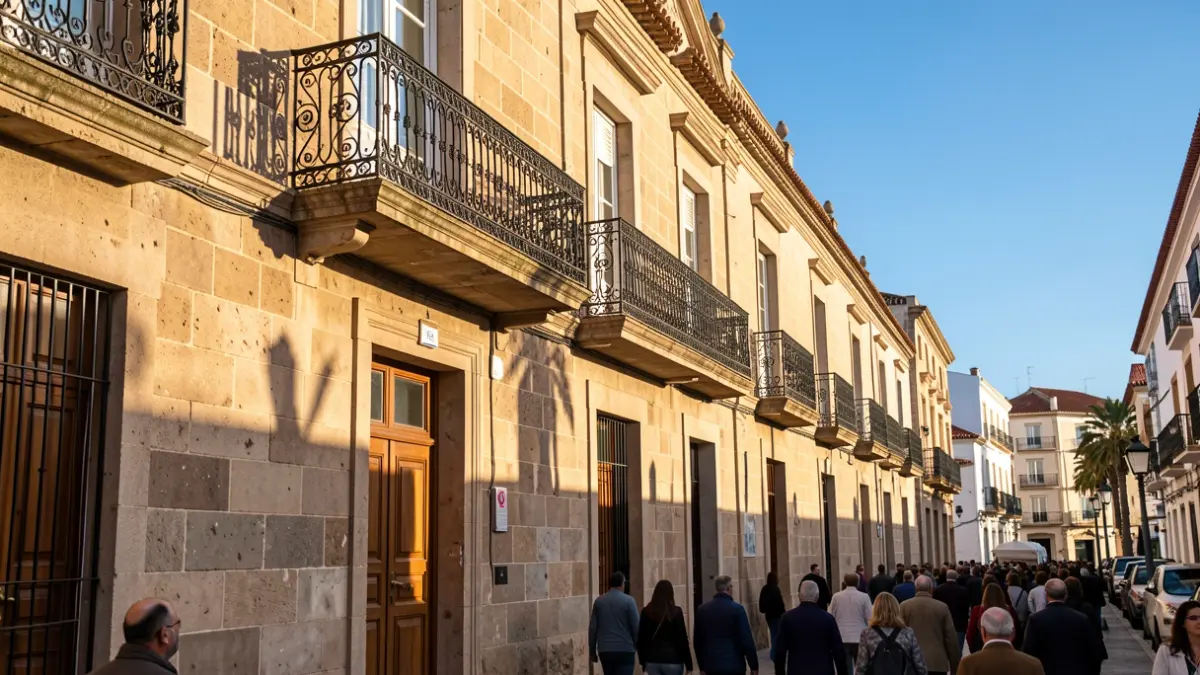
Residents of Tamaraceite have expressed alarm at the intention of the Las Palmas de Gran Canaria City Council to change the use of land reserved for educational and administrative facilities, in order to allocate them to new housing developments. This measure is justified by a technical report indicating that these plots have remained undeveloped for over 25 years, suggesting that current equipment needs are met.
The Councilor for Planning, Urban Development, and Housing, Mauricio Roque, argues that this reclassification would boost the construction of new residences in the area and expand the public housing stock, in collaboration with other administrations. However, residents question the validity of this argument, pointing out that the neighborhood has experienced “brutal urban growth” in recent years, especially with the development of Tamaraceite Sur, which plans for nearly 2,000 homes.
Are the equipment needs in Tamaraceite really covered? Why Tamaraceite and not other neighborhoods? And why such a rush to approve these changes without residents being informed?
This demographic increase has not been accompanied by the necessary infrastructure in areas such as education, health, culture, or administration. Residents warn that basing urban planning solely on the availability of undeveloped land, without considering future needs, could compromise the balanced development of the neighborhood for decades. Furthermore, they criticize that the failure to develop a plot for 25 years does not imply it is no longer needed, but rather could indicate a lack of public investment or a clear strategy for sustained territorial development.
While acknowledging the urgency of expanding the public housing stock, residents insist that the solution should not involve concentrating more residential pressure on neighborhoods already experiencing accelerated growth without adequate services. A neighborhood, they argue, is defined by its schools, health centers, public transport, sports areas, and cultural spaces, not just by the number of homes. They emphasize that Tamaraceite is a historic neighborhood with its own identity, a traditional agricultural landscape, and a connection to natural areas of high ecological value, such as Las Charcas de San Lorenzo, within the Pino Santo Protected Landscape, which has already suffered the impact of commercial developments.
Given this situation, Tamaraceite residents demand long-term planning, territorial balance, and open dialogue with the community before making decisions that will significantly affect the neighborhood's future. The key question, for them, is not whether housing is needed, but whether Tamaraceite can continue to absorb it without sacrificing the quality of life of its inhabitants.