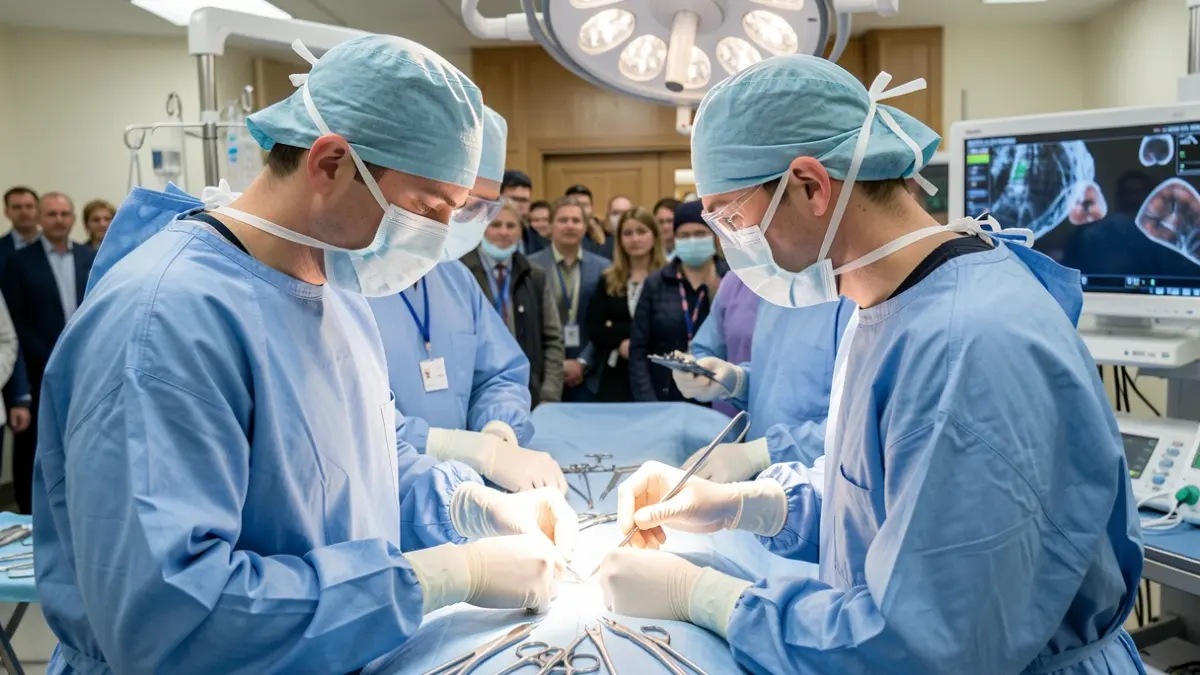
The hospital, affiliated with the Canary Islands Health Service, has solidified its position as the reference center in the islands for this complex surgical procedure over the past three decades. The first liver transplant was performed in 1996 on a 44-year-old male patient, and since then, the program has seen consistent growth, averaging 31 transplants annually.
During the anniversary event, held on Thursday, June 4th, the contributions of the over one hundred professionals involved in the program were highlighted. The busiest year was 2016, with 51 liver transplants. Emphasis was placed on the crucial role of organ donation, with gratitude extended to donors and their families, essential for improving the survival rates and quality of life for patients with severe liver diseases.
The unit has treated patients ranging in age from 14 to 72 years, suffering from various conditions such as liver cirrhosis, autoimmune liver diseases, hepatocellular carcinoma, and viral hepatitis. Patient distribution is balanced, with 51% men and 49% women. Without a transplant, the survival rate for eligible patients typically ranges from one to three years.
Over these 30 years, the program has benefited from significant technical advancements, including reduced surgical times, decreased need for transfusions, new immunosuppressive treatments with fewer side effects and lower rejection risks, as well as the adoption of direct-acting antivirals and donation after circulatory death.
The hospital has been a pioneer in implementing tools like the GEMA (Gender-based Evaluation and Model for Allocation) model for prioritizing the waiting list, becoming the first center in Spain to utilize this advanced statistical methodology.
The Liver Transplant Unit at La Candelaria has received accolades such as the Civil Order Decoration from the Ministry of Health in 2003 and AENOR's UNE 179008 certification in 2018, underscoring the quality of its care program, which also encompasses resident training and international scientific research.