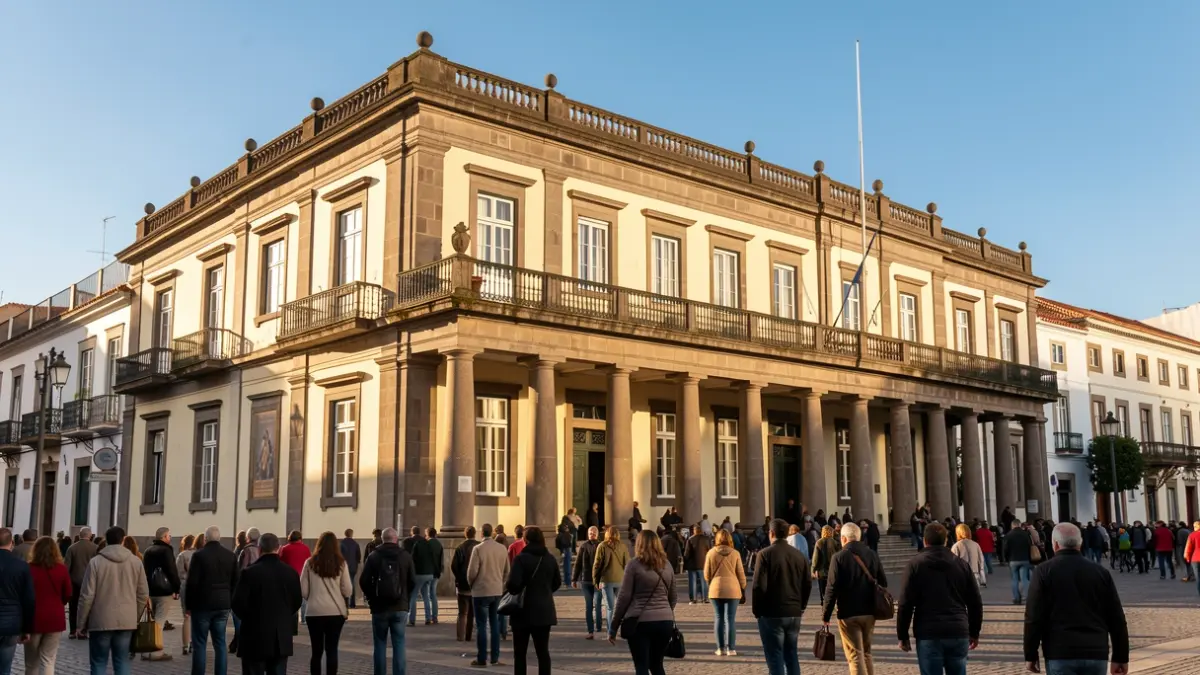
The discussion in the Chamber, prior to the decree's validation on April 29, revealed deep polarization. While President Fernando Clavijo and his allies (CC, PP, ASG, and AHI) defended the measures as the only possible response to an adverse international scenario, the opposition, led by the PSOE and NC, deemed them insufficient and belated.
“"There is no possibility of stopping the blow of the effects of the war in Iran and the closure of the Strait of Hormuz, only cushioning them. We will have to inject more fuel into the economy by increasing public investment, and for that, we need the spending rule to be made more flexible."
Socialist spokesperson, Sebastián Franquis, accused the Executive of “lack of social sensitivity” and “much media posturing,” also reproaching it for having left “Canarian families alone for 40 days.” Meanwhile, Luis Campos, from NC, was even more forceful, stating that the measures “arrive late, arrive badly, and are rigged.”
Campos highlighted the disparity in investment, noting that the 29.8 million euros mobilized by the Canary Islands pale in comparison to the 450 million from Catalonia or the more than 1,000 million from Euskadi. He also criticized the lack of effective measures for the most vulnerable, citing the reduction of the IGIC on salt, which, according to him, does not benefit low-income families.
In response, Clavijo shifted the criticism towards the Spanish Government, arguing that the “lack of sensitivity towards the Canary Islands was shown by the Government of Spain,” in an attempt to justify his Executive's stance.