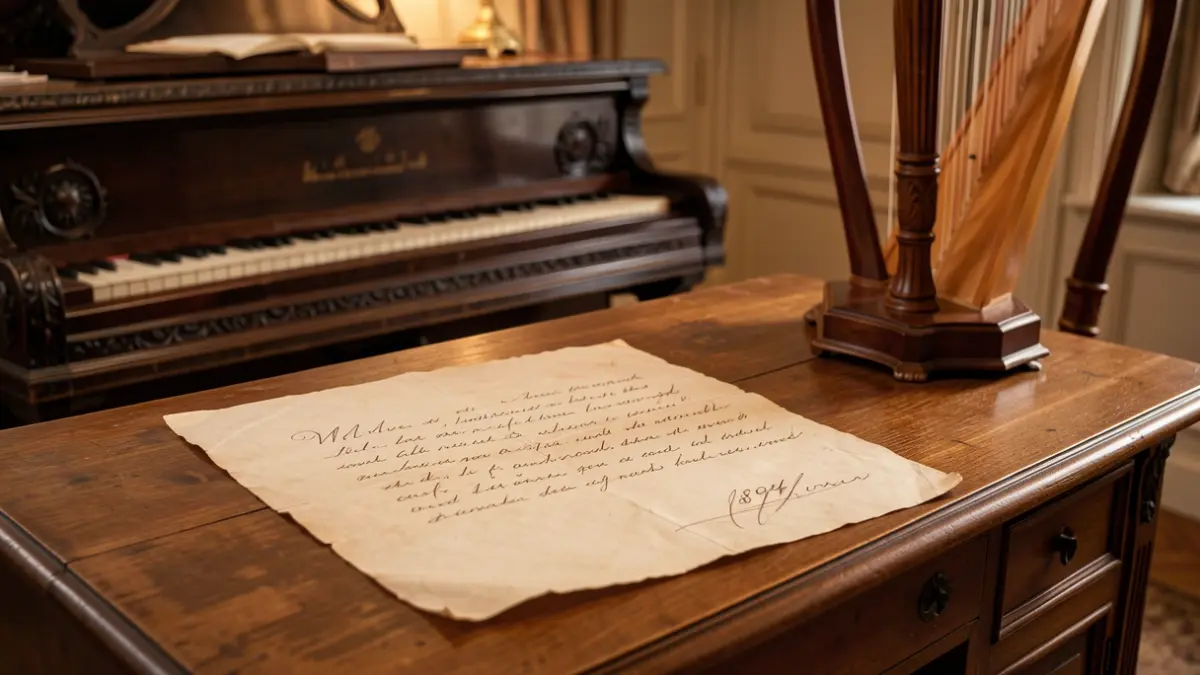
A letter dated San Francisco, January 14, 1894, preserved at the Documentation Center of the Canary Islands and America (CEDOCAM), reveals an emotional proposal from the Polish pianist and composer Antoine de Kontski to the Barcelona-born harpist Clotilde Cerdá, known artistically as Esmeralda Cervantes. The letter, written with "affection, enthusiasm, and a very specific proposal," invites the artist to return to the stage for collaborative concerts.
Clotilde Cerdá was a child prodigy of the harp, an international concert artist, composer, and defender of women's rights. After touring America, Europe, and Asia, she returned to the United States in 1893 at the invitation of the World's Columbian Exposition in Chicago, where she gave a concert and participated in a conference. Kontski's text refers to her success at a concert in Washington, which he learned about through the press.
Kontski, who had been living in San Francisco since 1883, proposed she travel to the Californian city to take advantage of the California Midwinter International Exposition, inaugurated on January 27, 1894, in Golden Gate Park. His plan was to perform several concerts together, recalling their triumphs as a duo in London and suggesting they play his Bolero.
The letter stands out for its personal tone, where Kontski refers to Cerdá as "Dear Daughter" and himself as her "Papa," expressing the pride he felt for her. The missive highlights the artistic and personal complicity between them, united by music and the applause they shared in previous tours.
This letter, part of the Estévanez Collection, sheds light not only on music history but also on the international network of artists and friendships that connected Esmeralda Cervantes with the world.