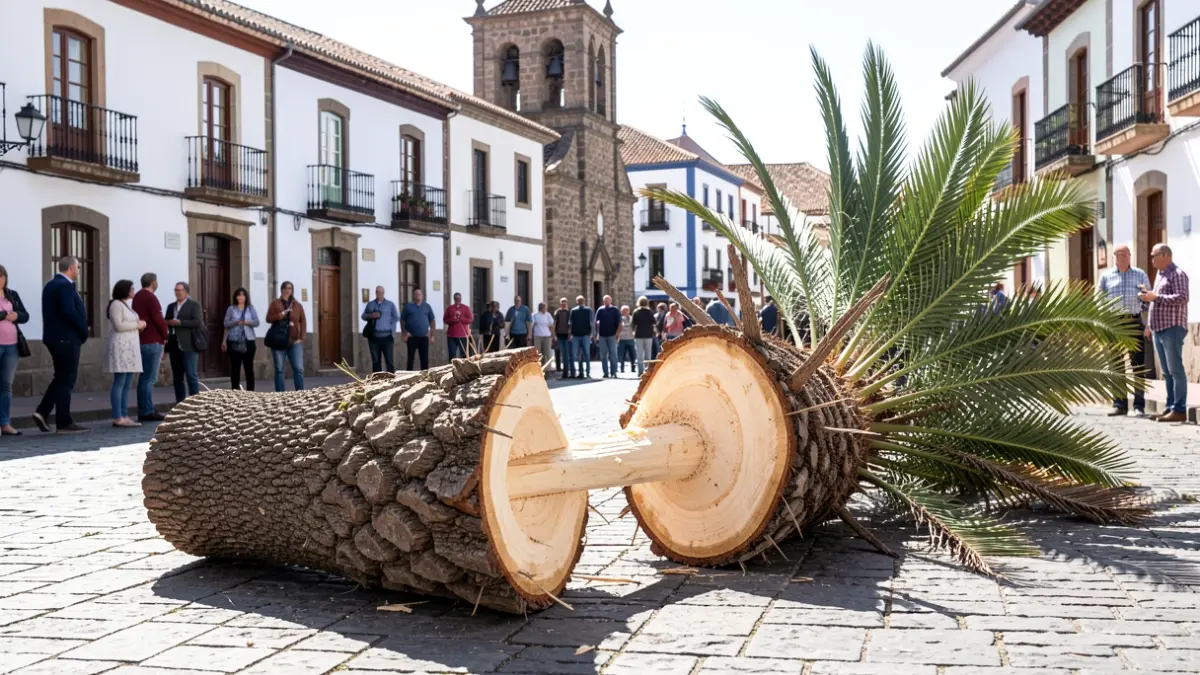
A Canary Island date palm tree broke in half and fell this Monday afternoon in the emblematic Plaza de Santa Ana, in Las Palmas de Gran Canaria. The upper part of the trunk snapped, hitting the pavement. Fortunately, no personal injuries were reported, despite children playing nearby. Staff from Parks and Gardens proceeded to remove the debris on Tuesday morning.
This incident adds to the loss of 55 palm tree specimens in the city this year. According to sources from the Parks and Gardens department, most of these falls were due to winter storms, while another 35 have been felled due to risk of fracture or collapse. In contrast, 75 trees have been replaced.
The primary cause of the incident appears to be internal rot near the base, likely caused by fungi, although samples have been sent for analysis. A previous inspection in June, before pruning the plaza's palms, had not detected any hollowness, according to the same sources.
“"These types of conditions advance quickly, making them difficult to detect until the damage is severe or becomes visible."
The department, headed by Gemma Martínez Soliño, has announced a new thorough inspection of all palm trees in the square, a central point in the historic center of the Gran Canarian capital.
The difficulty in finding effective fungicides for urban palm trees complicates their maintenance. Fungi often penetrate through wounds, such as those caused by the diocalandra, a widespread pest affecting Canary Island date palms across the archipelago.
The emergency plan implemented by Parks and Gardens since last year aims to improve early detection of problems. So far this year, 35 specimens have been felled due to risk of collapse or fracture.
Despite the felling, palms are replaced promptly, with 75 new trees of various species planted this year. The emergency plan also allocates resources for treating diocalandra, which affects 90% of the 13,881 registered specimens in the municipality. The picudín, another harmful weevil, affects 22.22%.
From Parks and Gardens, efforts have been made to involve the Government of the Canary Islands, which is responsible for pest control, without a response. The need for a comprehensive island-wide approach is emphasized due to the widespread nature of the pest.