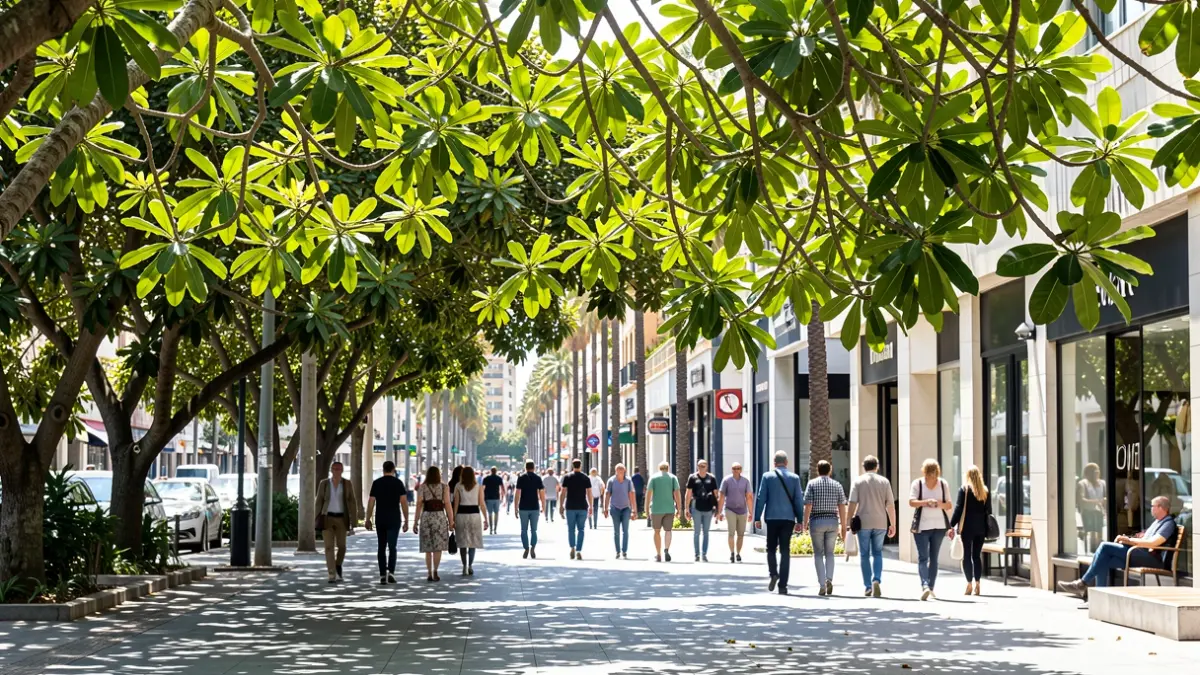
The Department of Territorial Policy of the Canary Islands has initiated a program to transform the design of streets, squares, and public spaces, prioritizing the integration of native vegetation. The goal is to establish greenery as an essential 'infrastructure' for creating more livable, healthy cities prepared for climate change.
This proposal aims to address issues such as lack of summer shade and intense rainfall flooding, common in many urban areas of the archipelago due to rapid growth and excessive concrete. Urban re-naturalization seeks to restore ecosystem services, improve environmental quality, and reduce temperatures.
“"It's as if the botanist or gardener stood beside you and helped you design the public spaces."
The initiative goes beyond simply planting trees; it focuses on selecting appropriate species based on their location, water needs, projected shade, and contribution to climate comfort. The aim is to incorporate a 'multifunctional green and blue infrastructure' into urban planning, creating 'climate refuges' to combat high temperatures.
The project is supported by several technical instruments, including the Manual for Urban Gardening in the Canary Islands, a guide for municipal offices and public administrations, already distributed to all island councils and town halls. A technical brief with typologies and guidelines for various urban interventions is also provided.
Another fundamental pillar is the Catalog of Native Vegetation for Urban Environments of the Canary Islands, divided into volumes for coastal and midland/summit areas. This catalog guides the selection of native species based on water efficiency, climate resilience, and identity value, adapting to the diversity of each island.
Furthermore, an interactive web viewer has been developed to consult georeferenced information and identify opportunities for ecological corridors, applying science and data to planning.
A pilot experience is underway on the Avenida de los Menceyes in Candelaria, Tenerife, to evaluate the combination of native vegetation, shade, soil improvement, and permeability in a real-world setting. This project underscores the need for the Canary Islands to manage its territory with consideration for its environmental limits.
The initiative, aligned with the Sustainable Development Goals and the Spanish Urban Agenda, features its own insignia with eight leaves representing the islands under a common tree, symbolizing protection, resilience, and comfort.