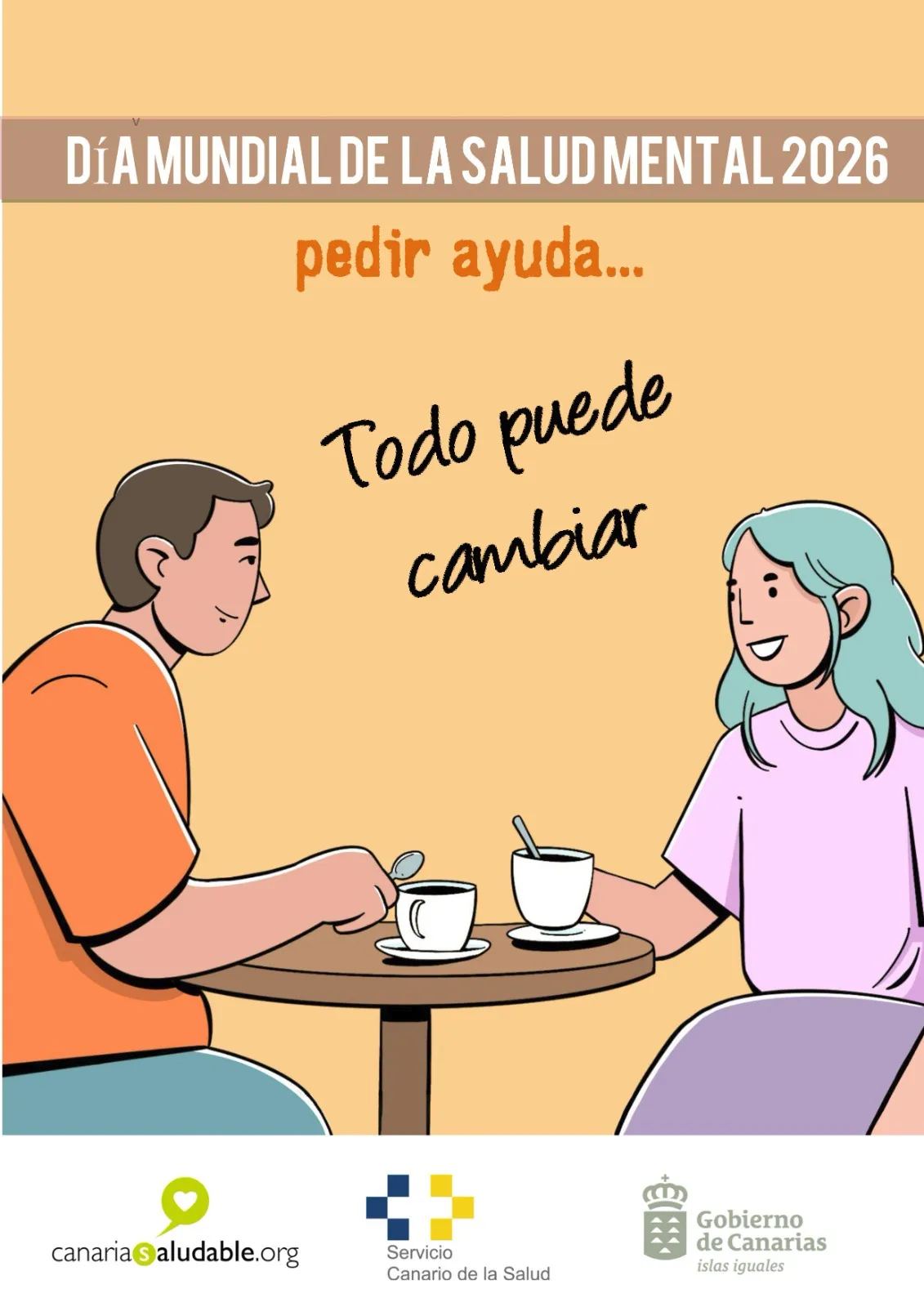
The initiative seeks to raise public awareness, reduce the stigma associated with mental health, encourage help-seeking, and reinforce the message that recovery of mental well-being is possible, promoting an approachable, realistic, and hopeful vision that indicates small advances lead to great transformations over time.
The public is reminded that actions such as leaving the house again, sleeping better, regaining a routine, meeting someone, or asking for help can be a first step towards recovery.
The Mental Health Network of the Canary Islands Health Service (SCS) currently has 756 healthcare professionals, a 5.8 percent increase compared to the previous year, in areas such as psychiatry, clinical psychology, nursing, occupational therapy, and social work.
During 2025, 345,755 specialized care consultations were carried out, attending to 82,319 patients, representing a 1.7 percent increase in the number of consultations compared to the previous year.
In the last three years, the SCS has increased its care resources, particularly those for child and adolescent mental health, home hospitalization, and eating disorders.
Eight resources for minors have been activated, including new child and adolescent mental health units in Gran Canaria, Early Attention Units (UAT) in Lanzarote and Tenerife, and home care units for minors with severe mental disorders in Lanzarote and Tenerife. The Program for Suicide Prevention in the Educational Sphere and outpatient units for Migrant Children (UPAIM) in the capital islands are also being developed.
For the adult population, six resources have been introduced, including the Eating Disorder (TCA) hospitalization unit and Day Hospital, a Psychosocial Rehabilitation unit and a night unit in La Palma. The Mejora project, for homeless individuals with addiction and mental health problems, is being piloted, along with a pioneering program for women with severe mental disorders during pregnancy, childbirth, and the postpartum period.
Mental health has become a major public health priority, defined by the WHO as a state of well-being that allows individuals to cope with life's stresses and develop their abilities. Anxiety and depression are among the most frequent conditions and mental disorders are a leading cause of disability.
The WHO warns that the response of healthcare systems remains insufficient, calling for greater investment and the development of community-centered, person-focused care models.